

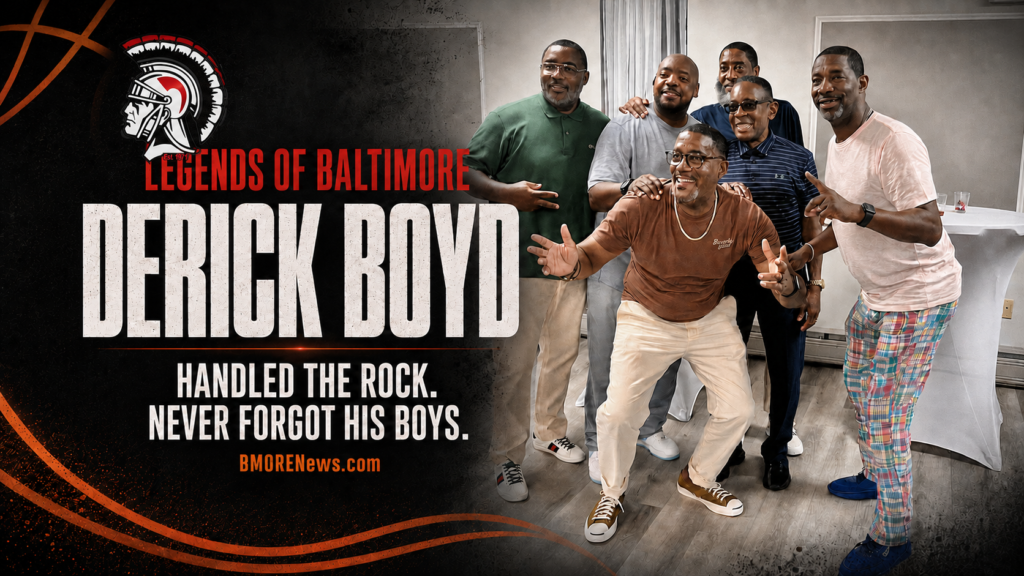
(BALTIMORE – August 22, 2026) — Now, this legend story is very special.
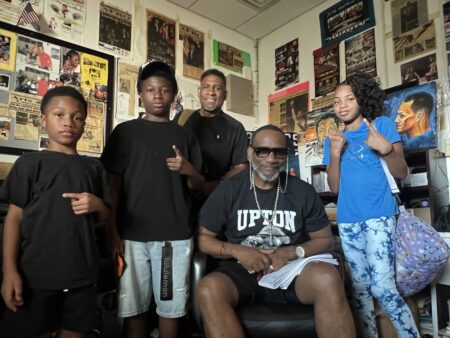
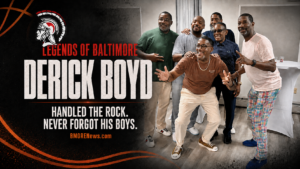
Derick Boyd is my elementary school classmate. We are the same age, born around the same time, and we have maintained our friendship for more than half a century.
That alone is a blessing.
Conducting these “Legends of Baltimore: Beyond the Game” interviews has helped me better understand my own childhood. Although sports was certainly a part of my story, my childhood was also deeply connected to business.
While Derick and the other young ballplayers were handling the rock, I was handling newspapers.
I had an AFRO paper route.
Looking back, that paper route fits perfectly with what I do today. I was distributing Black news then. Today, I publish BMORENews.com.
I also remember The Pocket, a small Baltimore publication produced by Earl Koger that would appear every Friday around Penn-North. I remember The Nightlifer and other independent Black publications that documented our community in ways the mainstream press never could.
I even tried publishing my own paper for about six months.
The signs were always there. My purpose was already revealing itself. I just did not recognize it yet.
Derick’s gift was basketball.
And make no mistake about it: The brother was a beast.
But the most remarkable thing about Derick Boyd was never simply what he could do with a basketball. It was how he treated people.
Derick was a superstar outside of school, but he never acted like one. He never treated the rest of us as though we were beneath him. We were his boys, and he would tell you that himself.
That has never changed.
To this day, Derick remains extraordinarily humble—Timmy Greene humble. Michael “Silk” Dukes humble. Choo Smith humble. If you met him without knowing his history, you might never realize how good he was.
That is one of the reasons this story matters.
A Friendship Built at Matthew A. Henson
Our friendship began at Matthew A. Henson Elementary School, which produced an extraordinary circle of students who remain connected decades later: Derick Boyd, Gordon Wilder, Kenny Parks, Reginald Powell, Dennis Fountain, Irvin Nore, Malcolm Hamm, Earl Lane, Antoinette Gatewood-Sykes, Lisa Carroll, Gerald Quarles, William White, John McCauley—and yours truly, Doni Glover.
And that is only the beginning of the list.
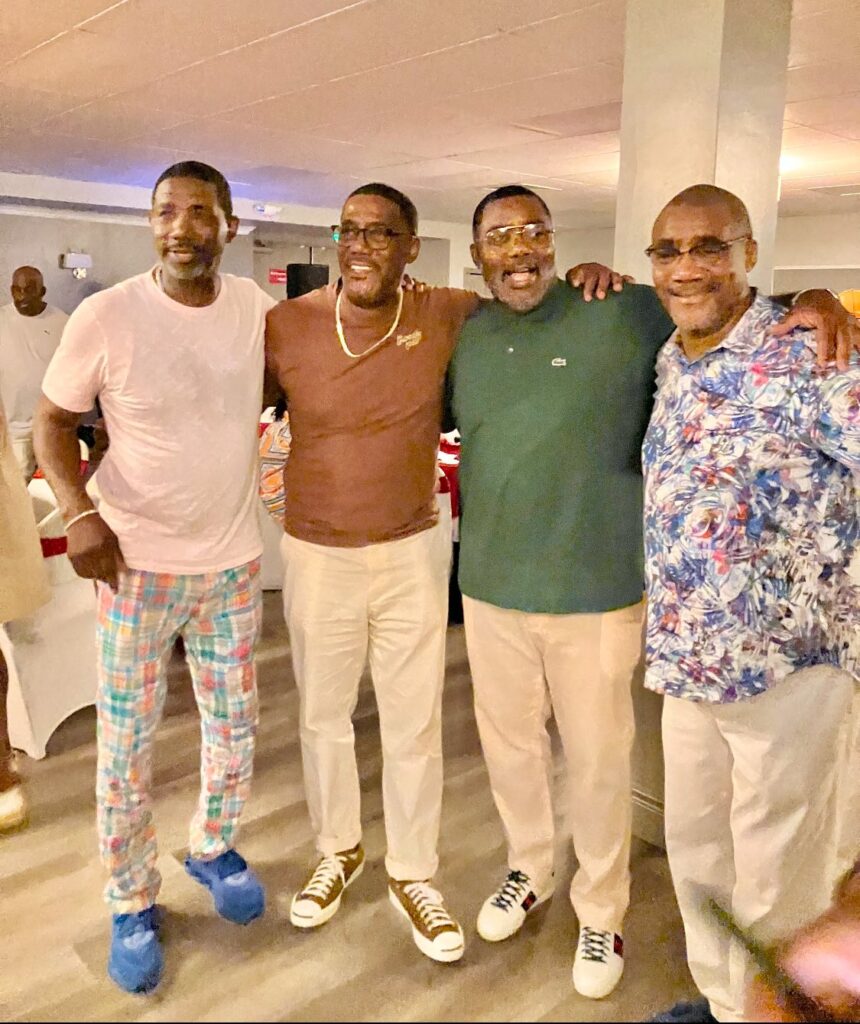
Derick calls us “life friends.”
Not casual friends. Not temporary friends. Not people who disappear when circumstances change.
Life friends.
At the beginning of our interview, before I could ask him a single basketball question, Derick turned the microphone around on me.
“Every time I think about my brother and how uniquely special you are, it is represented by who your life friends are,” he said. “Not friend-friends. Life friends.”
Then he spoke about the importance of BMORENews.com telling the stories that larger media outlets overlook.
“You highlight those little things in our communities,” he said. “Keep doing what you’re doing because nobody is doing what you’re doing in that city from a media standpoint. With the pen and the platform that you have—nobody.”
He was talking about the unsung heroes—the people who may not have much but continue to do a lot.
That is precisely why this Legends series exists.
Mainstream media too often reduces Baltimore to homicides, police misconduct, and young Black people in handcuffs. Those stories become the public representation of us, even though they do not represent the overwhelming majority of people who live here.
Our communities are filled with legends. You simply have to care enough to look for them.
Raised Between Sandtown and Bentalou
Derick’s basketball education began at William McAbee Park in Sandtown.
“Did I play at McAbee?” he responded when I asked him. “Oh, my God. That’s where I honed my craft.”
He began playing informally before he entered school—shooting balls into makeshift clothes-hanger rims, battling inside the house and turning rolled-up socks into basketballs. By age six or seven, he had entered organized competition.
One day, a coach watching the action at McAbee recognized something special in the young left-hander. The coach urged Derick’s oldest brother, Preston, to get him to Bentalou Recreation Center.
According to Derick, the message was simple: “You need to get him down Bentalou. Ain’t nothing up here for him.”
Preston listened.
From the family home on Fulton Avenue, Derick walked along Presstman Street, climbed the hill toward Bentalou – walking past our rec, Easterwood, I might add – and headed south to cross the railroad tracks to reach the recreation center.
It was a route that would terrify most parents today. For Derick, it became part of his basketball education.
Bentalou sat in the middle of a stable, predominantly Black homeowning community. The residents did not view the children arriving from surrounding neighborhoods as a burden.
“They understood the asset,” Derick explained. “They didn’t look at it as a liability. We were kids, and they loved to see us coming there.”
The recreation center provided structure, discipline, and a sense of belonging. Even if a child entered behaving poorly, Derick said, that child was unlikely to leave behaving the same way.
“The rec was a foundation,” he said.
Coach Herman Jones and the Discipline of the Game
The coach who made the greatest impression on Derick was Herman Jones.
“It’s not even close,” Boyd said. “He taught me the fundamentals. He exposed me to tournaments and winning, team concepts. He held us accountable, and he loved us hard.”
Coach Jones understood the leverage he possessed.
When a player broke the rules, the punishment was not necessarily running laps or doing push-ups. Sometimes, the punishment was being barred from the gym.
That was devastating.
“We would be standing outside the gym door begging and crying,” Derick recalled. “‘Please, I’m sorry.’ Nope. We would stand there the whole time waiting for our guys to come out because they had been balling all night.”
That was how badly young people wanted to be inside Baltimore’s recreation centers.
The gym was not simply a building. It was the center of their social lives, a sanctuary and a training ground. It was where boys learned discipline, teamwork, accountability and how to compete against the best players in the city.
Bentalou also hosted an official Metro one-on-one tournament that attracted players from throughout Baltimore.
“Everybody played in that tournament,” Derick said.
And somehow, after all these years, Derick still has a short clip of him competing.
That is Baltimore basketball history.
The West Side Versus the East Side
Basketball in Baltimore was fiercely territorial.
Bentalou. Lafayette. Madison. Crispus Attucks. John Eager Howard. Lake Clifton. The Dome.
Each recreation center had its players, coaches, traditions, and neighborhood pride. Charlie Moore coached at John Eager Howard. Mr. Lee became one of the respected figures at Lafayette. Anthony Clark, “Spoon,” and others were associated with the competition emerging from Crispus Attucks.
“Everybody was good,” Derick said. “Even the ones you were better than—you couldn’t tell them they were.”
West Baltimore produced tremendous players, but beating the powerhouse teams from East Baltimore was another matter.
That is what makes Derick’s story so remarkable.
During the 15-and-under Project Survival competition, Derick and Bentalou defeated Lafayette—the team led by Tyrone “Muggsy” Bogues.
Once.
Only once.
But they did it.
“We beat him once in my whole career,” Derick said, laughing.
That single victory is no small accomplishment. West Baltimore teams did not routinely go across town and defeat Muggsy Bogues and Lafayette.
Everybody who knows Baltimore basketball knows that.
Derick had competed against Muggsy since they were approximately 10 or 11 years old. They faced each other in BNBL competition, Project Survival, middle school, high school, and championship games at the Civic Center and The Dome.
When I asked Derick what it was like to play against Muggsy, he did not focus primarily on Muggsy’s speed, strength or famously powerful legs.
He focused on his mind.
“I don’t think people have ever fully given Tyrone Bogues credit for being one of the most cerebral—meaning smartest—basketball players ever to put on the laces,” Derick said. “People want to say he was small and fast. He was that. But his basketball IQ was next level.”
Derick understood that he was unlikely to force Muggsy into repeated mistakes. His job was to disrupt him long enough to limit his effect on the players around him.
“He was Bob Wade on the court,” Derick said. “Bob Wade entrusted him with everything.”
Sometimes, Derick explained, success meant disrupting Muggsy for only a couple of crucial minutes.
“You’re not going to disrupt him for long periods of time,” he said. “He was good, and they were talented.”
But on that one unforgettable day, Bentalou got it done.
For a West Baltimore boy who had walked across railroad tracks to learn the game, defeating Muggsy Bogues and Lafayette is legend enough for me.
When Commitment Became Personal
Derick eventually played at Walbrook High School, where he encountered another level of basketball and another kind of lesson.
During his first year on the junior varsity team, Derick began failing three classes. His coach sat him down.
Derick was devastated.
What made the experience even more painful was that he was still required to attend every practice, arrive on time, and watch his teammates prepare for games he could not play.
One day, the coach addressed the entire team.
“This is what it looks like when you don’t commit,” the coach told them. “We are all in this together. He failed y’all. We’re going to lose some games because he’s not playing.”
The words struck Derick deeply.
He realized that failing academically was not affecting only him. His choices affected everyone who depended on him.
“It changed me,” he said. “I realized that it was a commitment I had to people.”
That lesson followed him long after his playing days ended.
Derick has been married to his wife for 36 years and has been married for 31. He is a husband, father, grandfather, educator and friend.
“My life is about commitments,” he said. “Everything you commit to is supposed to be hard. That’s how God has it—because it has value to you.”
He applies that principle to every role he accepts.
“If I say I’m your best friend, then I have to be committed to that,” he told me. “That can’t be fair-weather.”
“I Just Produce Hall of Famers”
Derick comes from an exceptional basketball family.
His brother Devin Boyd became the leading scorer in Towson basketball history, finishing his career with 2,000 points and 438 assists. Devin was inducted into the Towson Athletics Hall of Fame in 2004.
His brother Andre Boyd scored 1,204 points and recorded 434 assists at Robert Morris University, earned All-Northeast Conference honors twice and helped lead the Colonials to two NCAA Tournament appearances. Andre entered the Robert Morris Athletic Hall of Fame in 2002.
When I asked Derick whether he was also in a Hall of Fame, he laughed.
“No,” he said. “I just produce Hall of Famers.”
Then he reconsidered.
“Yeah, I’m in the Hall of Fame, Doni. You know why? Because they are.”
That answer tells you everything you need to know about Derick Boyd.
He does not need the plaque. His joy is found in what the family produced and in knowing that he helped expose his brothers to competition, preparation and winning.
“The Hall of Fame is what we produce,” he said. “We are in our Hall of Fame—all of us.”
The Hardest Decision
One of the most difficult decisions Derick ever made was leaving Baltimore for Prince George’s County.
He wanted to remain in the city. His wife wanted something different for their family, and although he understood that her desire came from a good place, he worried that moving would disconnect him from his community.
For a time, he even resented the decision.
But the connection never disappeared because Baltimore remained in his heart.
Derick continued to return for community gatherings, basketball events, the One Baltimore cookout, Black Wall Street activities, and programs supporting the OOH Foundation. He supports BMORENews.com, shows up when people need him, and ensures his heart remains in the right place.
Sometimes giving back means writing a check.
Sometimes it means mentoring a young person.
And sometimes it simply means coming home—allowing people to see your face and know that you have not forgotten them.
Derick never forgot.
What His Father Taught Him
Near the end of our conversation, I asked Derick what his father taught him about friendship.
His answer brought the entire interview home.
“My dad taught me that there wasn’t a catch with friendship,” he said. “That’s your friend, that’s your friend.”
His father taught him not to judge his friends as though he were God. He also taught him to be careful about calling someone a best friend because those words carry an obligation.
“If that’s your best friend, because that’s what you said, then I’m going to show you what that means,” Derick recalled his father telling him. “And you’ll be careful how you open your mouth to say that through the rest of your life.”
His father was right.
Derick Boyd has been careful with that word.
More importantly, he has lived up to it.
Beyond the Game
A legend is not simply somebody who scored a lot of points.
A legend is not somebody who became famous and then forgot the people who knew him before the applause.
A legend remains connected.
A legend gives back.
A legend remembers the recreation center, the playground, the coach who demanded more, and the friends who were there from the beginning.
Derick Boyd was handling the rock at age 7. He competed against the best basketball players Baltimore produced. He helped deliver one of those rare West Baltimore victories over Muggsy Bogues and Lafayette. He helped prepare two brothers who became collegiate Hall of Famers.
But through it all, he remained humble.
He never let the stardom go to his head. He never treated his childhood friends differently. After all these years, we are still his boys.
And he is still one of my best friends.
That is my story, and I’m sticking to it.