
Black History did not start nor end with slavery
(BALTIMORE – August 29, 2025) – When most American history books introduce Black people, they start at 1619, when “20 and odd” Africans arrived in Virginia. But that narrative is not just incomplete — it is a deliberate erasure. Black presence in the Americas begins long before Jamestown, and Black contributions run far deeper than slavery alone. From the Nile Valley shipbuilders, to West African emperors who launched Atlantic fleets, to the Moors who ruled Iberia, to Black navigators who guided European voyages, to Freedmen whose land and identity were stolen, and to Black Seminoles who fought the U.S. military to a standstill — the struggle for recognition tells the true story of America.
African Foundations of Navigation
Long before Europe dreamed of ocean crossings, Africans had mastered the waters. Ancient Egyptians built reed and wooden ships as early as 3,000 BCE, navigating the Nile and the Red Sea with skill. They sailed to Punt (the Horn of Africa), proving African civilizations had the technology, astronomy, and seamanship for open-water voyages millennia before Columbus.
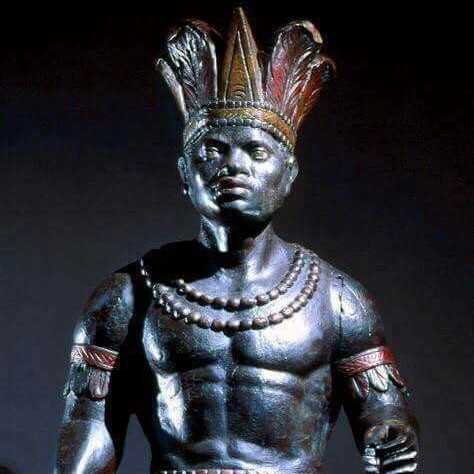
Centuries later, West African kingdoms extended this legacy into the Atlantic. Chroniclers recorded how Mansa Abubakari II of Mali abdicated his throne around 1311 to lead hundreds of ships westward into the ocean — a fleet launched not for war but for discovery. Oral histories and scattered evidence suggest African fleets reached far into the Atlantic, if not the Americas themselves.
The Moors and the Birth of Navigation
For nearly 800 years (711–1492), the Moors — Muslim powers that included countless Black Africans from North and West Africa — ruled much of Spain and Portugal. They transformed Iberia into a center of learning, leaving behind:
-
Mathematics and astronomy that advanced navigation,
-
Shipbuilding innovations like the lateen sail,
-
Tools like the astrolabe and advanced maps that guided ships across oceans.
When Europeans launched the so-called Age of Discovery, they sailed on the foundation of Egyptian science, West African ambition, and Moorish engineering.
Black Navigators Before Columbus Was Famous
History books often put Columbus on a pedestal, but the truth is he wasn’t sailing alone. Black navigators and explorers were at the heart of those voyages:
-
Pedro Alonso Niño (“El Negro”): A celebrated African-descended navigator who guided Atlantic crossings and later commanded his own expedition to South America.
-
Juan Garrido: A free African who joined Cortés in Mexico and became the first to plant wheat in the Americas.
-
Estebanico (Estevanico de Dorantes): A Moroccan Berber who explored the American Southwest as a guide, scout, and interpreter.
-
Sebastián Toral: A free African who fought in the Spanish conquest of the Yucatán.
These were not background figures. They were navigators, explorers, and founders.
The Beginning of Whitewashing
In 1492, the same year Columbus sailed west, Spain expelled the Moors from Granada. From that moment, a project of whitening Iberian identity began. African roots were erased. Black navigators were minimized. European monarchs recast themselves as the sole “discoverers” of the New World.
This was the start of the whitewashing of Black history in the Americas: exporting a story where Europeans were heroes and Africans were slaves.
Black Seminoles and the Second Seminole War
The erasure didn’t stop with the “Age of Discovery.” It continued as Black people fought for freedom on American soil.
In the Second Seminole War (1835–1842), hundreds of Black people — many formerly enslaved, called Black Seminoles — fought side by side with the Seminole Nation in Florida.
They battled the U.S. Army, which called the war the “costliest Indian war” in American history. Unlike most wars against Native nations, this one ended not in surrender, but in a truce.
A key figure was Chief John Horse (Juan Caballo), a Black Seminole leader who guided his people through war and migration. After the war, John Horse led his followers — Seminole soldiers and their Black families — first to Oklahoma, then into Texas, and ultimately across the border into Mexico, where slavery was illegal. There, they established free settlements and continued to resist re-enslavement.
Their story shows that Black people weren’t just victims of history — they were freedom fighters who forced the U.S. military to the table.
Black Presence at the White House
Recognition at the White House lagged far behind.
-
1802 – Thomas Jefferson invited Absalom Jones, a free Black minister from Philadelphia, in recognition of his leadership during the yellow fever epidemic. The first documented social invitation for Black people.
-
1862 – Abraham Lincoln invited Frederick Douglass and other Black leaders to the White House to discuss emancipation and the role of Black men in the Union Army — the first time African Americans were consulted on national policy.
These were milestones, but they were built on centuries of Black contributions that went unacknowledged.
The Freedmen and Stolen Land
After the Civil War, the 1866 treaties required the Cherokee, Chickasaw, Choctaw, Creek, and Seminole Nations to free enslaved Africans and grant them full tribal citizenship. These Black citizens became known as the Freedmen.
But by the late 1800s, the U.S. government imposed the Dawes Act (1887) and Dawes Rolls (1898–1914) to break up tribal land:
-
Citizens were divided into “By Blood,” “Freedmen,” or “Intermarried Whites.”
-
Black-Indigenous families were forced onto Freedmen Rolls, often stripped of Native identity even when they had Native parents or grandparents.
-
Land allotted to Freedmen was stolen, taxed, or bought up by speculators.
The result? Millions of acres lost. Communities divided. Black-Indigenous people “declassified” on paper and denied recognition.
The Long Arc of Recognition
From the Nile Valley to West Africa’s Atlantic fleets, from Moorish Spain to Columbus’s decks, from the Seminole truce to the Freedmen’s stolen land, and from Absalom Jones to Frederick Douglass to today’s Cherokee Freedmen court victories, the arc is clear:
We were here from the beginning.
We guided ships, fought wars, planted crops, built cities, and forced recognition.
We were acknowledged, erased, and then made to fight again and again for what was already ours.
Bottom line: Black history does not begin with chains. It begins with sovereignty, science, navigation, resistance, land, and identity. From Egypt to the Moors, from the Seminoles to the Freedmen, the story is one long fight against erasure — and a reclamation of the truth that Black people have always been central to the making of America.