



From Baltimore’s recreation centers to more than 500 victories at St. Frances Academy, Coach William Wells used basketball to educate, protect and empower generations of young people.
(BALTIMORE – August 13, 2026) – There are coaches who win games. There are coaches who build programs. Then there are coaches who spend a lifetime building people.
Coach William Wells did all three.
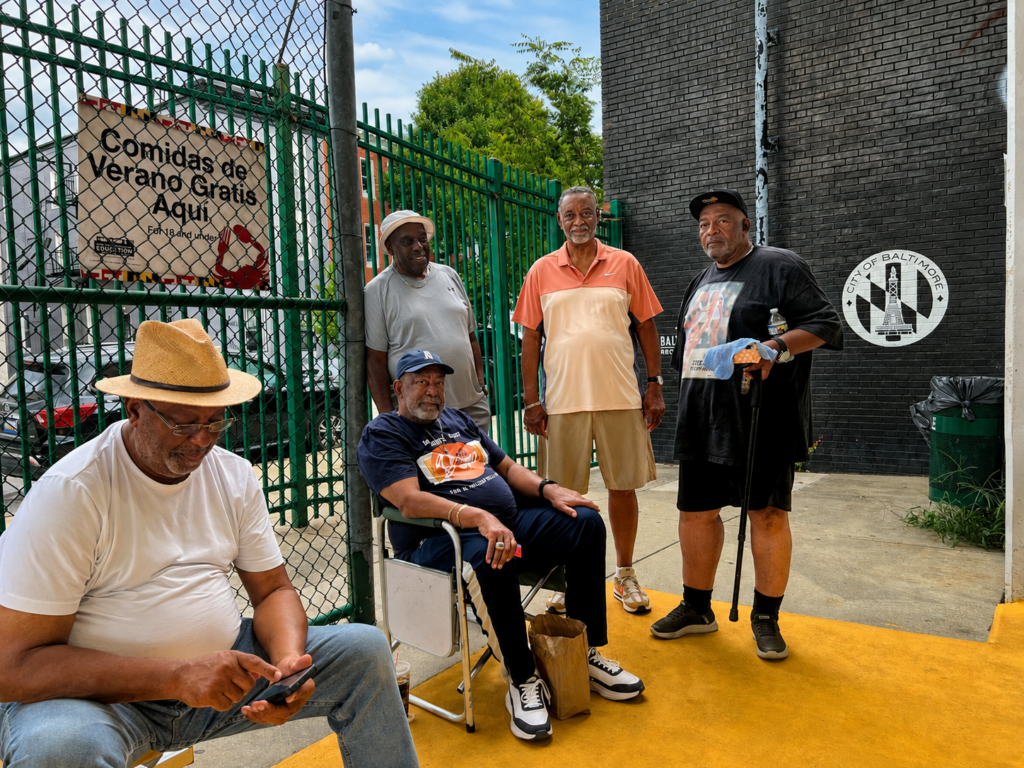
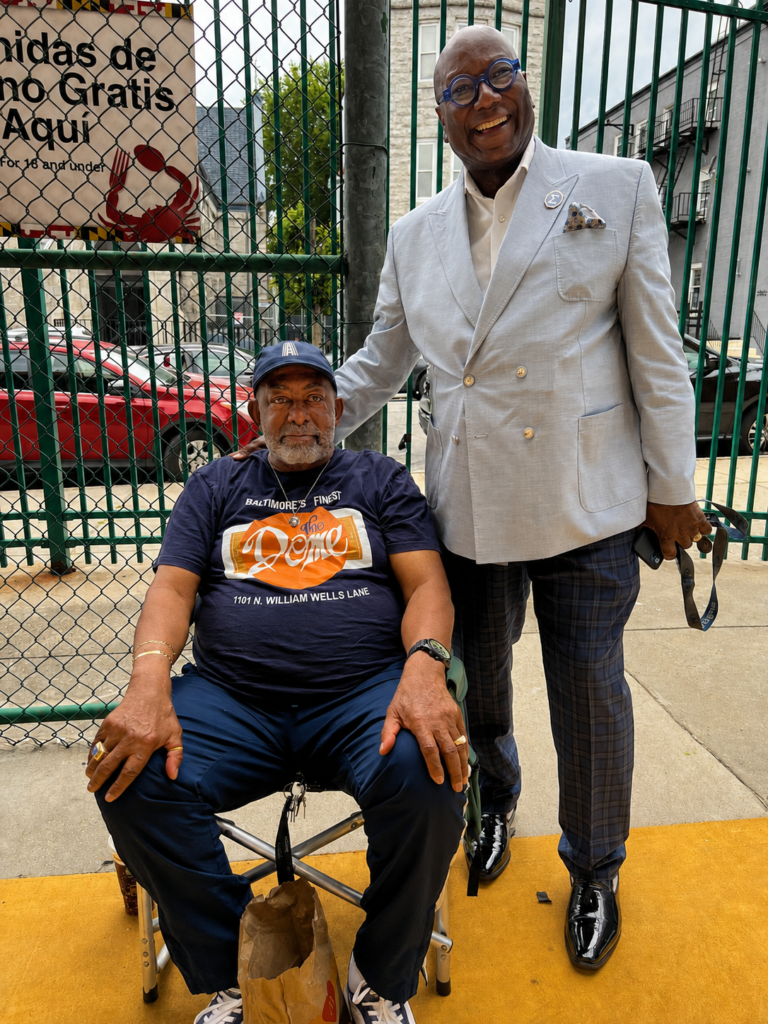
His name is inseparable from The Dome at Madison Square in historic East Baltimore, where generations of players came to compete, earn their reputations and learn lessons that extended far beyond basketball.
The outdoor court became one of Baltimore’s sacred basketball grounds. Carmelo Anthony, Sam Cassell, Muggsy Bogues, Reggie Lewis, Reggie Williams and countless other stars competed there. But before many of them became household names, there was Coach Wells—watching, teaching, protecting and opening doors.
In 2022, the iconic court was formally named in his honor.
That recognition was fitting, but no sign, plaque or championship trophy can fully measure what Wells gave Baltimore.
“I Just Did My Job”
Everybody seems to have a Coach Wells story.
Since I began sharing pieces of his story, people have called, written to me, and stopped me with memories I had never heard before.
“I bet he didn’t tell you this.”
“I bet he didn’t tell you that.”
They told me Wells had attended Dunbar. They told me he was an artist. They told me he had been an exceptional tennis player.
Coach Wells does not volunteer much of that information.
“I don’t talk about myself that much,” he told me. “I believe in the song, ‘May the Work I’ve Done Speak for Me.’”
That humility helps explain why he is so deeply loved. When I told him how Baltimore speaks about him, he answered plainly:
“I just did my job. I like to help kids.”
That may be how Coach Wells describes it, but Baltimore knows it was far more than a job.
It was a calling.
From East Towson to East Baltimore
Wells said he was originally from East Towson. His family later moved to the 3100 block of Brentwood Avenue and then, when he was about 14 or 15, to 27th Street.
As a child, he was nicknamed “Pickles.”
His mother cut his hair extremely close, and Wells remembers having an unusually shaped head. He joked that growing a little hair—and eventually some “bushes”—was one of the best things that ever happened to him.
As he grew older, people increasingly stopped calling him Pickles.
They began calling him Coach Wells.
The name represented what he had become to Baltimore: coach, counselor, teacher, protector and father figure.
Basketball, however, was only one of his gifts.
The Tennis Player Baltimore Almost Never Knew
While living in Waverly, Wells became fascinated with tennis after watching a man walk with a racket and seeing players hit balls against a wall.
His family could not afford expensive equipment, so Wells saved enough money to buy a $3.99 tennis racket from Sunny’s Surplus.
He started by watching, imitating and teaching himself.
Basketball gave him the footwork, endurance and lateral movement needed for tennis. He only had to develop his serve, volley, ball placement and understanding of the court’s angles.
Wells soon discovered that talent alone would not guarantee acceptance.
He went to Druid Hill Park to play tennis wearing cut-off jeans and a T-shirt. In the 1960s, tennis was still treated as an exclusive sport, even within parts of Baltimore’s Black community. There were expectations concerning clothing, social circles, and who was considered worthy of being on the court.
Wells did not have the proper uniform.
He was not part of the clique.
But he could play.
One day, an experienced player needed someone to hit with him. After about 30 or 45 minutes, the man recognized Wells’s ability and offered some advice.
“Come out here with some gym shorts and the right T-shirt,” he told him. “I’m going to help you.”
That encouragement gave Wells confidence. He knew he might not have been part of the established tennis circuit, but he could hold his own.
Later, a white college player saw Wells hitting and asked him to play. Impressed by his game, the young man began picking Wells up so the two could travel around and find competition.
One day, they went to Johns Hopkins University. While they were hitting and waiting for a court, campus police approached them.
“Jimmy can stay, but he has to go,” Wells recalled the officer saying.
The officer was talking about him.
Wells left and walked home.
“I said, ‘I’m going to let tennis go,’” he recalled.
Racism had once again told a talented Black youngster that he did not belong.
During his senior year at Dunbar, a tennis instructor told Wells that although he was good at tennis, he was even better at basketball.
Wells eventually concentrated on basketball, but he never completely abandoned tennis. During his early college years, he taught the sport at a YMCA camp.
That opportunity introduced him to mentors who would help shape the rest of his life.
The Men Who Stepped In
Coach Wells never knew his biological father.
“My mother would never tell me who he was,” he said.
For years, the unanswered question remained with him. His wife eventually reminded him that he had lived a good life, made the right decisions, and could not allow the past to define him.
Wells believes perhaps 10 men stepped into his life at critical moments and helped keep him on the right path.
One encounter remains unforgettable.
As a young man, Wells was known as a talented basketball player. He traveled around Baltimore with some of the city’s better players and could hold his own wherever they went.
One Friday night, he followed some friends into a poolroom. Wells was not a poolroom hustler. He was simply hanging out with the boys.
A neighborhood drug dealer walked into the room, saw Wells, and immediately confronted him.
“What are you doing here?”
Wells answered that he was with his friends.
“I’m going to tell you right now: Get your ass out of here,” the man told him. “If I ever see you here again, I’m going to kick your ass and drag you to your mother.”
Wells never returned.
The man may not have had an official title, but in that moment, he acted as a guardian. He recognized that Wells had a future and refused to watch him throw it away.
Another mentor was Mr. Morrison, whom Wells met through the YMCA camp where he taught tennis.
Wells had carried shame about coming from what he considered a broken home. Mr. Morrison helped him understand that his beginnings did not have to determine his ending.
“He told me what I needed to do,” Wells recalled. “He said, ‘Stay on the narrow path. It’s going to be a rough road, but stay on it.’”
Wells tried to live by that rule.
Judge Robert M. Bell, a proud Dunbar alumnus, long before becoming Maryland’s first Black chief judge, also played a role in Wells’s development.
Bell encouraged him to join the Hi-Y Club at the Druid Hill YMCA.
Wells initially resisted. He was busy playing basketball and tennis and considered himself something of a hotshot.
Bell kept encouraging him.
“Look, man, you meet people,” Bell told him. “And when you meet people, they open doors.”
That is exactly what happened.
Baltimore’s Recreation-Center University
Before there were travel teams commanding thousands of dollars, private trainers charging hourly rates, and national recruiting services evaluating elementary school children, Baltimore had recreation centers.
Those centers formed an interconnected development system across the city.
Madison Square was part of it, but so were Cloverdale, Easterwood, Bentalou, John Eager Howard, Lillian Jones, C.C. Jackson, Robert C. Marshall and Crispus Attucks.
There were other neighborhood gyms, playgrounds and recreation programs throughout Baltimore. Each center had its own identity, mentors, coaches, rivalries and homegrown talent.
Children could walk into a recreation center, encounter a caring adult and discover a new direction for their lives.
The centers taught sports, but they also taught discipline, responsibility, teamwork and survival.
They were Baltimore’s neighborhood universities.
A child developed at one center and then traveled across town to compete against children from another. Coaches knew the families. Older players taught younger players. Adults watched from the sidelines and intervened when a child began moving in the wrong direction.
Cloverdale was a mecca. Easterwood developed generations of athletes and community leaders. Bentalou, John Eager Howard, Lillian Jones, C.C. Jackson, Robert Marshall and Crispus Attucks each contributed to a citywide culture that made Baltimore one of America’s richest basketball communities.
The game belonged to the neighborhoods.
And among the people who held that system together was William Wells.
The Road to Madison Square
Wells’s career in recreation began almost by accident.
He regularly went to a neighborhood school recreation center to shoot around and work on his game. One Friday night, while he was practicing, the center’s director and a supervisor sat in the office discussing the need for help.
The director pointed toward Wells.
“There’s a good guy right out there,” she said.
They called Wells into the office and asked whether he would consider working for the Bureau of Recreation and Parks.
The supervisor initially wanted to send him to Greenmount. Wells rejected the assignment. He had grown up around Greenmount and played basketball there, and he believed being assigned to the same environment would make it more difficult for him to establish himself as a leader.
Instead, he was sent to Recreation Center No. 85.
After about a year, Wells was placed in charge of another recreation program. He remained there for approximately six months.
Then, in 1969, he was assigned to Madison Square.
Wells replaced Charlie Moore, one of East Baltimore’s outstanding basketball players, who later coached at Lake Clifton. When Moore became a director and was transferred to another center, Wells was sent to Madison Square as the senior recreation leader.
“That’s how it all started,” Wells said.
What began as a job assignment became Baltimore basketball history.
The Dome Was Where Reputations Were Earned
The Dome was never simply an outdoor basketball court.
It was a proving ground.
Players came from East, West, North and South Baltimore to find out whether their games were real. You could dominate your neighborhood, your school or your recreation center, but The Dome presented a different test.
At The Dome, reputations were not given.
They were earned.
The court became the stage for some of the greatest recreational basketball ever played in Baltimore. Neighborhood stars, high school champions, college standouts and future professional players all came through Madison Square.
The spectators knew basketball. They knew who could play, who was afraid, who was selfish and who could deliver when a game was on the line.
Coach Wells stood at the center of that world.
He knew the players, the families and the neighborhoods. He understood that a recreation leader had to do more than roll out basketballs and unlock a gate. The leader had to organize, motivate, correct, console and create opportunities.
Wells coached in Baltimore’s organized recreational leagues, including the Baltimore Neighborhood Basketball League’s 13-and-under, 15-and-under and 18-and-under divisions.
He said he won championships in all three.
He also coached Baltimore teams in the United States Youth Games, where some of the city’s best 15-and-under players competed against teams from other cities and states.
Wells recalled winning three United States Youth Games championships—at the University of Massachusetts, Gallaudet University in Washington, D.C., and in Richmond, Virginia.
“One thing I’m most proud of is that every program I coached in, I won a championship,” Wells said.
Winning followed him everywhere.
But one painful loss nearly drove him away from recreation entirely.
“Basketball Is Not Everything”
Wells’s team had won a league championship and was advancing toward national competition. According to Wells, recreation officials instructed him to add players to the team before the next level.
Another coach, Mr. Howard, protested the eligibility of the additions.
Officials decided to allow Wells’s original team to keep the trophies it had already earned. However, Mr. Howard’s team—not Wells’s—was permitted to advance to the national tournament.
Wells was devastated.
He had won the league with his regular players. He believed he had followed the instructions given to him, only to have the opportunity taken away.
The decision left him so disillusioned that he considered quitting the Bureau of Recreation and Parks.
Then Mr. Lee stepped in.
“Boy, you can’t leave like that,” Lee told him.
Mr. Lee had watched Wells work with children for several years. He told Wells that he was excellent with young people and possessed something much more important than a single championship.
Wells was still hurt.
“Mr. Lee, I don’t think recreation is what I want,” he told him.
“Trust me,” Lee answered. “It’ll work out. Basketball is not everything. You are a good leader.”
That conversation helped Wells recognize something he could not yet see in himself.
His purpose was larger than coaching basketball.
Mr. Lee saw Wells’s gift for reaching children, earning their trust and helping them become more disciplined. He saw an adult capable of changing the direction of a young person’s life.
The championship had been taken away, but Wells’s calling remained.
He stayed.
Generations of Baltimore children benefited from that decision.
Building St. Frances Without a Gym
Wells’s work at Madison Square eventually opened another door.
A sister from St. Frances Academy approached him about using the Madison Square facility. That relationship led to Wells being hired by the historic Catholic school.
At the time, St. Frances did not have the basketball facilities or national reputation it has today. The Panthers had no home gym. Players sometimes walked approximately 20 minutes to practice at Madison Square and played home games at the University of Baltimore.
Wells initially guided St. Frances through Catholic Youth Organization and independent competition.
He recalled winning three CYO championships in the 16- and 18-year-old divisions.
In 1986, St. Frances entered the Baltimore Catholic League.
The established Catholic school programs did not expect the small East Baltimore school to become a powerhouse.
Wells’s first team had a losing record. The following season, however, his junior varsity team went undefeated.
School officials told him that he could no longer remain at the junior varsity level. He had to move up and compete against the league’s established varsity coaches and programs.
Some may have believed the move would expose him or push him out.
Instead, Wells adjusted.
His first varsity season was difficult, but he soon began winning. Once St. Frances broke through, Wells and his Panthers did not look back.
Over 28 seasons at St. Frances, Wells recorded more than 500 victories, captured six Baltimore Catholic League tournament championships and led the Panthers to four appearances in the prestigious Alhambra Catholic Invitational Tournament.
His teams won despite starting with fewer resources than many of their competitors. In time, St. Frances became one of Baltimore’s premier basketball programs.
When Wells retired in 2008, he turned the program over to one of his former players, Mark Karcher.
That transition was part of Wells’s philosophy: build the institution, prepare the next leader, and remain available without blocking the next generation.
Two Coaches, One Goal
Legendary Dunbar coach Bob Wade is like a father figure to me and several others to this day. His record as an educator, coach, mentor, and builder of young men speaks for itself. Coach Wade and Coach Wells both wanted Baltimore’s young people to succeed. They simply occupied different positions and had different responsibilities.
Coach Wade was doing his job. As Dunbar’s coach and athletic leader, he was responsible for building the strongest program possible. That meant attracting talented players, developing them and maintaining Dunbar’s tradition of excellence. No one can blame him for doing exactly what he was entrusted to do.
Coach Wells was looking at the same situation from the recreation-center level, where he worked with young players from different neighborhoods and helped families consider the opportunities available to each child.
Baltimore had an extraordinary amount of basketball talent. Dunbar could field a championship team, but only five players could start. A gifted young man might attend Dunbar and become the sixth man on a loaded roster. That same player might attend another school, receive more playing time and emerge as one of its stars.
Those were real decisions facing young athletes and their families.
This was not a question of one coach caring more than the other. It was not a battle between public and Catholic schools. It was not about who was right and who was wrong.
Neither man was wrong.
They were two committed coaches doing their jobs, viewing the same young talent from different positions and trying to help Baltimore’s children win.
“If a kid is going to play for you, then you have to make sure that kid goes to college and has an opportunity to be successful in life,” Wells said.
Coach Wade demonstrated that same commitment throughout his career. He developed nationally recognized teams while preparing young men for college, professional careers and productive lives beyond basketball.
The philosophical difference was not about whether the children deserved an opportunity. Both men believed they did. The question was simply where each young person could make the most of that opportunity.
At this juncture, I am the point guard. My responsibility is to handle this story carefully, see the entire floor and make the right pass.
Coach Wade built champions at Dunbar. Coach Wells built champions through Madison Square, St. Frances Academy and Baltimore’s recreation system. Their routes were not always identical, but their destination was the same: educated, disciplined and successful young people.
Both men wanted Baltimore’s children to win—on the court, in the classroom and in life.
Wells is especially critical of educated adults who return to struggling communities with an “I got mine” attitude.
“I’ve had people who were off and say, ‘I got mine,’” he said.
To Wells, what they were really saying was: I earned my degree; now you have to figure out how to earn yours.
“That’s like a put-down to me,” he said. “You should never say that to a poor kid because, from the beginning, they don’t think they can make it.”
A child cannot merely be told to succeed.
Someone must show that child how.
Someone has to demonstrate how to study, prepare for class, apply to school and make the sacrifices education requires.
Wells described the kind of determination some children must develop—even if it means washing the only suitable T-shirt they own at night, allowing it to dry and putting it back on for school the next morning.
Those practical lessons matter.
A speech about success is not enough. Children need adults willing to walk beside them and demonstrate the path.
Coach Wells did that.
Coaching the Whole Child
Basketball gave Wells a point of entry, but the game was never his final destination.
He used it to teach preparation, humility, discipline and responsibility. He pushed children to see themselves as students and future professionals, not simply athletes.
That philosophy can be summarized in one of his best-known lessons:
“Don’t let basketball use you. Use basketball.”
A ball could help a child travel, meet people, attend school and gain exposure to opportunities beyond the neighborhood. But the child had to understand that athletic ability would not last forever.
Education mattered.
Character mattered.
How a young person treated people mattered.
Coach Wells understood that poor children did not need pity. They needed instruction, structure and someone who believed they could meet a high standard.
He had come from the same streets. He understood broken homes, financial limitations and the temptation to accept whatever expectations society assigned to Black boys.
He also knew those circumstances did not have to determine their future.
Teaching Players to Protect Their Stories
Wells understood something else long before social media: controlling the story is a form of protection.
When reporters requested access to one of his players, Wells established a rule.
“You’re not going to talk to him unless you talk about us,” Wells said. “You have to talk about the whole team.”
He knew a reporter could isolate a young athlete, provoke an unguarded response and publish something that embarrassed the player or damaged the program.
Wells prepared his athletes for that possibility. He taught them how to speak, how to represent themselves and how to remember the people standing beside them.
He was teaching media literacy before most people had a name for it.
He did not merely coach young Black men to perform. He taught them to navigate institutions that were not always built to protect them.
When St. Frances entered the Baltimore Catholic League, Wells said the established powers never expected his program to flourish as it did.
“When they realized what they had on their hands, they put rocks in the road,” he said. “They made the road rough. But I learned how to go around it, go over it—whatever I had to do.”
He taught his players to do the same.
The Artist Behind the Coach
Basketball is only part of Wells’s creative life.
He began his college education at Baltimore Junior College. Art was another major part of his journey, and his talent attracted the attention of people who promised to help him continue his education.
He draws, paints, and has experimented with sculpture. His deepest artistic interests include landscaping and graphic design.
Ask him what kind of art he can create, and his answer is characteristically understated:
“Whatever you want me to do.”
He can draw people, but Wells does not brag about it. The next time we meet, he promised to show me some of his work.
He has also begun writing his life story by hand.
“I don’t mess with the computer,” he told me. “I do handwriting. I do it as I think.”
When he grows tired of his artwork, he writes. When he needs a break from writing, he returns to art.
He has already completed pages, although he has not yet reached the St. Frances portion of his story.
I told him we had probably recorded at least one or two chapters during our conversation.
The truth is that his life could fill an entire book.
Baltimore’s history cannot be properly documented without the people who built its neighborhood institutions.
The Dome did not become The Dome simply because someone poured concrete and installed basketball rims.
It became sacred because people like William Wells poured themselves into the children who gathered there.
Love Made Visible
Coach Wells and his wife had celebrated their 54th wedding anniversary the day before we spoke.
He asked her whether she had ever regretted marrying him.
“No,” she told him. “I saw the goodness in you all along. I saw it before you saw it.”
That sentence may explain his entire life.
Other people saw something in Wells before he could completely see it in himself. Men corrected him, challenged him, introduced him to new environments and opened doors.
Then he spent his adult life doing the same for thousands of others.
This man is the embodiment of love.
People debate Christianity, Islam, Judaism, Hinduism, Taoism and every other spiritual path. What I know is that love is expressed through loving actions—through caring, sharing, teaching and showing up.
People tend to talk about love.
Those who are truly about it are often too busy being about it to talk about it.
They save the talking for the talkers.
Doers do.
Mr. Wells is a doer.
His nationally recognized coaching record, championships and ability to overcome adversity deserve to be marveled at. But beyond the victories, consider how many generations he empowered.
Consider the children he redirected.
Consider the doors he opened, the scholarships he helped make possible and the young men he taught to believe in themselves.
Consider how many parents trusted him with their children.
Consider how many former players are now coming back to thank him.
Wells told me that one of the most gratifying parts of growing older is learning that he did not lose the majority of the young people he coached.
They return.
They call.
They say thank you.
“I just did my job,” he says.
Yes, Coach, but you did it with love.
And consider the way he speaks about his wife and their 54 years of marriage.
That is an even greater testament to one hell of a man.
The Grasshopper Still Has Much to Learn
I thought I knew a little something about Baltimore basketball.
I went to Dunbar. I graduated in 1983 with national champions. Coach Bob Wade is like a father to me. I watched some of the greatest talent this city has ever produced.
But the old grasshopper had much more to learn.
It was not enough to meet Dwayne “Kosher” Wood.
It was not enough to reconnect with my former schoolmate Keith Goodie beyond having watched him command a basketball court.
It was not enough to know Timmy Greene, Choo Smith or JoJo Parker without understanding the full depth of their journeys.
I met JoJo Parker and learned about a man who traveled the world playing basketball, encountering legends along the way. I already knew Choo Smith and had worked with him at several events, but I did not fully appreciate how vast Baltimore’s basketball story was.
I had heard bits and pieces about Marvin “The Human Eraser” Webster. I had gone to Baltimore Bullets games with my father at the Civic Center. But I did not understand the complete, interconnected history of Baltimore recreation, neighborhood basketball and the adults who protected its children.
I did not know enough about Cloverdale, Easterwood, Bentalou, John Eager Howard, Lillian Jones, C.C. Jackson, Robert Marshall, Crispus Attucks and the other recreation centers that nurtured Baltimore’s children.
I did not fully understand Dr. Warren Hayman’s place in that history.
I did not know enough about Coppin State Hall of Famer Winky Camphor.
I did not appreciate the championship history of former Baltimore Police Commissioner Leonard Hamm—a man who seems not to know what losing is.
Then, on top of all that richness, tradition and legacy, I met the originator of The Dome.
Coach William Wells’s story is all that—and a bag of chips.
I am humbled.
I am blown away.
I am still listening, still learning and recording as I go.
This is one heck of a journey.
Coach William Wells is a legend—not simply because he won, but because he loved.
And he turned that love into action, one child at a time.