


Two precedents. One choice for Maryland’s 41st District.
(BALTIMORE – June 7, 2026) – Area pastors delivered their final sermons before early voting begins this week. The last Khutbah was on Friday at Juma. The last D’var Torah was delivered yesterday at Shabbat. And now that we have given proper homage to God, let the voting begin.
But before we get to the ballots, let’s talk about precedent.
Because the 41st District has been here before.
Not in exactly the same way. History never repeats itself perfectly. But it often rhymes.
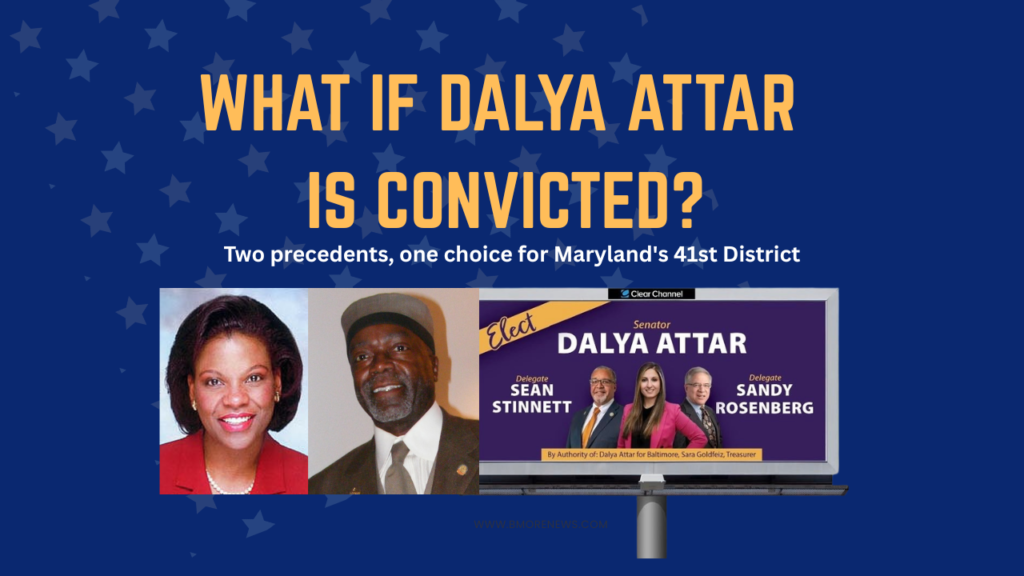
And the voters of the 41st District have before them two powerful precedents.
The first is a story of empowerment.
The second is a story of embarrassment.
In September 2002, a first-term State Delegate named Lisa Gladden challenged State Senator Barbara Hoffman, one of the most powerful legislators in Annapolis. Hoffman chaired the Senate Budget and Taxation Committee and was widely viewed as untouchable after being redistricted into the 41st District.
The voters of the 41st District disagreed.
Backed by African-American political leadership, including the legendary Delegate Howard “Pete” Rawlings, Gladden defeated Hoffman in the Democratic primary and captured the Senate seat. Because there was no Republican opposition, that primary victory effectively decided the election.
For many Black voters, it was a moment of pride. A majority-Black district asserted itself and chose its own future. It was a reminder that political power belongs to those who exercise it.
The second precedent is far less inspiring.
Former State Senator Nathaniel Oaks had every opportunity to build a lasting legacy. Instead, he became the subject of a federal corruption case, pleaded guilty, and left office in disgrace.
The district paid the price.
Representation became secondary to legal proceedings. Public trust suffered. A district with real needs found itself watching another political scandal unfold.
Those are the two precedents.
Lisa Gladden.
Nathaniel Oaks.
Empowerment and embarrassment.
Progress and scandal.
And now the voters of the 41st District face another consequential choice.
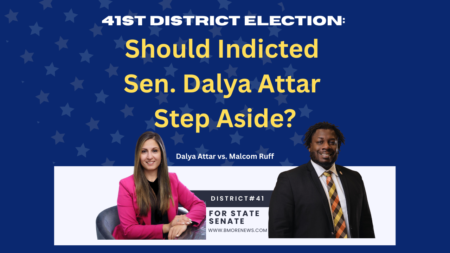
State Senator Dalya Attar is currently under federal indictment on multiple charges. An indictment is not a conviction, and every person accused of a crime is entitled to the presumption of innocence.
That principle matters.
But another principle matters too.
Voters have the right to consider whether a candidate facing serious federal charges should continue serving in public office.
That is not prejudice.
That is accountability.
What makes this situation unique is not simply the indictment itself.
It is the uncertainty that follows.
From the moment the indictment became public, an uncomfortable question began hanging over this race:
What if Dalya Attar is convicted?
Federal indictments are serious matters. They are not filed lightly.
And while the legal process must run its course, the political process does not stop.
The voters still have a decision to make.
What is striking is how little attention has been paid to what a conviction could actually mean for the district.
Under Maryland law, removal from office does not occur simply because someone is indicted. The legal process must run its course. Appeals may follow. Proceedings can take months or years.
In practical terms, if Attar wins the Democratic primary and is later convicted, the district could spend a significant period of time represented by a senator whose future remains uncertain.
That is not a political talking point.
It is a legitimate question.
I have been covering Baltimore politics since 1994.
Over the years, I have learned that public office is not simply about winning elections.
It is about stewardship.
It is about trust.
It is about understanding that your actions affect not only your own reputation but also the reputation of the people you represent.
Back in 1998, when I ran for State Central Committee in the 44th District, one of the best pieces of political advice I ever received was simple:
“Don’t touch the money.”
The lesson was larger than campaign finance.
It was about discipline.
Don’t do anything that jeopardizes the trust people have placed in you.
Don’t create distractions that become bigger than your mission.
Don’t forget that public office is a privilege, not an entitlement.
Those lessons remain true today.
Which brings us back to the question before the voters of the 41st District.
What if Dalya Attar is convicted?
If that happens, the consequences will not belong solely to Dalya Attar.
They will belong to the district.
The voters.
The neighborhoods.
The businesses.
The families.
The people who depend on effective representation in Annapolis.
The people of the 41st District cannot control what prosecutors do.
They cannot control what defense attorneys do.
They cannot control what judges do.
But they can control what they do.
That power belongs to them.
It always has.
In 2002, the voters of the 41st District charted their own course.
Today, they face another important decision.
History will not tell them what to do.
But history does remind them that this district has never lacked the power to decide its own future.
June 23 will have its say. Early voting starts Thursday. #vote
Doni Glover is the founder and publisher of BMORENews.com, now in its 24th year of covering Black Baltimore, and the founder of the Joe Manns Black Wall Street Awards, now in its 15th year. He is also the host of the Emmy-nominated Doni Glover podcast and The Doni Glover Show on WMAR-TV 2.