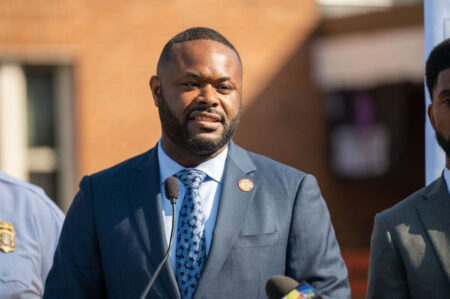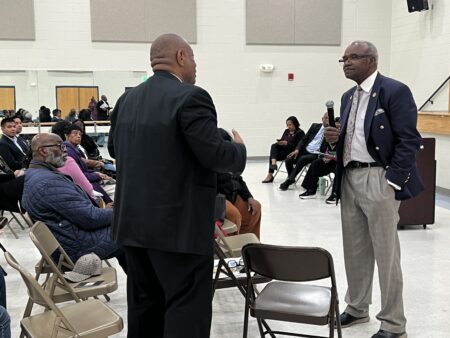
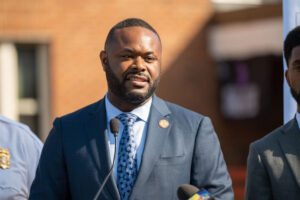


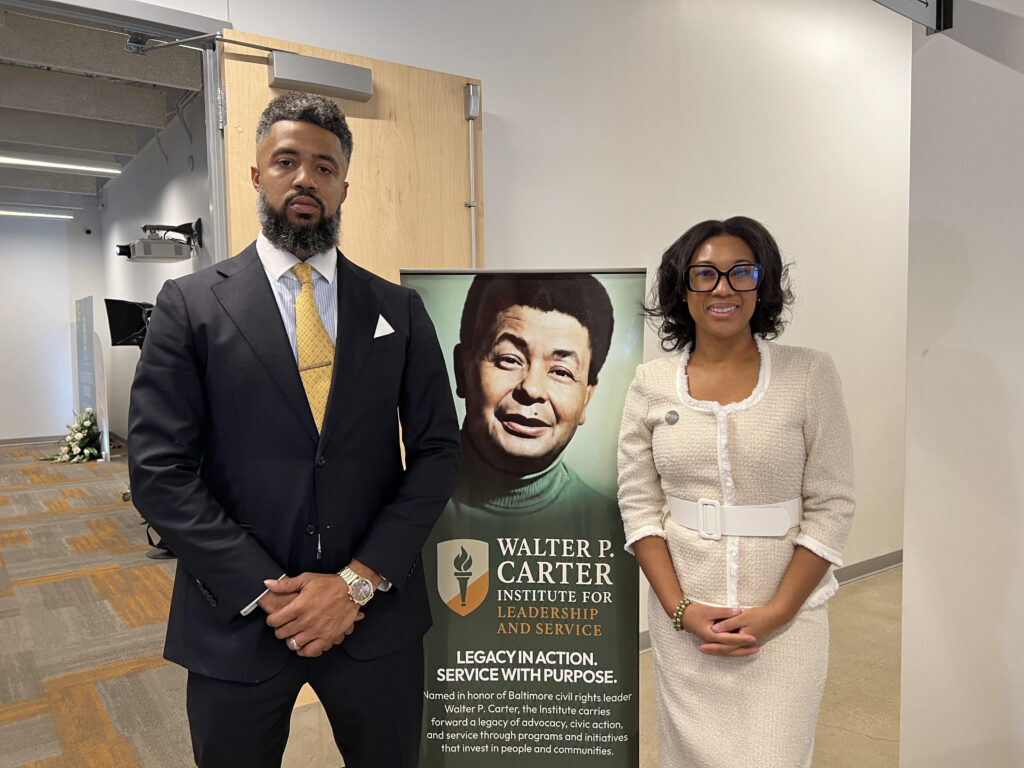
Montgomery County Executive-elect Will Jawando delivered the keynote as graduates presented five capstone proposals at Baltimore Unity Hall.
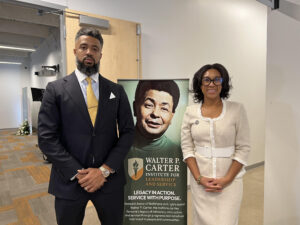
(BALTIMORE – November 23, 2026) — The Walter P. Carter Institute of Leadership & Service held the inaugural graduation of its Community Leadership Empowerment Program (CLEP) on Saturday, Nov. 21, at Baltimore Unity Hall. Members of the founding cohort presented their capstone proposals, and Montgomery County Executive-elect Will Jawando delivered the keynote.
Chezia Cager, the institute’s co-founder and director of strategy and operations, invited BMORENews to the ceremony. The graduation theme was “The Work Is the Legacy,” accompanied by three words: “Lead. Serve. Build.”
“Graduation gave our founding cohort the opportunity to put their ideas directly before public officials and potential partners. Their five capstone proposals connected community needs with research, policy, and practical plans for action. That’s the purpose of the Walter P. Carter Institute’s free Community Leadership Empowerment Program: investing in people and giving them access to the knowledge, relationships, and opportunities to move their communities forward.”
Former Maryland State Sen. Jill P. Carter founded the institute in honor of her father, Baltimore civil rights organizer Walter P. Carter. Former Baltimore City Councilman Kristerfer Burnett and Aaron Maybin co-founded CLEP.
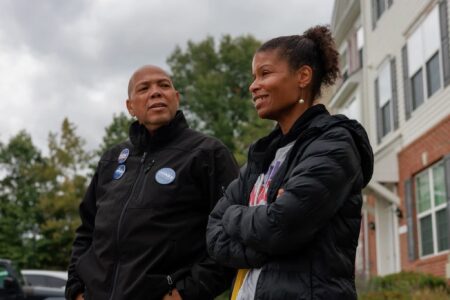
The founding cohort included Bolon Zahir Xi-Amaru, Khadija Ba, Delegate-elect Ryan Turner, Trenae’ L. Watson, Esq., and Anthony Weldon Jr.
The program recognized Fagan Harris, Tisha Edwards, Dr. Andre Bundley, the Rev. Dr. Alvin Hathaway, Dayvon Love, Matthew Bradford, Breanna Ross, and Alexis Taylor as guest speakers and contributors. The Aaron Maybin Foundation was among the sponsors.
The organizer behind the name
Walter P. Carter (1923–1971) organized against segregation in housing and public accommodations. He chaired Baltimore’s chapter of the Congress of Racial Equality and served as Maryland coordinator for the 1963 March on Washington, helping mobilize people across the state to take part.
More than six decades after that march, the first graduates of the institute that bears Carter’s name took the floor at Baltimore Unity Hall to present their own work.