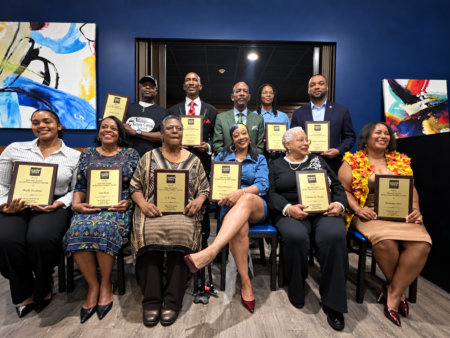



(BALTIMORE – December 3, 2022) – Be sure to RSVP to https://blackpressmatters.eventbrite.com/ for the BMORENews 20th Anniversary event, “Black Press Matters”, set for Saturday, December 10, 2022, from 3 to 5 pm at Nancy by SNAC located at 131 W. North Avenue in Baltimore.
The event will feature the Joe Manns Black Wall Street Awards and the “Dear Black Girl” art exhibit by local artist extraordinaire, Tamara Payne.
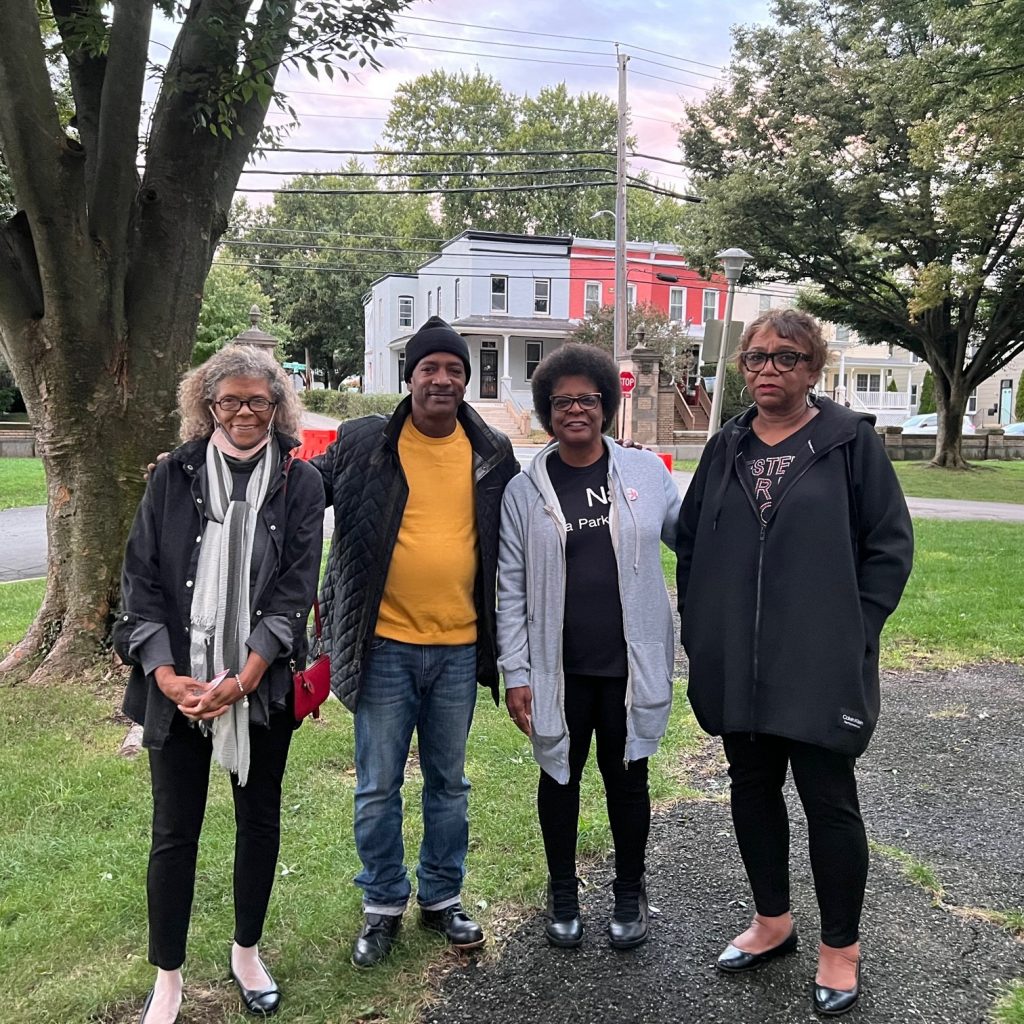
BMORENews.com is extremely pleased and grateful for the distinct opportunity to celebrate the most powerful women of the Hoes Heights Action Committee for successfully staving off efforts by neighboring Roland Park to eliminate their 100+ year access to Roland Avenue.
It is one of the ugliest incidents of apartheid in Baltimore ever. The wealthy people in Roland Park were acting like this is 1910 when Baltimore Mayor J. Barry Mahool, known as the father of segregation, attempted to enact an unconstitutionally inhumane and diabolically evil policy whereby Blacks could not move into white neighborhoods and whites couldn’t move where Blacks lived.
Sound sick? Sick, indeed! And this is 2022.
In any event, BMORENews is tickled brown to honor this cadre of fearlessly bold and beautiful women!
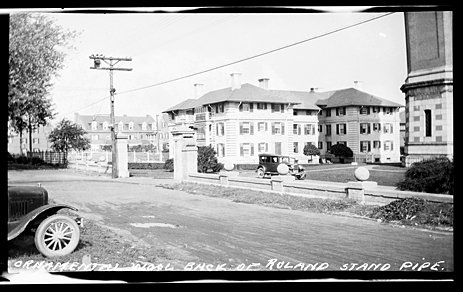
Waterworks Roland Park Ornamental Wall Behind Standpipe
Photographer unknown
Baltimore City Buildings Photograph Collection
Box 4
HISTORY OF HOES HEIGHTS
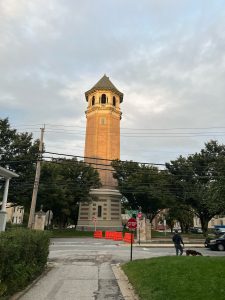
Ever wonder about Hoes Heights? The hidden and oft-overlooked north Baltimore neighborhood of Hoes Heights bears the name of Grandison Hoe, a freed slave in Antebellum Baltimore who once owned and operated a farm on the location. Nestled between its more renowned neighbors—Hampden to the south and Roland Park to the north—this neighborhood remained entirely African-American until the last few decades. Hoes Heights, bound by Cold Spring Lane to the north, 41st Street to the south, Falls Road to the west, and Evans Chapel Road to the east, became part of Baltimore City under the 1918 Annexation Act. It is an architecturally diverse community consisting of 19th-century stick-style houses, turn-of-the-century single-family homes, and brick rowhouses. Many are probably familiar with this neighborhood’s most prominent feature—the 148-foot tall water tower located on Roland Avenue near the intersection of University Parkway.