



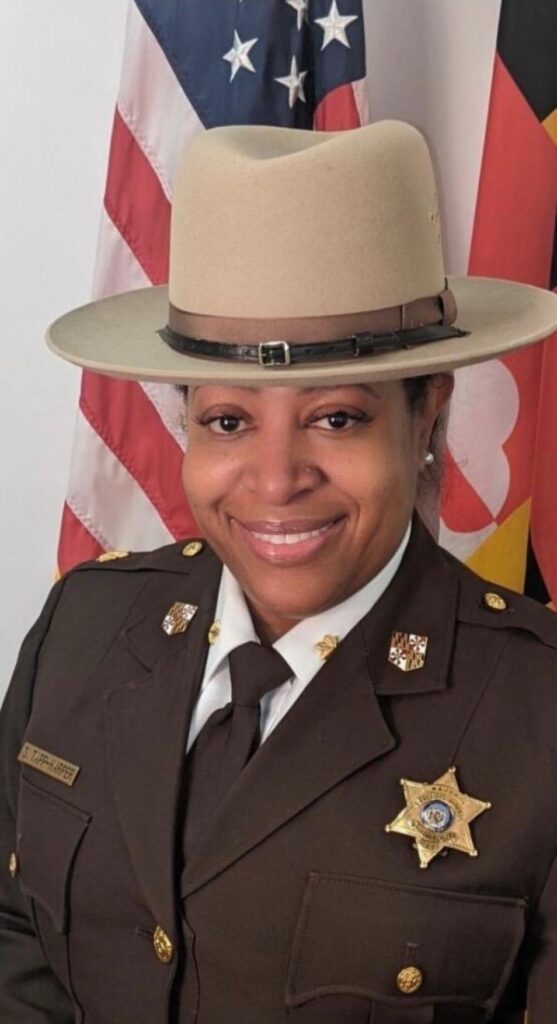
(BALTIMORE – June 3, 2026) – There are moments in politics when the most important question is not who is running. It is why.
Why would a career law enforcement professional spend decades serving the Baltimore City Sheriff’s Office, rise through the ranks, earn the respect of her peers, and position herself for continued leadership within the agency—only to turn around and challenge the sitting sheriff?
That question deserves an answer.
Sabrina Tapp-Harper is not a political tourist looking for a title. She is not an outsider parachuting in for a campaign season. She is a veteran insider who has seen the Sheriff’s Office from every angle—as a front-line deputy, supervisor, and in executive leadership.
Which is precisely why Baltimore should pay attention.
People leave organizations every day. People get passed over for promotions. People disagree with leadership. None of that, by itself, is unusual.
What is unusual is when the people closest to an institution begin to question the person at the top—and decide they can no longer support the direction of the office they helped build.
Recently, the deputies represented by FOP Lodge 22 took the extraordinary step of issuing a vote of no confidence in Sheriff Sam Cogen. Think about that for a moment. Not political opponents. Not campaign operatives. Not social media critics. The deputies. The men and women who report to work every day under the sheriff’s command.
These are the people who serve the warrants. The people who protect our courts. The people who knock on doors long after the cameras go home. They know better than anyone what is happening inside that office.
When employees publicly declare that they have lost confidence in their leader, it should cause every voter to stop and ask questions. What are they seeing? What are they experiencing? And why did they feel compelled to put their concerns on the record?
Those questions become even more urgent when placed alongside the controversies that have followed the current administration, including a multimillion-dollar payroll dispute that put deputies in the middle of a fight over who should pay for City Hall’s mistakes. Again, the point is not whether every critic is right or every decision was wrong. The point is that the very people closest to the work are raising red flags.
And that brings us back to Sabrina Tapp-Harper.
Perhaps the most important fact about her candidacy is not that she is running. It is that she decided she had to run.
When a longtime insider with deep roots in the Sheriff’s Office steps forward and says, in effect, “This is not the leadership Baltimore needs,” that is a message the city cannot afford to ignore.
For now, Baltimore voters should sit with one simple question:
If a veteran insider who spent her career helping to make the Sheriff’s Office work has concluded that change is necessary, what does she know that the rest of us need to understand?
In Part 2, we will examine the controversies, decisions, and leadership style surrounding the current administration—and why they may help explain Sabrina Tapp-Harper’s decision to challenge the man who now holds the office she once helped lead.