

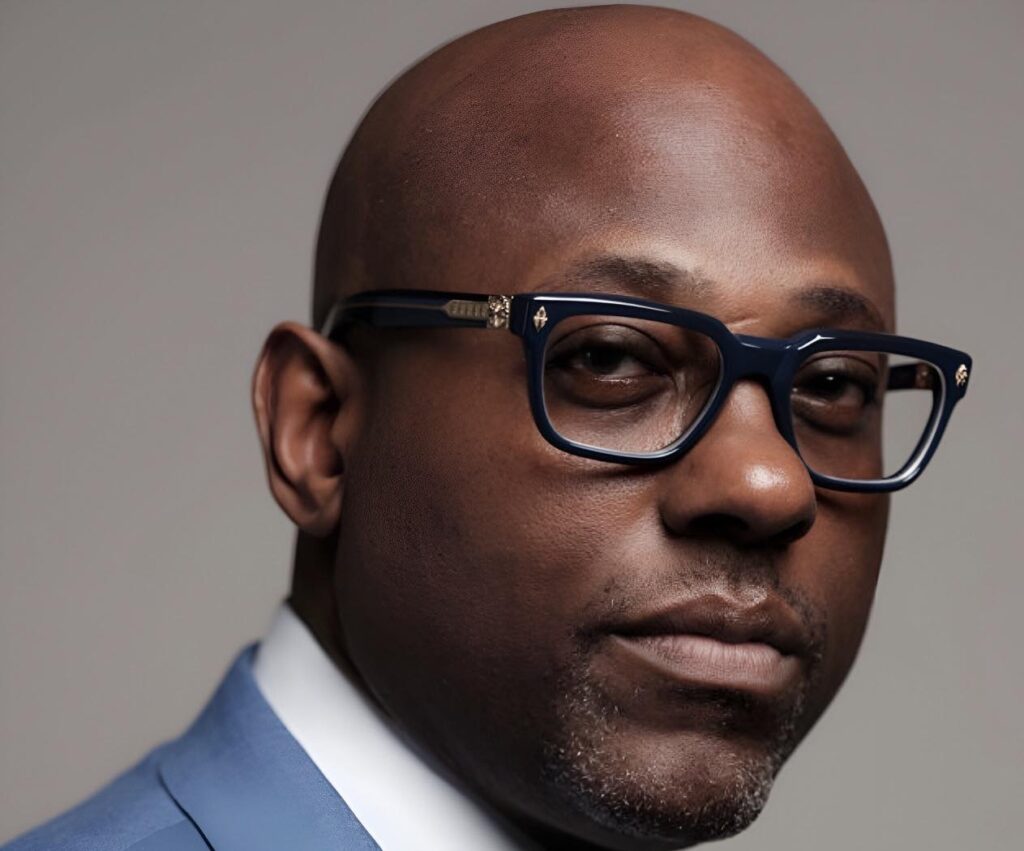
(BALTIMORE – May 19, 2026) – My take on the U.S. Supreme Court’s recent Voting Rights decision.
There is a dangerous illusion growing in American constitutional law that racial discrimination somehow disappears when it is relabeled as politics. It does not.
When electoral maps are deliberately designed to weaken the political power of communities that are overwhelmingly Black and overwhelmingly aligned politically, the constitutional injury does not become less real simply because the mechanism used is partisan gerrymandering instead of otherwise open racial exclusion. Our Constitution was designed to protect its citizens, not semantics or “old shell game” tactics.
For decades, the Voting Rights Act recognized an undeniable truth rooted in American history: discrimination evolves. It changes language while preserving the effect. Poll taxes became literacy tests. Literacy tests became “neutral” barriers. Today, racial political subordination and anti-blackness increasingly hide behind a thin veil of language suggesting partisan advantage.
However, when Black voters overwhelmingly belong to one political coalition, and district lines are intentionally drawn to neutralize that coalition’s ability to meaningfully influence governance, courts should not ignore reality simply because lawmakers claim they targeted “Democrats” rather than Black citizens.
At some point, constitutional honesty must matter so that judicial integrity remains part of the decision-making process.
This essay is not arguing for quotas or guaranteed election outcomes. It is arguing against the deliberate political muting of Black voices.
There is a constitutional difference between ordinary political competition and the intentional construction of electoral systems designed to render certain communities persistently powerless, regardless of turnout, participation, or civic engagement.
That distinction matters because democracy requires more than the mechanical ability to cast a ballot. The right to vote is not merely the right to place paper into a box or press “ENTER” on a touchscreen after making a few selections. It is the right to meaningfully participate in self-government.
The First Amendment protects political association. The Fourteenth Amendment protects equal citizenship. The Fifteenth Amendment prohibits racial discrimination in voting. Yet courts increasingly avoid confronting extreme partisan entrenchment used as a subterfuge for racially based exclusion by claiming there are no “judicially manageable standards.”
But courts manage difficult constitutional standards every day. They have no problem applying judicially manageable standards to reasonable suspicion, deliberate indifference, materiality, undue burden, and objective reasonableness, to name a few; so the unmanageable standards argument really falls flat.
The judiciary has never avoided constitutional responsibility simply because drawing lines is difficult.
The real danger is that the court’s suggested concern of judicial overreach is giving way to the erosion of American democracy.
A one-party political system, whether Republican or Democrat, is dangerous to any constitutional republic because concentrated power naturally resists accountability, results in the party’s leader becoming king, and ultimately corrupts.
Democracy functions best when citizens genuinely believe they can influence outcomes through participation, organization, and coalition-building.
When political systems are engineered to create durable unresponsiveness, public trust collapses. Cynicism replaces participation. Alienation replaces civic faith.
And history teaches us something else: people who believe their voices no longer matter eventually stop believing in institutions themselves. Instead, they take matters into their own hands. When this occurs, the results are not always positive.
It is axiomatic that the Constitution does not promise that every group will win elections. However, at a minimum, it prevents systems intentionally designed to ensure that certain communities can never meaningfully compete.
The Constitution also prevents the government from intentionally building systems designed to make our community’s votes not matter, not technically, not structurally, nor through maps drawn in back rooms. If the intent was to suppress, if the design was to mute, if the result is that your people can participate but never prevail, then the system is broken, and the Constitution demands that it be fixed.
The call to action is for constitutional courage and democratic reform.
America must recommit itself to the principle that voters should choose their representatives and not the other way around. Courts must also stop pretending that race and politics exist in separate universes where statistical reality plainly demonstrates otherwise. When partisan structures predictably and systematically mute identifiable racial communities, constitutional scrutiny should not end simply because discrimination has learned how to speak the language of politics instead of race.
But the ultimate solution cannot come from courts alone. It must come from citizens, too.
I believe democracy is strongest when every citizen, regardless of race or political affiliation, possesses a meaningful opportunity to participate, organize, compete, and be heard. In other words, everyone should get a fair chance.
Once a nation begins engineering political systems where certain communities are permitted to vote but never truly permitted to have any influence or are muted altogether, our democracy is doomed to fail. At the end of the day, the only thing that has ever preserved democracy in America is its citizens’ willingness to fight for it. —The Warrior Lawyer ! #thewarriorlawyer #GetGordononthephone
! #thewarriorlawyer #GetGordononthephone