

(BALTIMORE — August 22, 2026) – Before basketball became a business, it was a bond.
It was the sound of a ball bouncing against concrete.
At Cloverdale, that sound rises from a thin sliver of land along the edge of Druid Hill Park, directly across Druid Park Drive from one of Baltimore’s greatest treasures.
Cloverdale sits in a complicated little pocket of West Baltimore, where McCulloh Street and Druid Park Drive meet a steady stream of traffic moving south, east and west. Cars are always passing. The city is always moving.
Yet basketball players have always known exactly how to find it.
They know how to reach that little island—an island featuring a basketball oasis.
That is Cloverdale. The one and only.
During its greatest years, the playground became an outdoor arena. Cars lined the surrounding streets. Spectators filled every available space around the court. Baltimore’s best basketball players came to compete, and people from across the city came to watch.
It was where older players taught younger players how to compete, how to carry themselves and how to become men.
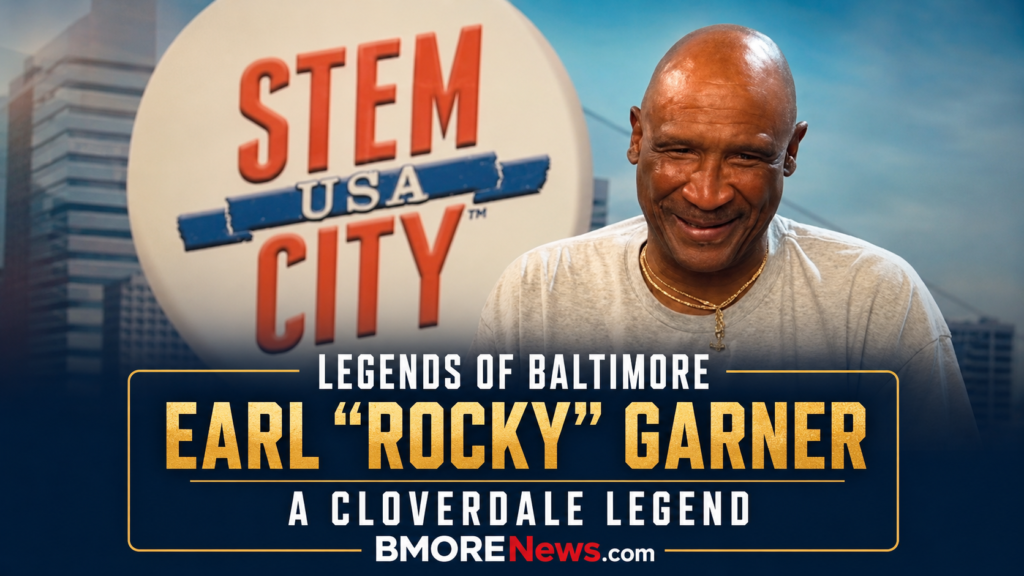
And few people embody that Cloverdale tradition more than Earl “Rocky” Garner.
To me, he is Mister Rocky.
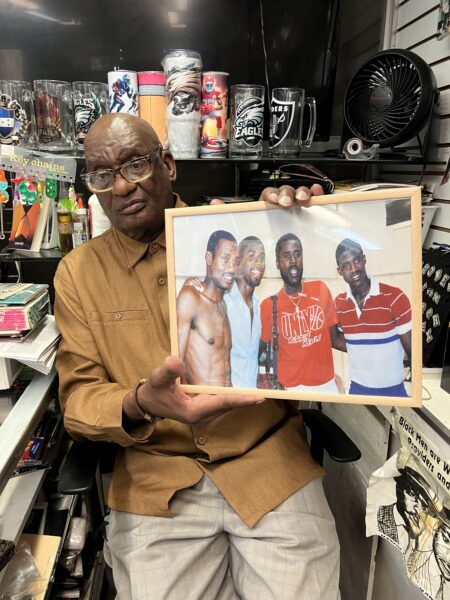
At 72, Garner is the director of the Cloverdale Recreation Center, but his connection to Baltimore basketball reaches far beyond any job title. He is a former Division I player, a witness to a golden era of playground basketball and a mentor whose influence has lasted for generations.
Garner played college basketball at East Carolina University, competing at the highest level. Looking back, however, he admits that he sometimes wonders what his journey might have been like at a historically Black university.
“If I could do it over again, I would have gone to Howard University,” he said.
That reflection emerged during our discussion of the CIAA and the extraordinary role historically Black colleges played in developing Black basketball talent.
Garner remembers when it was not called “HBCU sports.” It was simply Black college basketball—and it produced some of the greatest players ever to touch a basketball.
Among them was Baltimore’s own Earl “The Pearl” Monroe.
“Earl Monroe, my namesake, was probably the greatest performer in CIAA history,” Garner said. “His name still looms every time they have a tournament.”
Monroe starred at Winston-Salem State University before becoming an NBA legend and Hall of Famer. To Garner, however, Monroe’s greatness cannot be fully explained by statistics, championships or accolades.
He was something different.
“They called him Black Jesus,” Garner said. “That’s all I can tell you. That was a fitting title. He was magical with it.”
From East Carolina to Rucker Park
Garner’s own basketball journey eventually took him to one of the most famous playgrounds in the world: Rucker Park in Harlem.
He does not exaggerate his role there. Garner said he was used as a fill-in player when a team needed somebody. Sometimes scheduled players did not appear, and another baller was called to step onto the court.
“I just wanted to see the place,” he said.
But he did more than see it. He played there, witnessed professional players competing before playground crowds and encountered basketball royalty, including Julius “Dr. J” Erving.
Rucker Park holds an almost sacred place in basketball history. Yet when Garner compares it with Cloverdale during its prime, he does not hesitate.
Cloverdale could hold its own.
In some respects, he said, Cloverdale was an even greater attraction because of the enormous crowds that gathered around the West Baltimore courts.
“People were double-parked from basically Fulton Avenue all the way down White Lock Street, sometimes heading toward North Avenue,” Garner recalled. “On McCulloh Street, you had the same thing coming up the other way.”
He remembers looking across the playground and seeing a sea of people surrounding the court.
“I guarantee there were more people at some of those Cloverdale games than at that one Rucker game I attended,” he said.
That statement carries weight because Garner experienced both places.
Rucker Park may have had the international reputation, but Baltimore had its own basketball cathedral. On the right summer night, Cloverdale was packed wall to wall with people who came to witness the city’s best talent.
It was more than a game. It was theater. It was community. It was West Baltimore announcing that its players belonged in any basketball conversation in America.
When Baltimore Basketball Had a National Name
Garner remembers when Baltimore players were respected well beyond the city limits.
The reputations of players such as Gus Johnson and Earl Monroe traveled wherever professional basketball players gathered. When players changed teams or talked about what they did during the summer, stories about Baltimore basketball traveled with them.
Garner believes Baltimore’s national playground reputation reached its height from the late 1980s through the 1990s.
During that period, the city had no shortage of talent. What many players lacked were clear pathways to college and professional basketball.
“The gateway wasn’t as open,” Garner said. “There were a whole lot of guys from my area who should have played professional basketball.”
Talent was present in abundance. Opportunity was not.
That is part of why preserving this history matters. Many great Baltimore players were never properly documented. They did not have social media highlights, recruiting websites or personal videographers following their every move. Their greatness lives primarily in the memories of the people who stood along those crowded courts and watched them play.
If those witnesses do not tell the stories, much of the history disappears with them.
More Than a Basketball Player
Rodell Bailey grew up in West Baltimore and became a youth coach and mentor. Although he did not play in a Cloverdale league, he watched Garner play and came to view him as one of the older basketball figures worth following.
“I watched him growing up playing basketball, and he always gave me great advice on the court,” Bailey said.
Bailey was about 5 feet 11 inches tall, but he said he played with the heart of someone 6-foot-8. Garner encouraged him to use that heart—to stop hesitating, attack the basket and play hard.
“Go up in that middle,” Garner would tell him. “Get to that bucket.”
It was the kind of direct instruction younger players received from respected older men. They were not formal seminars or scheduled mentoring sessions. The lessons came during games, on sidelines and in conversations around the neighborhood.
“They were like your big brothers,” Bailey said. “They would call you to the side and say, ‘Stop playing with your man. Take him to the basket.’ It was encouragement on a bigger level.”
Garner continued playing well beyond the age when most men hang up their sneakers. Bailey remembers him remaining active into his late 50s and possibly his 60s.
But the lesson Bailey remembers most vividly had nothing to do with basketball.
When Bailey got married, Garner gave him a simple piece of advice:
“No name-calling.”
Twenty-four years later, whenever the two men see one another, Garner still reminds him.
“No name-calling.”
Bailey first admired Garner as a basketball player. Over time, he came to admire him as a husband and as a man.
“He went from being a person I admired in basketball to a man I admired as a husband,” Bailey said. “He’s a great man.”
That is the difference between being remembered as a player and being respected as a legend.
The Cloverdale Handshake
Garner’s influence can be seen in something as simple as a handshake.
Whenever he enters Cloverdale, he makes it a point to approach people, including young people he may not personally know, and shake their hands.
He learned that from the older men who came before him.
“I don’t have to know you,” Garner said. “I walk up and shake your hand.”
That small gesture communicates something many young people desperately need: I see you. You matter. You belong here.
It is called respect.
But when I look at what happens at Cloverdale, I see something even greater.
I see love.
Garner agreed.
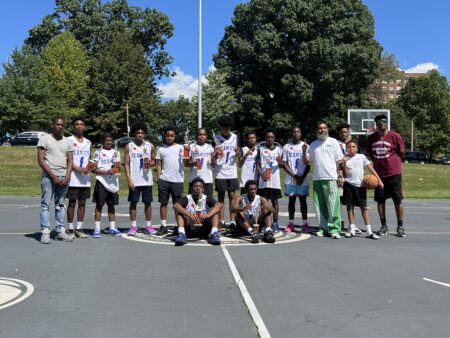
The camaraderie seen at Cloverdale did not begin yesterday. It was born when neighborhood recreation centers and playgrounds gave children constructive places to gather. Young people had basketball at night. They had coaches. They had older men and women who knew their names, corrected them and encouraged them.
Garner was given that opportunity as a child. His work at Cloverdale helps extend it to another generation.
“At least the kids have an opportunity to form some kind of camaraderie,” he said.
That camaraderie can save lives.
Many of us know what recreation centers meant to Baltimore children. Miss Eola May Williams and Ralph Durant gave my generation that kind of unconditional love at Easterwood Recreation Center. Adults created places where we could play, compete, learn and grow.
We did not always recognize it then, but they were helping to keep us alive.
Cloverdale has served that same purpose for generations of West Baltimore children.
Preserving the Legacy
Baltimore’s playground legends did not always receive trophies, news coverage or scholarships. Some never had their performances recorded. Some had professional-level talent but never encountered a professional opportunity.
Yet their impact survives in the people they taught.
Earl “Rocky” Garner is part of that unrecorded—and now finally being recorded—history.
He played Division I basketball. He stepped onto the court at Rucker Park. He witnessed the greatness of Earl Monroe’s era. He saw Cloverdale attract crowds that rivaled those at the most famous playground in America.
But his greatest contribution may be what he did after the cheering stopped.
He stayed.
He kept showing up at Cloverdale. He kept encouraging younger players. He kept shaking hands. He kept teaching respect. He kept reminding a younger man that what happens inside a marriage matters more than anything that happens on a basketball court.
“No name-calling.”
Basketball introduced Earl “Rocky” Garner to generations of West Baltimore players.
Love, leadership and consistency made him a legend.
That is the Cloverdale way.
And that is why we must tell his story.