


(BALTIMORE – August 26, 2026) – The national media sees a bidding war. Politicians see another program to announce. Government agencies see a property transferred out of inventory.
But the person living next door sees something entirely different: a vacant house that is still vacant.
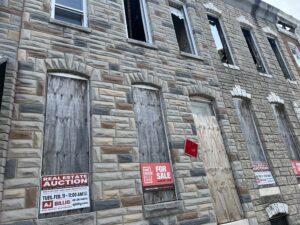
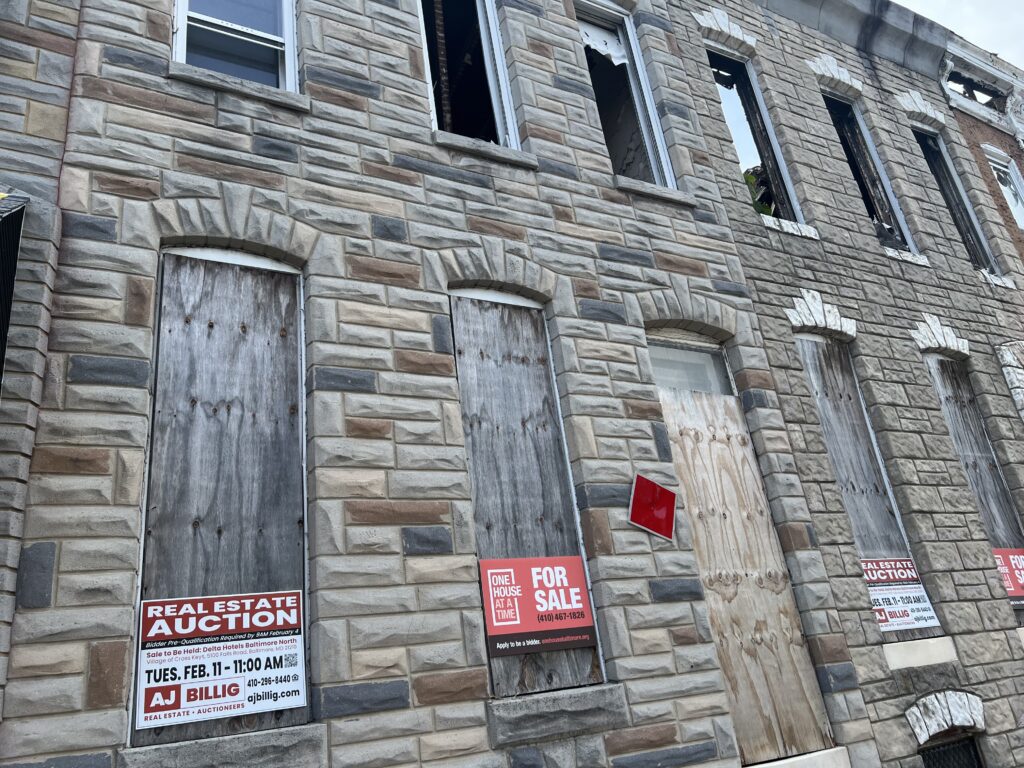
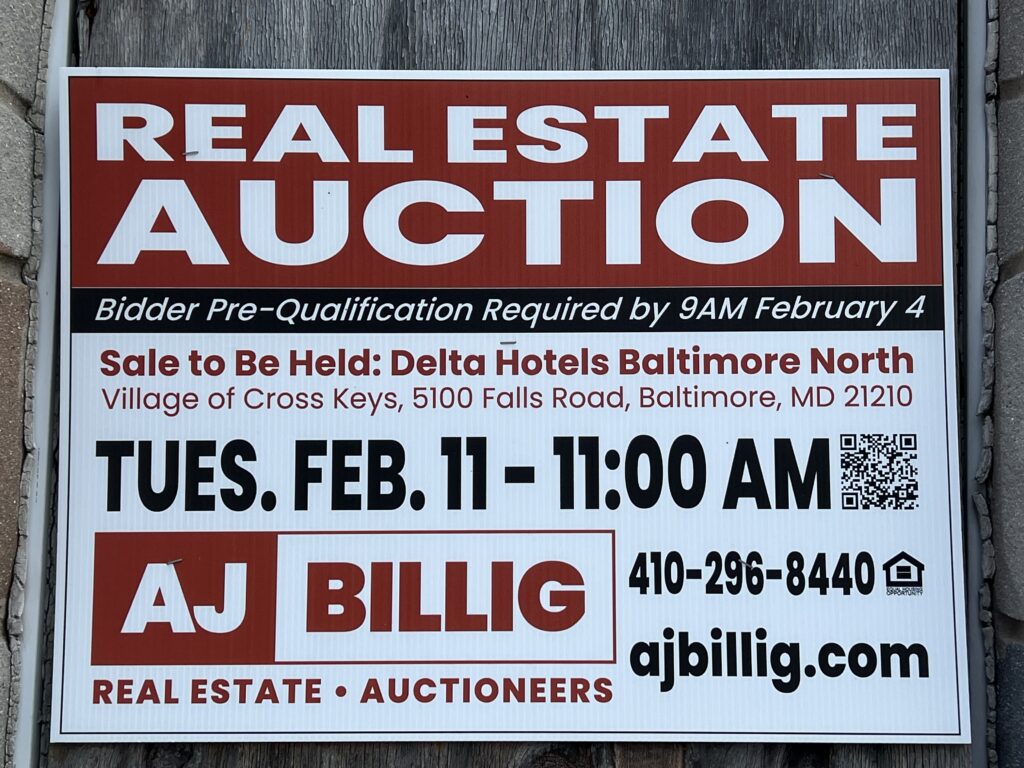
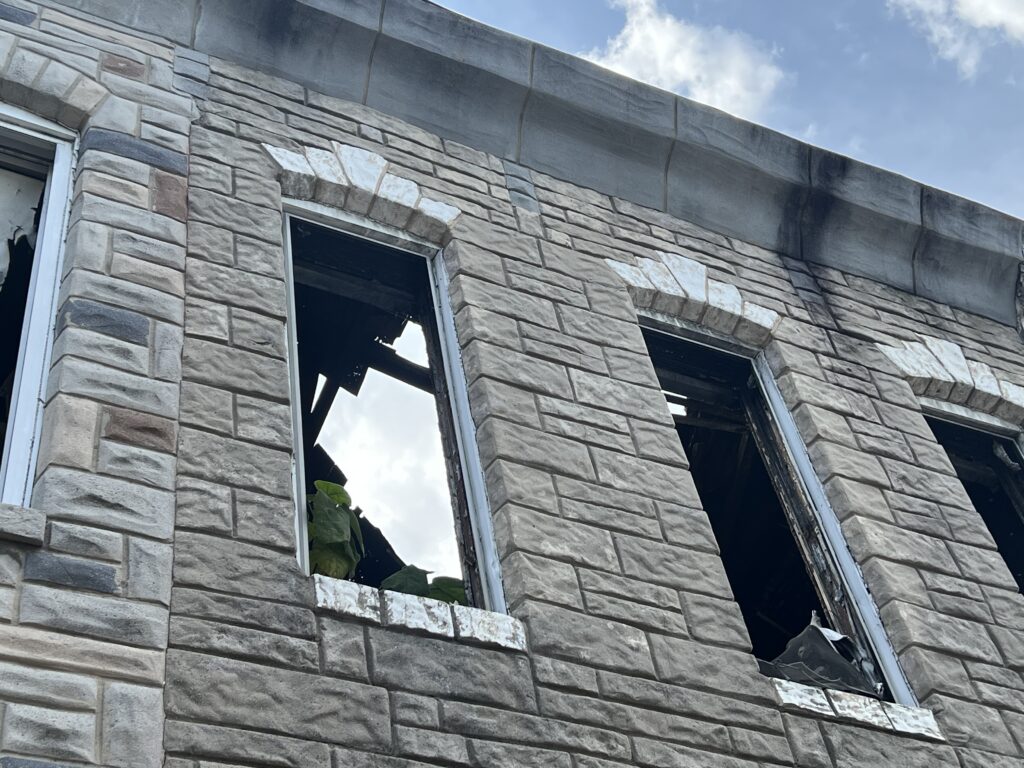
Three houses next to my West Baltimore home have been vacant since approximately 2002 or 2003—the same period when BMORENews.com was founded. In April 2017, the properties caught fire. The City of Baltimore auctioned them in front of the houses roughly six months ago, and they were purchased.
Since then, two of the backyards have been cleared. Beyond that, I have seen no visible rehabilitation.
That does not necessarily mean the purchasers have failed. It means the public rarely understands what must happen between buying a vacant house and placing a family inside it.
That is the story Baltimore needs to tell.
The Wall Street Journal recently reported that abandoned Baltimore houses are now being “fought over in bidding wars.” Its leading example involved a plumber and part-time investor who paid $45,000 at auction for a vacant house. He planned to invest approximately $130,000, rehabilitate the property within five months and sell it for more than $300,000.
That is a compelling real-estate story. It is also an incomplete Baltimore story.
A successful bid does not repair a roof. An auction does not clear a title. A property transfer does not secure financing, obtain a permit, connect electricity, or place a family in a home.
A sale is not a save.
The real cost of rebuilding one house
I recently spoke with a Baltimore developer who has rehabilitated properties for more than 20 years. At his request, BMORENews.com is withholding his name.
He explained that the ability to complete a project begins with financing and clear title. With a capable title company, routine title work can sometimes be completed within seven to 14 days. Buying a property from the city, however, can become a much longer and more complicated undertaking.
According to this developer, acquiring a city-controlled property can take six months to a year.
Entrepreneurs do not operate on government time. While an application moves from desk to desk, the developer may be paying a lender, insurance premiums, taxes, utilities, security costs and contractors.
A substantial rowhouse rehabilitation can easily cost between $150,000 and $160,000 today—and that is on a tight budget, he said.
Consider the arithmetic.
A developer purchases a vacant property for $40,000 or $50,000. Rehabilitation costs another $150,000 or more. Add closing expenses and other costs, and the project may already have $210,000 to $215,000 invested.
That still does not include the full cost of holding the property.
The developer estimated that financing approximately $150,000 to $160,000 could produce monthly loan payments of roughly $1,700 to $1,800. Holding that loan for a year could cost another $20,400 to $21,600 before taxes, insurance, utilities, cleanup, and unforeseen construction problems are factored in.
Then the completed house must appraise and sell for enough to justify the risk.
The numbers might work in a neighborhood where renovated houses sell for $300,000. They may not work where comparable homes sell for $180,000 or $190,000.
This is why talk about Baltimore’s “cheap houses” can be misleading. The shell may be inexpensive. Rebuilding it is not.
Announcing a program is not executing a program
Baltimore has attracted unprecedented commitments from the city, the state, and philanthropies to address vacant housing. Mayor Brandon Scott’s administration has advanced a 15-year, $3 billion strategy designed to confront vacancy at scale. The state has also committed substantial resources through Reinvest Baltimore and related initiatives.
The money matters. The ambition matters.
Execution matters more.
The developer I interviewed believes parts of the city’s system are improving. He said permit turnaround and inspections appear to be getting faster. He also credited the current administration with developing better ways to receive feedback, investigate problems and make corrections.
“They’re not there yet,” he said, “but they’re working toward the right direction.”
That distinction is important. Constructive criticism does not require us to deny progress.
But we cannot confuse launching a program with delivering its results. We cannot count an application as an award, an award as a closing, a closing as the start of construction, or the start of construction as an occupied home.
Each stage matters, but none should be presented as the final victory.
Permitting is improving
Baltimore introduced its Accela E-Permits platform in February 2025. The transition was followed by technical problems, backlogs, and complaints from developers.
The city subsequently introduced an automated feature called Auto-Issue for certain uncomplicated permits. Baltimore Housing projected that, once fully implemented, approximately 20% of housing-related permit applications could be issued immediately without individual technical review. Baltimore City announced Auto-Issue in October 2025.
The developer informally referred to this automation as the “robo system.” His point was practical: routine electrical, HVAC, and similar permits should not sit on someone’s desk when a properly designed computer system can verify that the required information and licensed professional are attached.
Complicated building permits should receive human review. Routine applications should move.
That appears to be happening more quickly, according to the developer.
But a faster permit cannot solve a fragmented development system by itself.
The developer becomes the coordinator
The developer described one project in which he needed BGE to restore electrical service. Vegetation had grown around the utility pole.
BGE could not remove it. The developer could not remove it. The city had to handle it.
BGE placed the job on hold while waiting for the city. The developer then had to make repeated calls while the application—and the entire project—sat still.
Every day of delay cost him money.
This is the kind of mundane problem that rarely appears in a press conference, glossy report, or national newspaper story. Yet it can determine whether a project succeeds.
The developer becomes the person forced to coordinate Housing, permitting, inspections, BGE, city Forestry, title professionals, lenders and contractors—even though he has no authority over any of them.
He becomes a human ping-pong ball, bounced between agencies and departments while paying interest on the project.
When everybody has a hand in the process, nobody owns the outcome.
A one-stop shop with real authority
Baltimore needs genuine central coordination for vacant-house redevelopment.
The city appointed Deputy Mayor Justin Williams as its first permit czar in August 2025, giving him responsibility for coordinating development-related approvals. That was an important acknowledgment that Baltimore’s development process needed clearer leadership. Baltimore City’s permit-czar announcement.
But vacant housing requires coordination beyond permits.
Baltimore needs a vacant-housing czar—or a dedicated vacant-property delivery unit—with the authority to move projects across the entire system.
Each property should have one accountable coordinator responsible for tracking:
- Acquisition and disposition.
- Title clearance.
- Financing and incentives.
- Permits and inspections.
- BGE and utility coordination.
- Construction deadlines.
- Adjacent city-owned properties.
- Completion, sale and occupancy.
Developers should be able to see where a project is stalled, why it is stalled, who is responsible for the next action, and when that action is due.
A one-stop shop cannot merely be another telephone number that directs people back to the same disconnected departments. It must have the authority to solve problems across those departments.
One renovated house cannot defeat five vacants
A developer can beautifully rehabilitate one house and still lose.
If the completed property sits beside five abandoned buildings, buyers may not want it. Tenants may not want it. The appraisal may not support the developer’s investment.
The money becomes trapped in the finished house, preventing the developer from moving on to the next project.
Vacancy reproduces vacancy.
The experienced developer pointed to a city-owned shell near one of his completed houses. According to him, the city was asking approximately $40,000 for a severely distressed property in a neighborhood where a fully rehabilitated house might sell for only $180,000 or $190,000.
The numbers did not work.
His suggestion was not to give city property to anybody who asks. It was to offer deeply distressed houses at realistic prices to qualified developers with proven track records, adequate financing and enforceable completion deadlines.
If a developer fails to perform without legitimate cause, the city should reclaim the property and place it with someone prepared to finish.
That is not a giveaway. It is performance-based development.
Listen to the people who do the work
Too many systems are redesigned by executives, consultants and newly appointed officials who may understand policy but have never personally rehabilitated a Baltimore rowhouse.
They bring bright ideas but not always practical experience.
Meanwhile, the people pulling permits, clearing titles, paying lenders, coordinating trades, and waiting for utility connections are rarely invited to help design the system that governs their work.
That must change.
Baltimore should establish a standing advisory council composed primarily of active small- and mid-sized developers, contractors, title professionals, and others directly involved in rehabilitating vacant properties.
Not a ceremonial committee. Not another group assembled for a press release.
Its members should review disposition policies, property pricing, permitting workflows, incentive programs and interagency delays. Their recommendations—and the city’s responses—should be made public.
Executives come and go. Administrations change. The operating system must remain functional regardless of who occupies the corner office.
Celebrate Baltimore’s development all-stars
We should also begin to identify and celebrate the people who make successful rehabilitation possible.
A developer does not rebuild a vacant house alone.
Someone identifies and acquires the property. Someone clears the title. Someone finances the work. Someone prepares the plans, approves the permits, connects the utilities, manages the construction, and conducts the inspections.
It takes developers, lenders, title professionals, architects, city employees, BGE representatives, inspectors, general contractors, electricians, plumbers, HVAC specialists, roofers, carpenters, real estate professionals, and neighborhood residents.
Who are the all-stars in that process?
Who is the city employee who returns calls and moves a stalled file? Who is the BGE representative who understands development timelines? Who is the lender willing to finance a difficult project? Who is the inspector who protects public safety while helping responsible contractors understand what must be corrected? Who is the developer who has quietly restored houses for 20 years without recognition?
Baltimore should know their names.
Recognition is not empty ceremony. It helps us identify where the system works, who makes it work, and which practices should be replicated.
Fixing the plane while it is in the air
Baltimore cannot stop all vacant-house activity while it designs the perfect system.
The properties are deteriorating now. Developers are borrowing money now. Residents are living beside dangerous buildings now. City and state investments are already moving through programs that still have operational problems.
We must fix the plane while it is in the air.
That requires honesty. Baltimore must tell its progress story, but it must tell that story correctly. We should celebrate declining vacancy, improving permitting and completed blocks. We must also report the delays, failed handoffs, unrealistic pricing and carrying costs that can prevent a purchased house from ever becoming an occupied home.
All the pieces must work together.
Acquiring a property means little if the title is in question. A permit means little if utilities cannot be connected. A beautifully rehabilitated house may still fail if it is surrounded by abandoned properties.
The auction is not the victory. The announcement is not the victory. Even the permit is not the victory.
The victory is a safe, completed, and occupied home—and a stronger block surrounding it.