


(RICHMOND – February 14, 2026) – My entire life centers around Black media. So when I learn that two giants in our industry are closing their doors—at least in their current form—it hits me hard. It is a blow to the spirit. But it is also a reminder: in today’s media economy, survival requires constant reinvention.
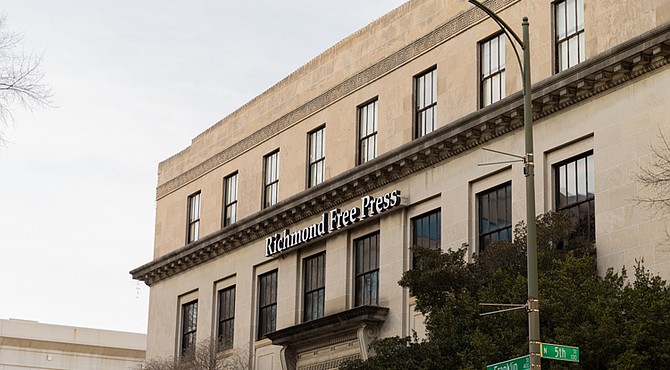
In February 2026, the Richmond Free Press, a pillar of Black journalism in Virginia for more than three decades, published its final edition. Publisher Jean P. Boone, widow of founder Raymond H. Boone, wrote words that every Black publisher in America understands: “We no longer have the advertising support to continue.”
Raymond Boone left a secure career as a journalism professor in 1992 to launch the Free Press. He and Jean stepped out on faith, built something durable, and sustained it for more than 30 years. That kind of sacrifice — leaving security to serve your community — is foundational to the Black Press tradition.
Just days earlier, on January 30, The Skanner, one of Oregon’s only Black-owned publications, ended operations

after 50 years. Bernie and Bobbie Dore Foster launched the paper in Portland in 1975. They published in print for nearly five decades before transitioning to digital-only in 2023. Now, even that chapter has closed.
Bernie Foster told Oregon Public Broadcasting that the shutdown was “due to rapid changes in technology.” That phrase carries weight. It reflects the broader restructuring of the advertising and distribution systems that once sustained community newspapers.
Local Black newspapers historically relied on community advertising, public notices, subscriptions, and relationships built over generations. Over the past decade, however, advertising dollars have steadily migrated to digital platforms that offer lower costs and hyper-targeted reach. Small community outlets — without venture capital backing or corporate reserves — have been left exposed in a rapidly shifting media landscape.
This is not a Baltimore problem. It is not a Richmond problem. It is not a Portland problem. It is a structural shift affecting community journalism nationwide.
Many Black publications survived segregation, Jim Crow, the civil rights era, and the transition from print to digital. What they are struggling to survive now is the platform economy.
Digital platforms function as today’s advertising marketplace and distribution infrastructure. They shape what content is seen, by whom, and how often. Major national outlets may experience declining organic reach — but they have the capital to purchase visibility. Smaller Black publishers often do not.
Meanwhile, the need for the Black Press has not diminished. More than 44 million Black Americans live in this country. Community newspapers have historically documented issues and stories that mainstream outlets have overlooked — from policing practices to housing discrimination to small-business advocacy. The Skanner, for example, challenged Portland police narratives around “gang-related” shootings — reporting that might otherwise have gone unquestioned.
When these institutions close, it is not just a business loss. It is an archival loss. A civic loss. A community memory at risk of disappearing.
And the loss is felt unevenly.
Younger readers may find alternatives online. But for older readers — many of whom built decades-long relationships with their local paper — there is no substitute. They lose a trusted voice, a weekly rhythm, a tangible connection to their community that no algorithm can replace. They are not scrolling social media. They are not on TikTok. When the paper stops coming, they go dark. And when readers go dark, communities go dark.
City council decisions go uncovered. Local business openings go unannounced. Obituaries go unwritten. The civic fabric that a community newspaper quietly holds together begins to fray — often before anyone realizes what has been lost.
At BMORENews.com, we have navigated this reality for 23 years. We have experienced sudden audience disruptions, unexplained declines in reach, and shifting platform policies that have dramatically affected visibility. These are not unique to us; they are common among independent publishers. The difference is that we have built multiple pathways to reach our audience — events, direct email, partnerships, and owned platforms — rather than relying on a single gatekeeper.
The larger question now is whether the digital platforms that function as modern public squares will be held accountable for how their systems affect community-serving publishers.
Congresswoman Summer Lee of Pennsylvania has introduced legislation, including the AI Civil Rights Act, to address algorithmic discrimination and increase oversight of automated decision systems. While federal policy is still evolving, the conversation is increasingly focused on how algorithmic systems influence economic and civic outcomes — including media visibility.
I am currently pursuing my doctorate at the University of Maryland’s Robert H. Smith School of Business, where my research examines what I call algorithmic precarity—the structural vulnerability faced by publishers who rely on opaque platform systems for distribution. The experiences of the Richmond Free Press and The Skanner reflect broader patterns that merit serious empirical attention.
To Jean Boone: thank you.
To Bernie and Bobbie Foster: thank you.
To every Black publisher who has poured their life into community journalism: your work matters.
The Black Press has reinvented itself before. It will again.
But survival will require diversifying revenue sources, adapting to technology, staying informed about policy, and investing in the community. It will require advertisers to remember who told their stories when no one else would. It will require readers to understand that independent media is not free — it is sustained by commitment.
As Jean Boone wrote, “Perhaps, dear reader, we will meet again.”
I believe we will.
But only if we refuse to let the next generation of Black voices be quietly engineered out of the digital public square.