


(COLLEGE PARK, MD – December 24, 2025) – Grades are in, and I aced all three classes. But for the grace of God and some serious determination. Saturday morning classes were the most challenging for me, especially hiking it all the way to College Park. And you want to be fresh for class. So, that means discipline must play a role on Friday nights. After all, this is a Doctor of Business Administration (DBA) program ranked among the best in the nation.
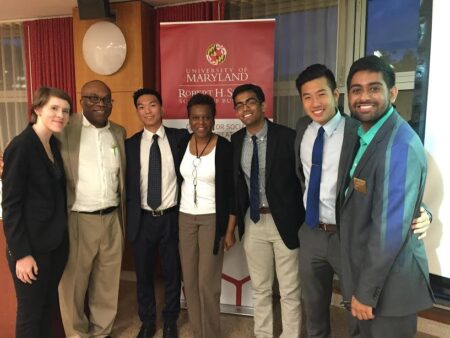
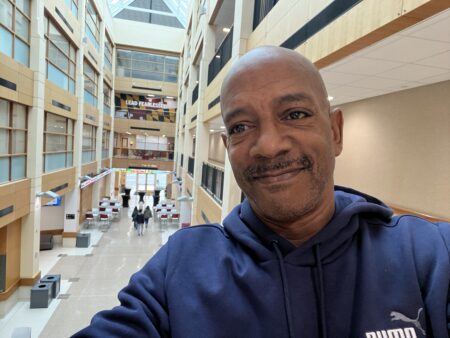
To say the least, it is a humbling experience to walk the halls of the Robert H. Smith School of Business at the University of Maryland, College Park. Exactly 75 years ago, people who looked like me could not attend as students.
I’ll never forget the first weekday there on campus to pick up my ID. It was a Monday. The building in which this service is provided is named after Clarence Mitchell, Jr. When it hit me, it was a full-circle moment. For more than 30 years, I’ve covered many stories. One recurring name in that lexicon is The Mitchells. Clarence Mitchell, Jr., sued the university and won. The Mitchell family has long been involved in Civil Rights in Baltimore. So, to come to this building – especially given my fondness for the late Clarence Mitchell, III (also known as “The Bear”) – it really served as a reminder that, given such an opportunity, I absolutely must rock every course thrown at me.
Frankly, I did not know what to expect. Granted, minus a couple of brief stints at Towson State and Georgia State when my mom was gravely ill, my collegiate experience was primarily on an HBCU campus. First, Morehouse. Then a bit of a tour that included Morgan and finally Coppin, and then back to Morgan for a Master’s.
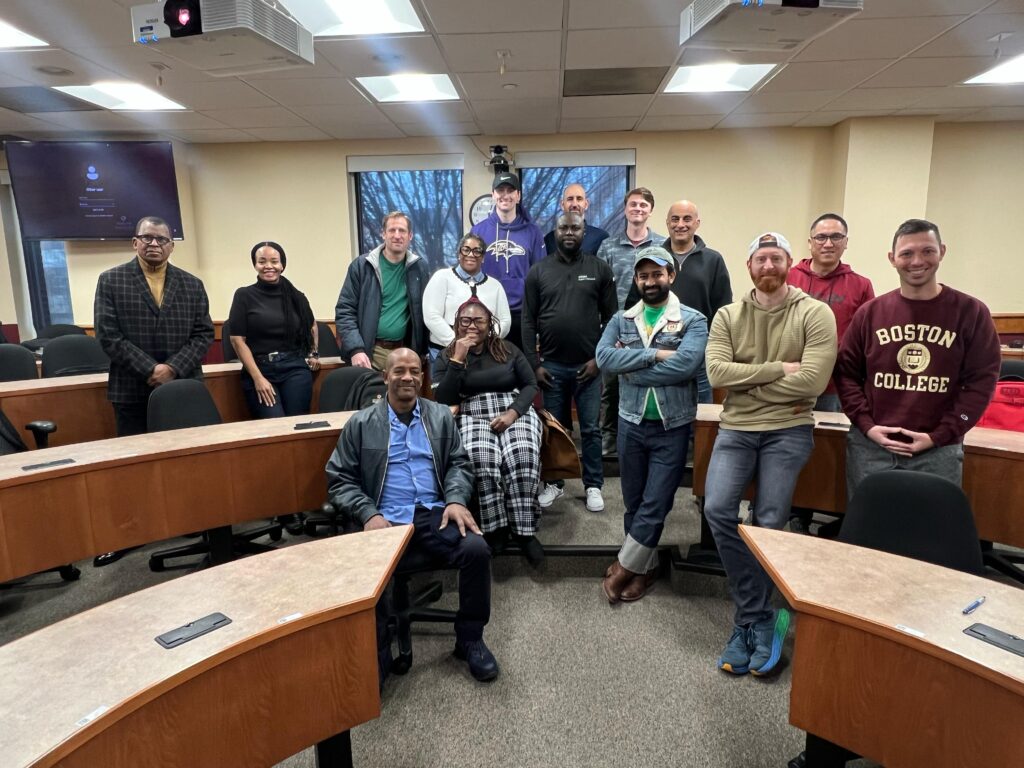
I can honestly say that my experience at College Park has been stellar. My cohort is filled with some of the brightest minds on the planet. The doctoral students’ varied areas of expertise formulate a well-balanced, world-class mix of skills, talents, and perspectives. For me, it is a new family where there is nothing but mutual respect. Learning from each other is a supplemental component worth mentioning. I think we all know that we learn from sharing and listening.
If I were asked what specifically about my HBCU foundation prepared me for this, I’d simply say “McNair.” Under then-Dean T.J. Bryan at then-Coppin State College, my fellow Ronald E. McNair Post-Baccalaureate Achievement Program scholars and I were exposed to rigorous academic coursework to prepare us for precisely this: a terminal degree. Dean Bryan exposed us to other universities in other states, including Pennsylvania and Kentucky. We did summer research projects. My mentor during my summer of study was Dr. Eugenia Collier. She molded my thinking beyond what’s in front of us. Dr. Collier showed me how to think for myself. I know that sounds corny, but it’s the truth. She taught me about history with a third eye, if you will. She opened up my thinking to better realize the possibilities. Regularly, we spent sessions with a range of research experts – PhDs who helped shape us into better researchers.
I can honestly say that McNair made me respect Coppin State. Coming from Morehouse and having grown up down the street from Coppin, I never imagined ever attending school there. Now, I couldn’t imagine not. In essence, both Coppin and Morgan, where I earned a Master’s in Journalism, along with my first three collegiate semesters at Morehouse, all formed the foundation I stand on today. Combine that with 31 years of journalism that has covered Jordan, Jamaica, Canada, Tanzania, Ethiopia, the United Nations, the White House, and, of course, my hometown, Baltimore, and what you have is the hungriest DBA student this side of the Mississippi.
Why Now?
The time is right, and so it must be done. But here’s what makes this moment even more urgent: Just as I’m finishing this triumphant first semester, Pittsburgh Congresswoman Summer Lee reintroduced the Artificial Intelligence Civil Rights Act—legislation that directly targets the algorithmic discrimination that is the focus of my doctoral research.
When Lee declared that “discrimination is illegal when it’s done by a person, and it should be just as illegal when it’s done by an algorithm,” I felt something I haven’t experienced in years of fighting platform suppression: hope backed by power.
This isn’t abstract academic research for me. I know this terrain intimately—not just as a researcher, but as a victim of it. In one stroke, Facebook disappeared a page I’d built to 211,000 followers. Gone. No warning adequate to the loss, no real recourse, no human being willing to explain why years of community-building vanished because an algorithm decided our content violated some opaque standard. TikTok followed with restrictions that choked our reach just as we were gaining traction with younger audiences.
Shadowbanning. Throttling. What platforms euphemistically call “content moderation” but what feels—and functions—remarkably like the discriminatory practices of America’s criminal justice system. The same communities overpoliced in our streets find themselves overpoliced online, our voices systematically suppressed by code that somehow learned society’s oldest biases.
This is what we call “algorithmic precarity”—the systematic ways social media platforms deploy carceral tactics against publishers serving Black communities. And it’s exactly what drove me from the newsroom to the doctoral program.
From Pain to Research to Policy
My dissertation focuses on platform precarity and algorithmic discrimination against media publishers serving underrepresented communities. The academic language makes it sound abstract, but the lived reality is concrete: reduced reach means reduced revenue. Suppressed content means suppressed community voice. Algorithmic bias doesn’t just limit what people see—it limits who gets to shape the narrative about their own communities.
The data supports what Black media operators have known intuitively. Senator Ed Markey, who will introduce Lee’s companion bill in the Senate, cited research showing mortgage algorithms were 80% more likely to reject Black applicants. Another study revealed AI missed liver disease in women twice as often as in men. If algorithms discriminate in lending and healthcare, why would anyone believe they treat media content neutrally?
They don’t. And now, finally, Congress might do something about it.
Lee’s AI Civil Rights Act tackles algorithmic discrimination head-on with three critical provisions. First, it bans decisions that unfairly impact people based on protected characteristics like race, gender, or disability. This means platforms couldn’t hide behind “the algorithm decided” when their systems systematically suppress Black voices. Second, it requires companies to conduct independent audits of their AI systems and take “reasonable measures” to prevent algorithmic harm. Third, and perhaps most importantly, it grants Americans the right to choose whether a human or an algorithm makes sensitive decisions affecting them.
The Federal Trade Commission would oversee enforcement, giving Lee’s bill real teeth. “We can’t allow companies to hide behind code when their products discriminate,” she said. “People deserve transparency, real oversight, and a human being who is beholden to civil rights law.”
The Full Circle Closes
So here I am, walking the halls that Clarence Mitchell, Jr. fought to integrate, acing classes in a program that prepares me to document and address the digital redlining of our time. Dr. Eugenia Collier taught me to see history with a third eye. Now I’m using that vision to connect the dots between the anecdotal experiences of individual publishers and the systemic nature of platform discrimination. Someone needs to translate lived experience into research that can inform policy.
Lee’s doing that work in Congress. I’m doing it in Baltimore and in academia.
For Black Baltimore, this matters beyond media. When platforms suppress independent Black news outlets, they don’t just silence journalists—they strangle the ecosystem of Black businesses who advertise with us, the entrepreneurs we cover through initiatives like our Joe Manns Black Wall Street Awards, the community organizations who use our platform to reach constituents.
Twenty-three years ago, I founded BMORENews.com to give Black Baltimore a voice in the digital age. I’ve interviewed thousands of community members, covered countless elections, and recognized over 3,000 Black entrepreneurs through our awards program. I’ve built an archive of nearly 8,000 video clips documenting Maryland’s evolution—a historical record of communities often erased from mainstream narratives.
I didn’t build all that to watch algorithms destroy it.
Those three A’s I just earned? They’re not just grades. They’re ammunition. Because Summer Lee’s AI Civil Rights Act won’t solve every problem facing independent Black media, but it’s a start. It’s Congress saying that algorithmic discrimination is real, harmful, and illegal.
For the first time in years of fighting this fight, I feel like someone in power is actually listening. And now I have the academic credentials and research framework to make sure they hear us loud … and clear.
The time is right. So it must be done.