


Close Menu
BmoreNews.com
  • News
  • Politics
  • Business
  • Editorial/Op-Ed
  • The Glover Report
  • Black Wall Street
  • Video
  • More
    • Legends
    • BEOs
    • HBCU
    • Africa/Caribbean
Trending

Chrisean: A Work in Progress

BMORENews at 24 | 2002–2026 24-YEAR IMPACT & LEGACY REPORT

Black Wall Street Summit: Ven McCormick on Tax Sale Secrets | Why Patience is Key for Entrepreneurs

Facebook X (Twitter) Instagram
  • About
  • Advertise
  • Contact
Facebook X (Twitter) YouTube
BmoreNews.com
  • News
  • Politics
  • Business
  • Editorial/Op-Ed
  • The Glover Report
  • Black Wall Street
  • Video
  • More
    • Legends
    • BEOs
    • HBCU
    • Africa/Caribbean
BmoreNews.com
  • News
  • Politics
  • Business
  • Legends
  • Editorial/Op-Ed
  • The Glover Report
  • Black Wall Street
  • Video
Home » Op-Ed: Blame Is Easy. Accountability Is Hard.
Editorial/Op-Ed

Op-Ed: Blame Is Easy. Accountability Is Hard.

Michael JohnsonBy Michael JohnsonApril 3, 202629 ViewsNo Comments3 Mins Read
Share Facebook Twitter Pinterest Telegram LinkedIn Tumblr Email Copy Link
Follow Us
Google News Flipboard
Michael Johnson

(BALTIMORE – April 3, 2026) – When all else fails, society reaches for the oldest, most convenient scapegoat: the parents. When young people struggle, act out, or fall short of expectations, the narrative quickly turns to what wasn’t done at home—what values weren’t taught, what discipline wasn’t enforced, what guidance was missing. It’s a familiar refrain. It’s also incomplete and deeply flawed.

Blaming parents ignores the broader ecosystem shaping today’s youth. It sidesteps the uncomfortable truth that many of our institutions—particularly our schools and public systems—are failing to meet the needs of the very children they are meant to serve.

Start with education. Too many students are navigating outdated, uninspired, or poorly implemented curricula that fail to engage, challenge, or prepare them for real-world opportunities. When young people disengage, we label them as disinterested or disruptive. Rarely do we question whether the system itself is worthy of their attention. An incompetent curriculum doesn’t just fail academically—it erodes confidence, curiosity, and hope.

Then there is the issue of nutrition. A child cannot focus, learn, or thrive on an empty stomach or a diet lacking essential nutrients. In communities where access to healthy food is limited, schools often become the primary source of daily meals. Yet even there, quality is inconsistent. We cannot expect excellence from children whose basic physical needs are unmet.

Housing conditions further complicate the picture. Overcrowded homes, unsafe environments, and unstable living situations create stress that no child should have to carry. These conditions don’t stay at home—they walk into classrooms, affecting behavior, concentration, and emotional well-being.

Add to this the steady disappearance of youth employment opportunities. Previous generations had access to part-time jobs that built responsibility, confidence, and financial literacy. Today, many young people are shut out of the workforce entirely, left without constructive outlets or pathways to independence.

And what of the promises? Civic and social programs once offered mentorship, structure, and a sense of belonging. Many of those programs have been reduced, underfunded, or eliminated altogether. The result is a generation often left to navigate complex challenges with fewer supports and fewer safe spaces.

So when we see a child acting out, struggling in school, or making poor decisions, we must ask a more honest question: are we witnessing failure at the individual level—or the cumulative effects of systemic neglect?

This is not to absolve parents of responsibility. Parenting matters deeply. But it does not happen in a vacuum. Families operate within systems, and when those systems are broken, even the most dedicated parents are forced to work against the grain.

If we truly care about our children, we must move beyond blame and toward accountability—shared accountability. That means investing in effective, relevant education. Ensuring access to nutritious food. Improving housing conditions. Expanding youth employment opportunities. Restoring and strengthening community-based programs.

Children are not simply products of their homes. They are reflections of the environments we collectively create.

If we continue to ignore that reality, we will keep blaming parents—while failing our children.
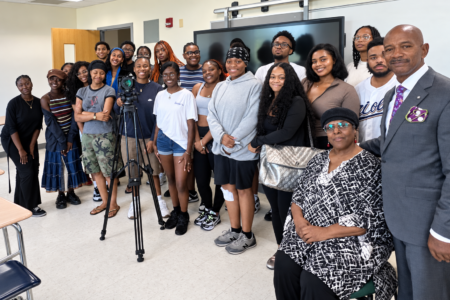
Op-Ed: Blame Is Easy. Accountability Is Hard.
Share. Facebook Twitter Pinterest LinkedIn Tumblr Email Copy Link
Previous ArticleLady Tiger said, “Pick a weight!” #boxing
Next Article Charles County Chamber of Commerce Hosts Business-Focused 2026 Candidate Forum Series

Keep Reading

August 17, 2026

Op-Ed: The Real Winner of Baltimore City’s June Primary Was Voter Suppression

By Jamar Day
August 12, 2026

Letter to the Editor: “Tonight’s Black Wall Street program was excellent in every sense!

By Doni Glover
August 3, 2026

EDITORIAL: Was Ruben Amaya’s County Council Campaign Really About Protecting Scott Phillips?

By Doni Glover
Ashley Esposito Baltimore City School Board Commissioner
July 26, 2026

Op/Ed: Disability Acceptance and Inclusion

By Ashley Esposito
July 23, 2026

We Are Failing Our Young People—and We Need to Be Angry About It

By Michael Johnson
July 20, 2026

Guest Editorial: How Grassroots Leadership, Not Political Spin, Drives Baltimore’s Crime Decline

By Aaron Maybin
Add A Comment
Leave A Reply Cancel Reply

Latest News

BMORENews at 24 | 2002–2026 24-YEAR IMPACT & LEGACY REPORT

Black Wall Street Summit: Ven McCormick on Tax Sale Secrets | Why Patience is Key for Entrepreneurs

Commanding Officer Whitlock: Knicks’ Win Unites Community | Family Watch Parties, Zero Violence!

EXCLUSIVE: Chrisean Is Still Rising

Trending News

CHRISEAN “HOLY HANDS” Interview by Ericka Alston-Buck, Arts & Culture Reporter. Video, BMORENews

August 24, 2026

Monday Mixer: Business Networking at Its Finest!

August 24, 2026

Dr. Kevin Parson aka “The Wizard” on the Emmy-nominated Doni Glover Show

August 24, 2026

Subscribe to News

Get the latest Baltimore news and updates directly to your inbox.

Facebook X (Twitter) YouTube
2026 © BmoreNews.com. All Rights Reserved.
  • Doni Glover
  • Privacy Policy
  • Terms
  • Contact

Type above and press Enter to search. Press Esc to cancel.

Support BmoreNews
Support Independent News

Help Keep BmoreNews Strong

Your support helps BmoreNews continue covering the stories, people, businesses, and communities that matter most.

Donate Now
Secure donations powered by BmoreNews.
BmoreNews.com MEMBERS

Welcome back

Sign in to continue reading and manage your membership, profile, and email preferences.

Continue with Microsoft
or continue with email

We also sent a secure sign-in link to your email.

New member accounts receive editorial updates from BmoreNews.com by default. You can change the schedule or turn them off at any time.

New to the site?