


Gregory Branch and the Talley Ho Foundation brought boys, girls, Legends and generations of Baltimore basketball history together at the Dome—while the Brunson League Finals delivered high-level action at UA House at Fayette
(BALTIMORE – August 2, 2026) – For anyone who tells you it is just a game, tell them, “Surely, you jest.”
It is more than a game.
For many inner-city youth, basketball can be defining. One’s ability to handle the rock can help determine a young person’s trajectory.
In some communities, hockey is the go-to sport. In other communities, soccer defines the culture. We just witnessed that with the FIFA international soccer championships. There are still other communities where bull riding is the center of attention.
But in Ball-dimore, the culture centers around basketball.
It is about one’s ability to handle the pill coming up the court. It is about how a player navigates the double team—and how speed, hand-eye coordination, and hang time all come together to make that beautiful swish sound at the end of the play.
That is Baltimore basketball.
Now, I knew by 13 that basketball was not going to be my saving grace, just like I knew by age 7 that I was never going to be anywhere near the kind of singer Michael Jackson was.
Even back then, my heart was that of a writer.
Today, it is the same deal.
That does not, however, change my love for the game. Hell, I bet I practiced over Easterwood Park as much as Muggsy Bogues practiced over Lafayette.
The difference is that playing basketball was Muggsy’s gift.
And the way the story has been told, the boys over Lafayette came up in a system.
The legend has it—similar to the stories told about Skip Wise—that those guys at Lafayette practiced about three times a day and still hooped all night.
If you were going to beat Muggsy, Russ, Mike Brown or any of those Dunbar cats, you had to play all day and all night, 365 days a year.
What Johnny does most, Johnny does best.
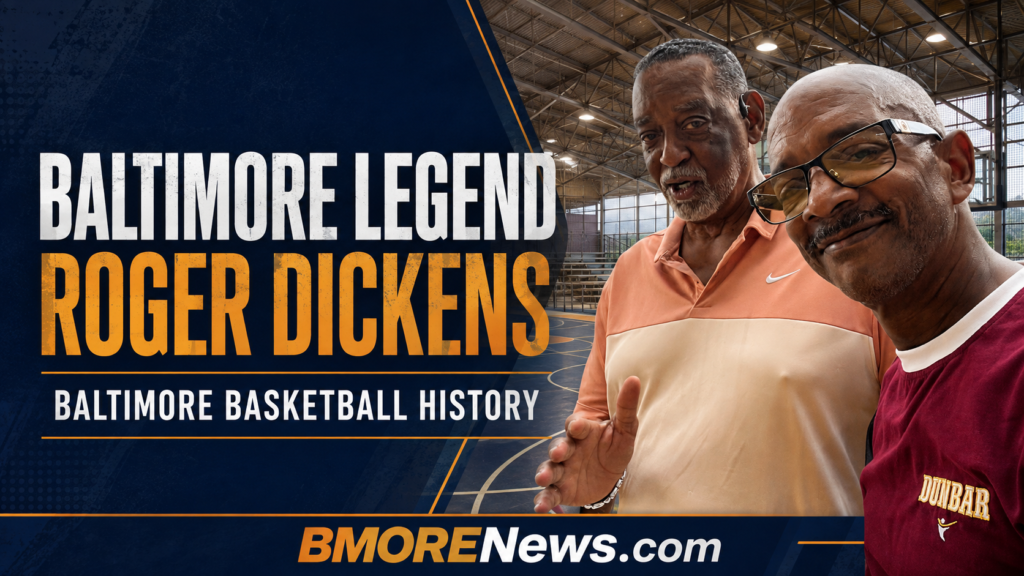
At Lafayette and Madison in East Baltimore, and at Cloverdale, John Eager Howard and Bentalou in West Baltimore, basketball was always more than a game.
If you wanted to be respected, you had to earn it.
These were more than neighborhood courts and recreation centers. They were basketball institutions—places where people gathered around the game and where reputations were built one possession at a time.
The real strength of Baltimore basketball, however, was found in the older players who came back.
They returned to pour what they had learned into the younger players. They showed them how to handle the ball, navigate a double team, play defense, and carry themselves on and off the court.
At these centers, you could see everybody—from the teeny boppers just learning the game to the professionals who had reached its highest level.
That passing of knowledge from one generation to the next is one of the foundations of Baltimore basketball.
I do not know that any other sport has touched Baltimore more.
Yes, we love football. We love baseball, too. Boxing? Yep! Track and field? Of course.
But basketball?
Ooh, everybody tries their shot.
The Legends Tournament at the Dome
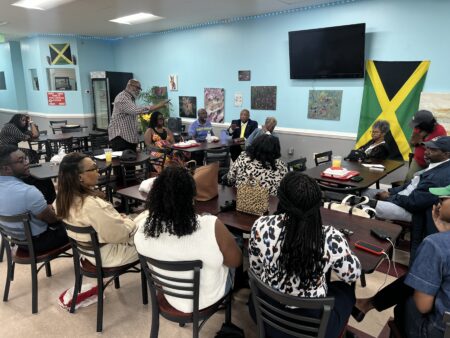
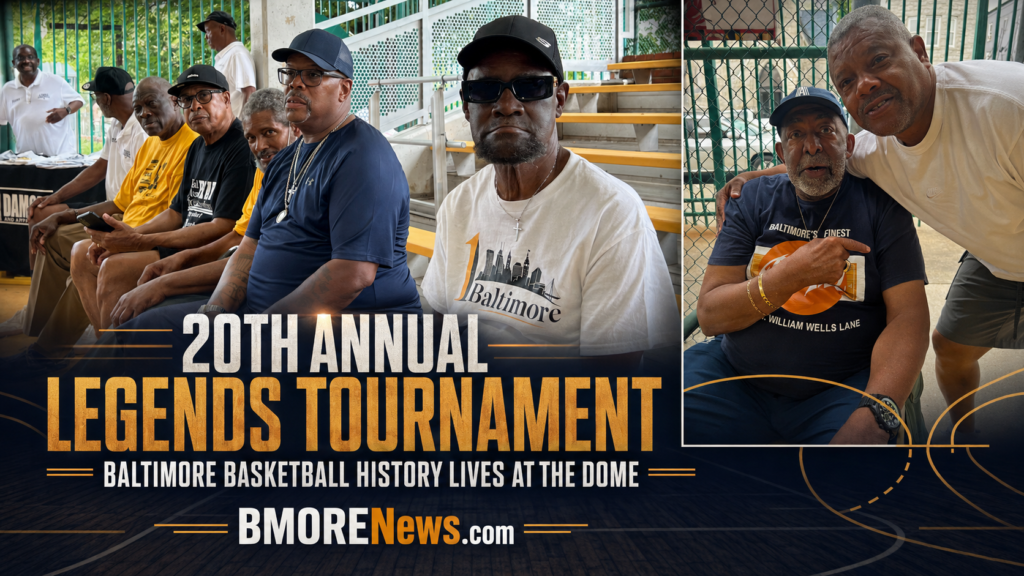
That culture—the discipline, competition, toughness and love for the game—was alive yesterday as Gregory Branch and the Talley Ho Foundation presented the 20th Annual Legends Tournament at the Dome in East Baltimore.
There were games for the boys. There were games for the girls. And then there were the big boys—the Legends.
It was a great day for Baltimore basketball and an even better day for the community.
Players, coaches, families, fans and familiar faces came from across the city. Some came to compete. Some came to reconnect. Others came simply to stand inside one of Baltimore basketball’s most historic places and show their appreciation for the game.
For 20 years, Gregory Branch and the Talley Ho Foundation have used the Legends Tournament to bring generations together.
That longevity matters.
Events come and go, but it takes commitment, relationships and a genuine love for the community to keep something alive for two decades.
Branch has done exactly that.
The Dome—officially the Madison Square Recreation Center—occupies sacred ground in Baltimore basketball history. Generations of players have competed there, learned there and earned their reputations there.
The old saying in Baltimore is simple: If you never played at the Dome, you never really played basketball in Baltimore.
Coach William Wells, the man credited with building the Dome’s basketball tradition, was among those sharing its history. Wells has been connected to that ground since 1969.
Long before many of Baltimore’s most celebrated players became household names, places like Madison Square gave young people somewhere to play, somewhere to learn and somebody to hold them accountable.
The Legends Tournament was not simply about athleticism or who could still get above the rim. Its power was found in seeing generations sharing the same historic ground.
The young players represented the future. The Legends represented the history. The coaches, organizers, families and fans helped connect the two.
They Always Came Back
One thread runs continuously through the basketball stories of East Baltimore. The same thread appears in stories about Cloverdale and the Westside.
You cannot hear the stories of Baltimore’s greatest players without also hearing about the coaches, mentors and older players who helped shape them.
Pete Pompei. Sugar Cain. Bob “Flakey” Wade.
Institutional!
Yesterday, Coach William Wells made that point. He talked about the older guys who never failed to return to the gym and coach the younger players.
They came back.
The knowledge did not simply leave the neighborhood when a player graduated, earned a scholarship, or became successful.
The older players returned and gave that knowledge to somebody else.
They taught younger players how to dribble, defend, pass and shoot. More importantly, they taught them how to carry themselves, accept coaching, compete and get back up after being knocked down.
I saw that tradition with my own eyes yesterday.
Respect Before the Whistle
Then I witnessed something that tied the entire day together.
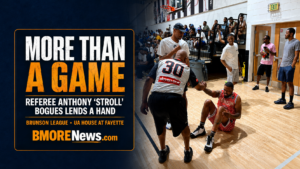
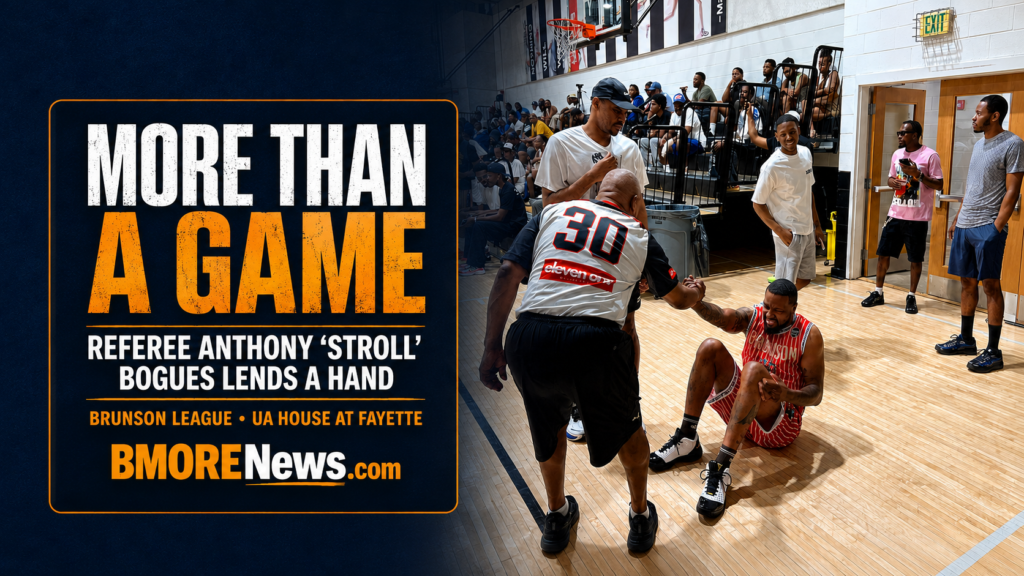
Anthony “Stroll” Bogues—Muggsy Bogues’ big brother—was scheduled to referee a Brunson League game at UA House at Fayette. He knew he had a game to officiate southwest of the Dome. He knew where he had to be and what time he had to be there.
But before going to work, Stroll made it his business to stop by the Legends Tournament and see Coach William Wells.
Mr. Wells was seated. Stroll knelt to get into the picture frame beside him.
That moment said everything.
Stroll did not think it robbery to stop at the Dome first and give Mr. Wells his love and respect. Before putting on the referee’s whistle at the Brunson League Finals, he paid homage to one of the men who helped lay the foundation for Baltimore basketball.
You cannot make that up.
That is what I saw yesterday.
It demonstrated exactly how this basketball culture works. The younger players learn from the older players. Those players grow up, travel, play, coach and officiate—but the ones who understand the culture come back.
They remember who opened the gym.
They remember who taught them.
They remember who checked on them.
They remember who was there before the crowds, scholarships and television cameras.
Stroll’s journey that day—from honoring Mr. Wells at the Dome to refereeing the Brunson League Finals at UA House—connected the two events.
One stop represented history, fellowship and respect.
The other represented the game being played at a high level.
But both belonged to the same Baltimore basketball family.
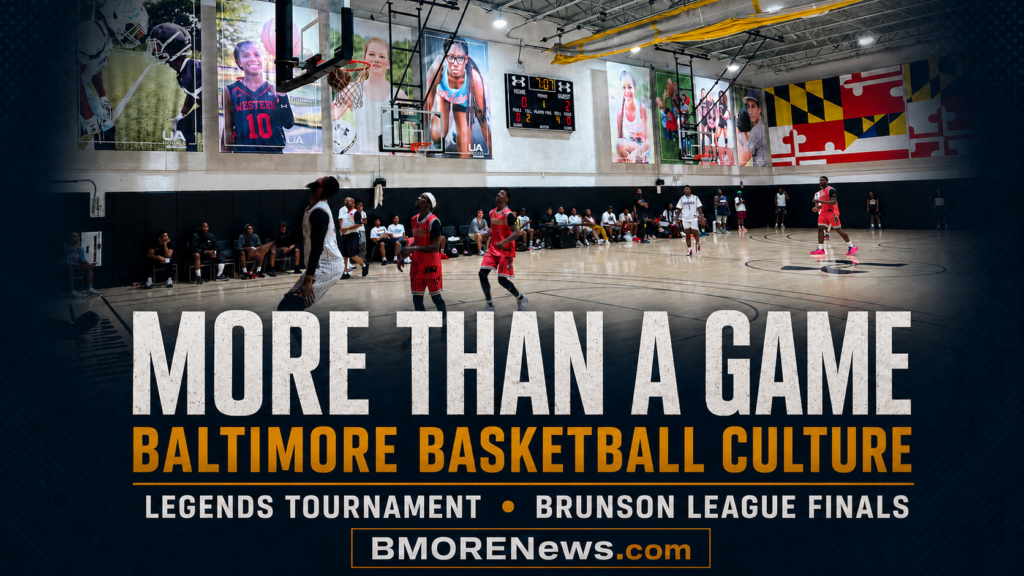
The Brunson League Finals at UA House
From the Dome, the story continued southwest at UA House at Fayette, the facility many Baltimoreans still call the Carmelo Anthony Center.
That is where the Brunson League Finals were being played—and where Anthony “Stroll” Bogues went from paying respect to Mr. Wells to putting on the whistle and going to work.
Let me make the distinction clear.
The Legends Tournament at the Dome was about history, community, and generations coming together. The Brunson League Finals offered another side of Baltimore basketball: high-level players competing at speed and attacking the rim.
Those cats were jamming.
They were running the floor, navigating traffic, challenging shots and throwing down dunks. The pace was faster. The athleticism was unmistakable. These were serious players showing what they could do.
If you came looking for above-the-rim basketball, UA House was the place to be.
It took about 60 seconds inside the former Carmelo Anthony Center to feel the passion.
The competition was real. The pride was real. Every possession mattered to somebody—whether that person was on the court, sitting on the bench, or standing along the sideline.
And the fans?
The fans are everything.
Just like at a prize fight, the fans will definitely tell you what they are thinking. There is no hiding from a Baltimore basketball crowd.
They know the game. They recognize effort. And they will let you know when they see something special.
The energy was electric. The excitement was unmistakable.
For the player with the heart, timing and nerve to steal all the thunder with a precision dunk, the crowd was there for the taking.
That was the beauty of the Brunson League Finals.
Two Events, One Baltimore Basketball Culture
The Dome and UA House offered two different experiences.
At the Dome, I saw boys, girls, and Legends sharing historic basketball ground. I saw generations reconnecting and older players continuing the tradition of coming back.
At UA House, I saw high-level players running, jumping, dunking and competing in the Brunson League Finals. I saw Baltimore basketball being played with speed, athleticism and intensity.
One event preserved the game’s history and passed its culture forward.
The other displayed the game at full speed.
Baltimore basketball needs both.
It needs places where teeny boppers can learn their first crossover. It needs older players willing to return and teach. It needs Legends whose presence reminds young people that somebody came before them. And it needs high-level competition that shows those young players how far the game can take them—and how hard they must work to get there.
Before the television cameras, major college scholarships and professional contracts, there were neighborhood courts, recreation centers and adults who opened gym doors and refused to let young people give up on themselves.
Yesterday, from the Dome to UA House at Fayette, I saw the entire Baltimore basketball ecosystem.
Anthony “Stroll” Bogues helped connect it: first honoring Coach William Wells and then officiating the Brunson League Finals.
That is how Baltimore basketball survives.
The game moves forward, but the people who understand its foundation never forget to look back.
The children played.
The girls played.
The Legends returned.
The Brunson League players took flight.
And Baltimore came out to watch.
But do not call it just a game.
Surely, you jest.
Related Stories