



New AI degree and interdisciplinary risk management course aim to prepare students for leadership in a technology-driven economy
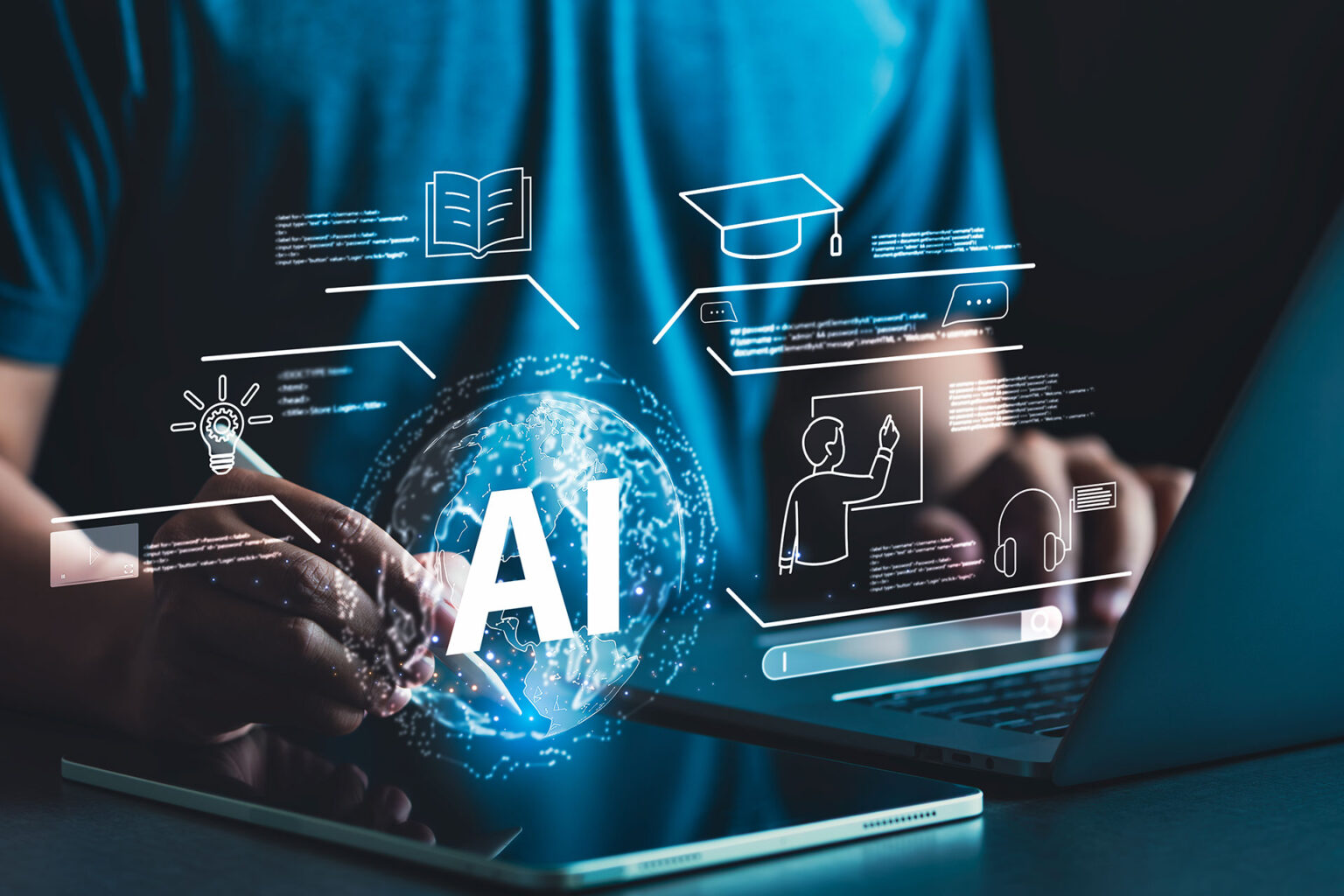
(BALTIMORE – July 18, 2026) — Morgan State University is expanding its career-focused academic offerings with a new Bachelor of Science in Artificial Intelligence and an interdisciplinary course designed to help students identify and manage risks in an increasingly technology-driven economy.
The undergraduate AI degree will launch this fall through Morgan’s School of Computer, Mathematical and Natural Sciences. The Earl G. Graves School of Business and Management will also introduce Holistically Assessing Risks, a course intended as the first step toward developing an interdisciplinary Risk Management certificate.
Both offerings reflect Morgan’s effort to align its curriculum with changing workforce demands as artificial intelligence reshapes fields ranging from healthcare and cybersecurity to business, government and scientific research.
From Cloud Computing to Artificial Intelligence
Approved by the Morgan State University Board of Regents and the Maryland Higher Education Commission, the new AI program is a strategic transformation of Morgan’s former Bachelor of Science in Cloud Computing.
Rather than simply adding several AI classes to the existing program, the University redesigned the curriculum around the development, application, and responsible management of intelligent technologies.
Students will study AI models and intelligent agents, AI-driven cybersecurity, cloud computing applications, data science, natural language processing, reinforcement learning, and quantum machine learning. The degree will also provide strong foundations in programming, mathematics, data science, and computational theory.
Graduates will be prepared to pursue careers in artificial intelligence, machine learning, cybersecurity, robotics, cloud computing, data science, and related technology fields.
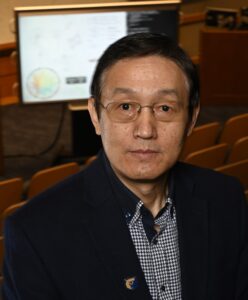
“Artificial intelligence has fundamentally changed the direction of computing,” said Paul Wang, Ph.D.
Wang said the program’s emphasis on project-based learning, undergraduate research and ethical AI development will prepare students not only to use intelligent technologies but also to create them responsibly.

Hands-On Learning and Ethical AI
Morgan’s Department of Computer Science already offers 18 artificial intelligence courses. The new degree organizes those existing strengths into a comprehensive undergraduate curriculum focused on AI and its rapidly expanding applications.
Every AI and machine learning course will incorporate hands-on projects developed by Morgan faculty and students. That approach will allow students to work on real-world challenges while building portfolios for internships, graduate school, and employment with leading technology organizations.
Students will also have access to faculty mentors, graduate students, and an AI-powered advising platform developed within the Department of Computer Science.
Ethics will be a central component of the program. Coursework will address fairness, algorithmic bias, privacy, transparency, security, and the development of trustworthy intelligent systems.
“The launch of this degree program demonstrates Morgan’s commitment to aligning academic excellence with the technologies and industries shaping tomorrow’s workforce,” said Paul B. Tchounwou, Ph.D., dean of the School of Computer, Mathematical and Natural Sciences.
“As artificial intelligence continues to influence scientific discovery, healthcare, business, government and virtually every other aspect of society, our students must graduate with the technical expertise, critical thinking skills and ethical perspective necessary to become innovators, researchers and leaders in this transformative era.”
Expanding Black Leadership in Artificial Intelligence
As one of the nation’s leading historically Black universities, Morgan’s expansion into artificial intelligence carries significance beyond the introduction of another academic degree.
Black professionals remain underrepresented in many of the technology fields shaping the future. That lack of representation can influence which problems receive attention, whose experiences are reflected in the data, and how emerging technologies are designed and deployed.
By preparing students to develop—not merely consume—AI systems, Morgan can help broaden participation in the industry and influence over technologies that increasingly affect employment, education, healthcare, finance, public safety, and public policy.
The program’s emphasis on fairness, bias, privacy and transparency is particularly important as AI systems play a growing role in decisions that directly affect individuals and communities. Morgan graduates will be positioned to bring technical knowledge, ethical leadership, and perspectives that have too often been missing from the technology sector.
New Risk Management Course Open Across Disciplines
Morgan’s Earl G. Graves School of Business and Management will complement the AI program by introducing Holistically Assessing Risks (MGBU 363) this fall.
The course is not a degree program, but it represents the University’s first step toward creating an interdisciplinary Risk Management certificate. The proposed certificate would help prepare students to earn the nationally recognized Associate in Risk Management credential through The Institutes Knowledge Group.
Open to students across multiple disciplines—not only business majors—the course will examine how organizations identify, analyze and respond to cybersecurity threats, data privacy concerns, financial uncertainty, operational disruptions and reputational challenges.
Students studying artificial intelligence, cybersecurity, healthcare, analytics, communications, public policy, information systems, and other fields can gain analytical and strategic decision-making skills increasingly sought by employers.
The course recognizes that technological innovation also creates new vulnerabilities. Organizations need professionals who understand not only how emerging technologies work but also how to assess their potential financial, operational, ethical, and reputational consequences.
Preparing Morgan Graduates to Lead
The new offerings come as Morgan continues investing in artificial intelligence through research, instruction, and infrastructure.
The School of Computer, Mathematical and Natural Sciences and the Graves School are among Morgan’s fastest-growing academic units. The Graves School is now the University’s largest academic school by enrollment.
University leaders say the AI degree and risk management course further Morgan’s mission as a public urban research institution preparing graduates for careers that demand technological fluency, interdisciplinary thinking and adaptable leadership.
As artificial intelligence increasingly influences who gets hired, how organizations operate, what information people receive and how major decisions are made, Morgan’s new curriculum positions its students to do more than participate in the emerging innovation economy.
It prepares them to help build it, question it, and lead it.