

How DNA, Genealogy, and Oral History Are Uniting a New Generation Reclaiming Their Identity
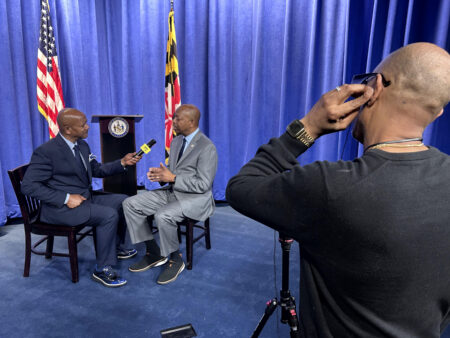
(BALTIMORE – February 12, 2026) – More than anything, this show has become a common meeting ground — a space for people with an expanded understanding of who they are and how they see America.
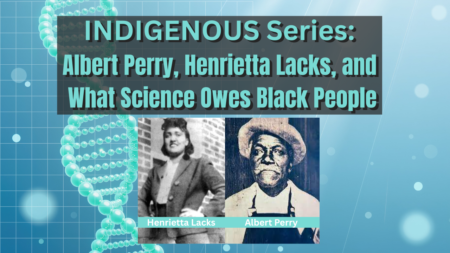
When we published our first piece last October on Albert Perry’s DNA, we knew we were touching something deep. Nearly 2,000 readers engaged with the story of a South Carolina man whose Y-chromosome — haplogroup A00, dating back more than 300,000 years — forced geneticists to reconsider the timeline of human ancestry.
But what we didn’t fully anticipate was that the article would become a doorway into something much bigger: a national awakening.
Since then, the Remember Who You Are: Indigenous Series on BMORENews and the Emmy-nominated Doni Glover Show have grown into something none of us quite expected. What started as a topic I had lightly shared with audiences for years took definitive shape last August when I connected with Mike Lane online. While I had a broad understanding of Indigenous identity among melanated people, Lane and other Indigenous scholars illuminated a movement already well underway — an awakening happening across the nation. Chief Top Katz immediately comes to mind.
The Awakening
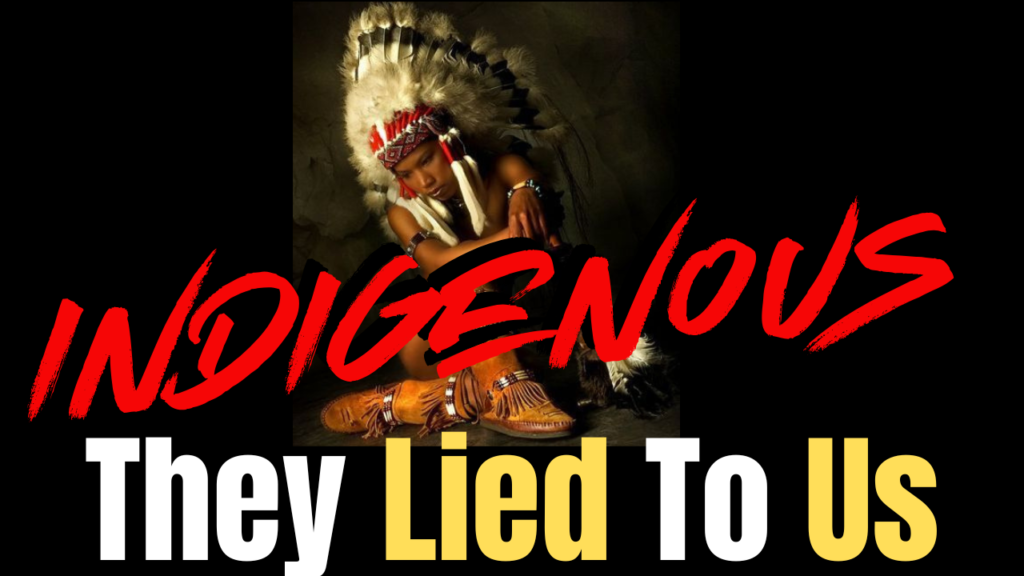
Melanated people — particularly those under 35 — are proclaiming their indigeneity with pride and conviction. Many reject the term “Black,” seeing it as a colonial label rather than an ancestral identity. They are reclaiming something families often hid for generations.
In some cases, families concealed Indigenous identity for survival.
In others, that identity was stripped from them altogether.
They were reclassified.
Can you imagine being declassified—and then reclassified by the state?
That is precisely what happened, systematically and legally. This is where the one-drop rule enters the story. And this is where figures like Walter Plecker emerge.
The Plecker Blueprint: Stealing Land by Stealing Identity
As head of Virginia’s Bureau of Vital Statistics, Plecker aggressively enforced the Racial Integrity Act of 1924. Through rigid racial classifications, thousands of Native families were reclassified as “colored,” severing their legal recognition and weakening land claims. We know it as the one-drop rule.
The impact was not merely bureaucratic — it was economic and generational.
When identity is altered on paper, land can be lost.
When land is lost, wealth disappears.
When wealth disappears, history shifts.
The legal erasure did not stop in Virginia. South Carolina’s 1740 Negro Act criminalized literacy among the enslaved and blurred distinctions between “Negro,” “Indian,” and “mulatto.” Across the South, racial categories became tools of consolidation.
Treaties matter because paper trails matter.
Documentation of dispossession is also documentation of proof.
The Math and the Questions
Historians estimate that roughly 12.5 million Africans were trafficked across the Atlantic, and approximately 400,000 to 500,000 arrived in what became the United States — about 4–6% of the total.
Today, more than 44 million Americans identify as Black or African American.
Demographers point to natural population growth over centuries, forced reproduction under slavery, and intermarriage as explanations. But the scale of growth invites deeper examination of migration patterns, classification practices, census manipulation, and identity shifts over time.
The numbers deserve honest conversation — not dismissal.
And when we consider the plagiarism controversy surrounding Roots: The Saga of an American Family and the shaping of public memory through Hollywood storytelling, it becomes clear that mainstream narratives have never been neutral.
The victors write history.
Until the descendants begin reading the receipts.
From Perry’s DNA to the Present
Albert Perry’s story remains the scientific anchor of this conversation.
In 2013, genetic analysis revealed that his Y-chromosome belonged to haplogroup A00 — the oldest known paternal lineage identified to date. Subsequent research found related lineages among the Mbo people of Cameroon. Perry’s DNA was not an anomaly. It was evidence of deeper human complexity.
But Perry’s story is not just about Africa.
Through this series, we have explored haplogroups such as E1B1A, commonly associated with West African paternal ancestry. Yet genetic markers migrate, overlap, and defy neat colonial categories. The deeper the research goes, the blurrier the rigid lines between “African,” “Indian,” and even “Moor” become.
Complexity is not a contradiction.
It is history.
From the Mounds to Modern Memory
Long before European contact, cities flourished across this continent. Cahokia, near present-day St. Louis, anchored one of the largest urban centers north of Mexico. The broader Mississippian culture built trade networks and ceremonial complexes spanning thousands of miles.
The Americas were not an empty wilderness.
Advanced civilizations existed here long before the arrival of colonialism.
A Lifelong Pull
The truth is, I have been drawn to Indians all my life. Even as a child, I remember rooting for the Indians. I suppose I could see at a very young age the mistreatment of one group by another. Back when G.I. Joes were the thing, I also had a Geronimo doll. It was always my favorite.
Then, at Matthew A. Henson Elementary, Christopher Olson — the only white kid at the school — was my compadre as we researched Indians together. We were featured in the newspaper. I didn’t know it then, but something was already taking root.
Fast forward fifty years, and I now have the distinct honor of sharing the show platform with Hannibal James out of Detroit, Planet Wells in Hawaii, Chicago’s own Horace Lee IV, and Mafia Shakur right here in Baltimore — as we delve deeper and deeper into who we actually are. What began as a childhood instinct has become a collective mission.
A Meeting Ground
What has emerged from this series is something rare: a space where genealogists, historians, scholars, and everyday families converge.
Some identify as Moors, tracing connections through empires linking Africa, Iberia, and beyond. Others explore Hebrew traditions rooted in migration and covenant narratives. Many simply reclaim the term Indigenous, recognizing that identity in America has always been more layered than census categories suggest.
Through DNA testing, archival research, and oral history, a new generation is redefining itself.
The whispered stories of “Indian blood” were not fantasies.
They were fragments of memory.
And now, science and documentation are intersecting with those memories in powerful ways.
More Ancient Than We’ve Been Told
“Genealogy is higher than spirituality,” because knowing one’s bloodline reveals not just who we are — but how long we’ve been here.
Albert Perry’s DNA challenged scientific assumptions. The Indigenous Series challenges cultural assumptions.
Whether one identifies as Moor, Hebrew, Indigenous, African, or some combination, one truth remains undeniable:
Our ancestors built, traded, governed, and worshipped long before the ships arrived.
Through the Remember Who You Are: Indigenous Series on BMORENews and the Emmy-nominated Doni Glover Show, we will continue to pull back the layers — questioning records, examining policy, and amplifying voices engaged in rediscovery.
Because if the world learned from Albert Perry that humanity is older than we thought, then perhaps it is time we recognize that our understanding of ourselves is deeper — and more complex — than we were told.
* * *
The Remember Who You Are: Indigenous Series airs on BMORENews.com and the Emmy-nominated Doni Glover Show on YouTube. Follow the conversation. Join the awakening.
RELATED ARTICLE
INDIGENOUS Series: Albert Perry, DNA, and the Reclaiming of Identity