



“When they show you who they are, believe them.”
(OWINGS MILLS – June 7, 2026) – One of my favorite politicians of all time is the Mayor for Life. I don’t even have to say his name. If your family lives anywhere along the Baltimore-Washington corridor, you already know who I’m talking about.
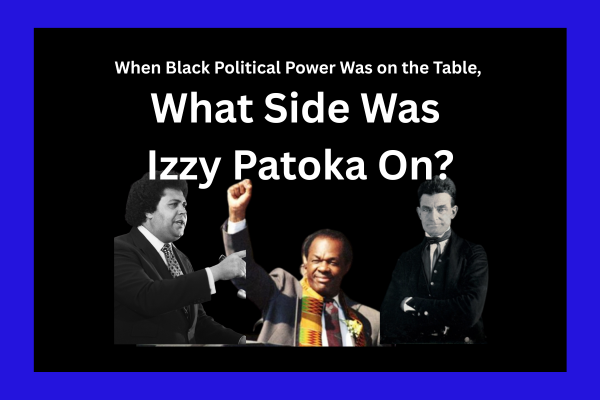
Before he was a politician, he was known as “the jobs man.” If you were Black and needed work, Marion Barry was the person people called. His efforts helped build a Black professional and business class in Prince George’s County that would later gain national recognition.
Another one of my heroes is Atlanta Mayor Maynard Jackson.
Jackson understood a simple truth: political power that doesn’t produce economic power is little more than theater. When Atlanta’s airport expanded, he demanded meaningful participation from Black contractors. He wasn’t interested in symbolic inclusion. He wanted results.
And then there is John Brown.
He wasn’t Black. But he understood that there comes a moment when talk ends, and choices begin. He chose to fight slavery and paid for that choice with his life.
What do these three men have in common?
They didn’t talk about helping Black people.
They actually did it.
They took risks.
They paid prices.
They used power when it mattered.
Which brings me to Izzy Patoka.
For years, I gave Izzy the benefit of the doubt. I know him. I’ve played basketball with him. I’ve watched his political rise. I respected his work and considered him a serious public servant.
But leadership is not revealed when nothing is at stake.
Leadership is revealed when something valuable is on the table.
And in Baltimore County, Black political power was on the table.
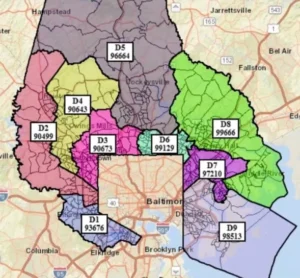
During last year’s redistricting fight, many Black leaders and community advocates pushed for the County Council to expand from seven districts to eleven. They argued that one of Maryland’s most diverse counties deserved fuller representation and more opportunities for historically underrepresented communities.

Got: 9.
Then came the map.
The debate was never about geography.
It was about power.
And Baltimore County is still arguing about who gained it—and who lost it.
What emerged instead was a compromise.
Seven districts became nine.
Not eleven.
Then came the map.
And that’s where the story gets uncomfortable.
Critics argued that the final map fractured portions of the historic Black political base centered in the Fourth Councilmanic District, separating communities in Woodlawn, Randallstown, and Lochearn that had long shared political interests and voting strength.
Supporters called it compromise.
Opponents called it dilution.
What is not in dispute is that many Black leaders walked away from the process believing an opportunity had been reduced rather than expanded.
And in that moment, choices were made.
Today, Izzy Patoka campaigns as a champion of diversity.
That is his message.
But the people who were in the room during that fight remember something else.
They remember the negotiations.
They remember the compromise.
They remember who stood where when the stakes were real.
Which brings us back to the only question that matters:
When Black political power was on the table, what side was Izzy Patoka on?
Because representation is not measured by campaign mailers.
It is not measured by press releases.
It is not measured by what politicians claim after the fact.
It is measured by what they do when it counts.
Marion Barry made a choice.
Maynard Jackson made a choice.
John Brown made a choice.
And Baltimore County voters watched choices being made here, too.
Maya Angelou said it best:
“When they show you who they are, believe them.”
The question now is whether voters were paying attention when it mattered.
Doni Glover is the founder and publisher of BMORENews.com, now in its 24th year of covering Black Baltimore, and the founder of the Joe Manns Black Wall Street Awards, now in its 15th year. He is also the host of the Emmy-nominated Doni Glover podcast and The Doni Glover Show on WMAR-TV 2.