


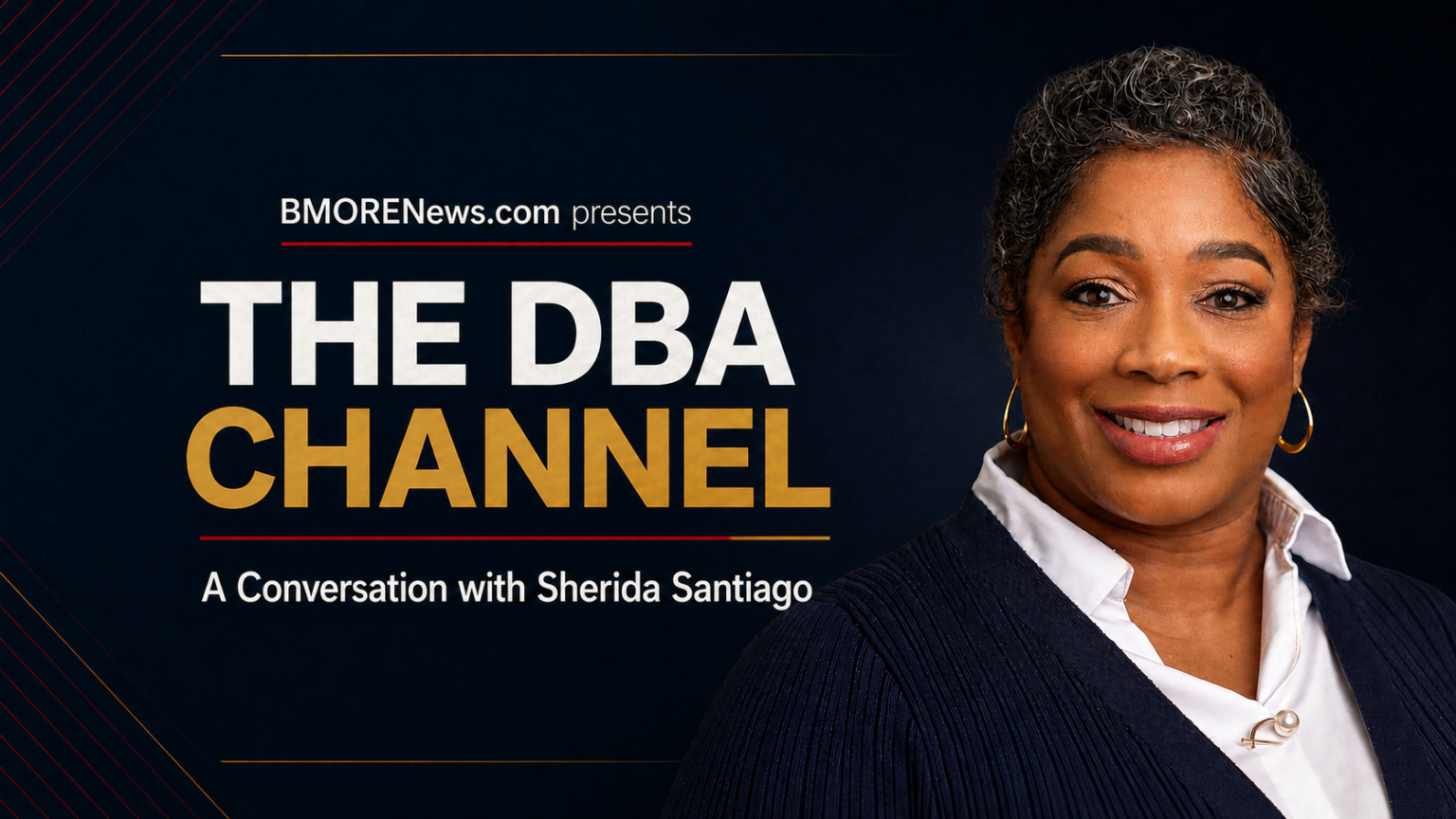
Sherida Santiago is a Doctor of Business Administration (DBA) student at the University of Maryland’s Robert H. Smith School of Business, studying management and organization. She is also a faculty member at Coppin State University. Doni Glover, a fellow DBA candidate at Smith, sat down with her to talk about the program, the classroom, the cohort, and what it takes to carry a doctorate to the finish line.
Doni Glover: What’s your discipline — what are you studying?
I’m working toward my doctorate in business administration, with a focus on management and organization.
How’d you come to choose the Smith School?
That’s a really interesting question. In 2017, I joined the PhD Project and was exploring programs that would allow me to earn my PhD. But after understanding the distinction between earning a DBA and working as a scholar-practitioner versus going straight into research, I thought the DBA would work better for me. I started looking at DBA programs — Temple, the University of Maryland, and some executive programs, I believe, through Virginia State or Virginia Tech.
The University of Maryland offered the better opportunity. The school had the rigor, the reputation, and the ranking. The faculty were well-researched — as an R1 institution, I found that I could pull a paper and discover that someone from the university had conducted the research or was listed as a contributor. I still find that to be true as a student. I looked at a lot of other programs, and this one just felt most suitable.
Tell me about the difference between research and practice — where do you sit in that?
In organization development, I sit on the other side of research. As a practitioner, I use the theories that researchers create and implement them within the systems I enter. As a faculty member, I’m doing something similar — taking information for which the research has already been done and the theories have already been implemented, and using it in the classroom and in the field.
But in the future, I see myself as someone who theorizes concepts — coming up with scholarly ideas and developing my own approach. I didn’t fully understand that distinction before because I was in the classroom teaching. Now that I’m actively conducting my own research project, I understand what it takes to review the literature, formulate the right question, establish causality — all of it. I plan to use that in my future as an author, a speaker, a researcher, a scholar-practitioner, and a contributor to think tanks. It’s something I wanted to do as a child, believe it or not. I always wanted to be someone who had the answer.
Tell me about the classroom experience — the professors, the instruction, the leadership.
It’s interesting to talk about the classroom without discussing rigor. I’d say the experience has been fresh and fairly flexible — though I don’t know if everyone would agree with me. I feel heard. I feel like my questions get answered. The faculty make adjustments to meet learners’ needs.
And there’s rigor — the papers, the reading. Reading multiple dense articles was a learning curve for me. Someone hands you a 50-page paper and says, “We’re discussing this Friday,” and then adds four more — that was a little challenging at first. So the program isn’t without rigor, but it also has a lot of flexibility and freedom inside the classroom.
Anything you want to add about the school, or the cohort?
I love my cohort. I genuinely enjoy that we’re not just in a program taking classes and that’s it — as theorists, I think it’s important that we put what we put out there to use. The program pairs us together and moves us through the system together, which helps us build quality relationships as peers and colleagues. I’ve had a chance to talk with my peers — you included — outside the classroom, to learn more about what they do and how we might benefit each other. It’s been a great learning experience just by way of building rapport.
I also think it’s meaningful that they let us share our own stories — the storytelling component matters because we’re not all the same. I’m not the traditional doctoral student, and I’m certainly not the traditional student UMD may have been accustomed to accepting. Given my upbringing and background, I wouldn’t have been considered the “ideal” student back in my heyday. So the opportunity to be refined in my own professionalism, and for the program to see the full package of who I am — not just test scores — makes sense to me.
I’ll also say: I’m faculty at Coppin State University.
How does it feel to be a doctoral student?
It’s not a cakewalk. For people who aren’t serious about really engaging with the work at a high level, it will show. I once looked something up that said there are public institutions and then there are “Public Ivies.” I feel like Maryland is a Public Ivy, for a fact — that’s the level of rigor I’ve experienced, coupled with the workload. If you’re reading the papers, if you’re intentional about putting in the work, you understand: this is not a breeze. But it’s worth it.
I remember the day we all walked into the room, smiled at each other, and thought, “Oh my goodness, what is this?” And now we’re halfway through — with one semester of coursework left. Being a doctoral student is allowing me to break some generational patterns in my family. It’s letting me elevate what’s possible in my community. And like my son told me, I keep raising the bar — making it hard for people to catch up. It allows me to raise the bar within my sphere of influence for anyone who looks to me.
It’s going to feel even more amazing when I get that gown on, get hooded, and walk across that stage.
Take me back — what was it like walking across the stage at Coppin in 2004?
I said, “I’m never going back to school again.” I meant it. And then I got two more degrees. Even coming out of American, I told my friends I didn’t know why I felt so compelled to go get my doctorate. They said, “More power to you.” Coming out of that program was tough too.
But I could never have written this story for myself. The experience is refreshing — it’s teaching me things I didn’t know about research in general. And it’s making my mother proud. If I can keep it 100%, that’s a big part of it. My mom tells me, “Do it for us.” So I’m excited to be in the program, and even more excited to get this research done and complete it.
What does this say about your faith?
My faith is that God is able. Ephesians 3:20 — that He can do exceedingly and abundantly above all that we can ask or think. That’s something I hang my hat on.
About Sherida Santiago
Sherida Santiago is a leadership strategist, educator, speaker, and author who helps leaders close the gap between intention and execution through clear communication, responsible accountability, and practical team development. She is the founder of Ignite180, a tech-enabled leadership development company that equips leaders to build trust, strengthen culture, and lead with measurable impact. Sherida also serves as a business professor in the College of Business at Coppin State University. Her work supports marketplace and ministry leaders who want clarity, competence, and stronger relationships under real pressure.
Doni Glover’s Take
Santiago has a big smile — and she’s very organized, very business-minded, and very astute. I tend to pay attention to the more organized people in the program because I’m always looking to become better organized myself. I learn by watching. As I see what it takes to be more efficient, I incorporate that into my own flow. Santiago is probably a model student — the type who does everything to the letter. As thorough as thorough gets.
I’d agree with her wholeheartedly about the cohort, too. I love it, in large part, because it includes people like her. We have a lot of beautiful people, and everybody helps everybody. Everybody’s different — we’ve got people from various countries, backgrounds, and industries. But the real beauty is that I haven’t felt like it’s a cutthroat environment at all. I find it to be a very helpful, warm, and welcoming environment.
Sherida Santiago is a DBA student in Doni Glover’s cohort at the University of Maryland’s Robert H. Smith School of Business.
____________________________________
RELATED STORIES
THE DBA CHANNEL WITH DONI GLOVER | EPISODE 1 | Featuring Dr. Sheetal Singh
What If Maryland Built the Business School for the Quantum Economy?
From the Family Business to the Smith School
ALIGNED: My DBA Journey at the University of Maryland