

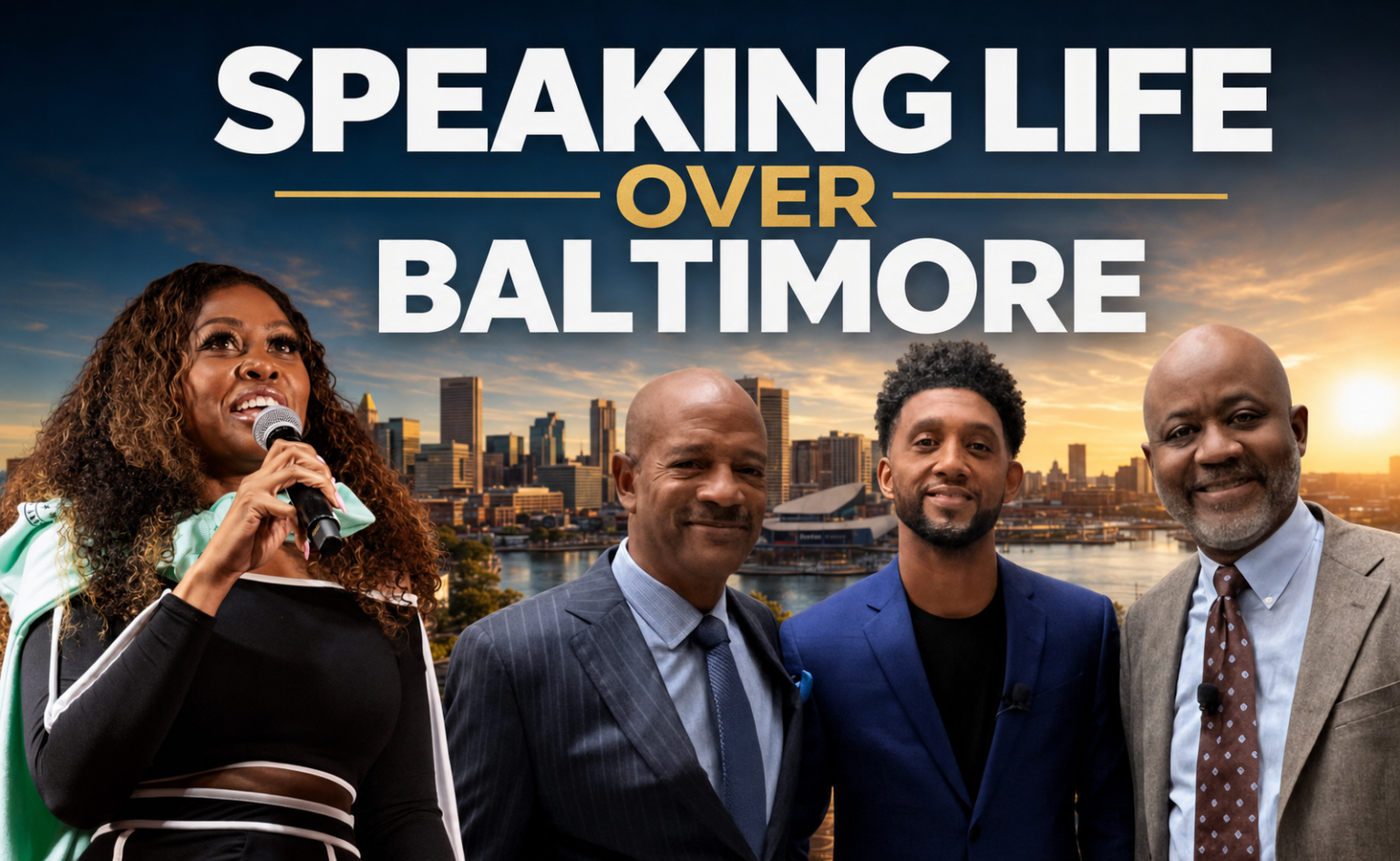
(BALTIMORE – July 18, 2026) – This is a message to everyone working to make Baltimore City better—beginning with Mayor Brandon M. Scott and extending to all those entrusted with the enormous responsibility of rebuilding and reimagining our city.
They are being asked to rebuild a plane that is already in the air.
Today’s leaders, many of whom are Black—including our beloved Mayor Brandon Scott—inherited a Baltimore that struggled to pivot following the decline of the industrial era. Thankfully, Baltimore’s world-class colleges, universities, hospitals, and research institutions helped keep the city academically, medically, and intellectually grounded throughout that transition.
But the transition is not over.
Like Detroit, which experienced tremendous decay after losing much of its automotive strength, Baltimore remains in the middle of a historic pivot. My message to the people leading that transformation is simple:
Go forward.
There will always be critics.
David Bramble and his partners at MCB Real Estate have faced significant criticism over their purchase of Harborplace. Yet Harborplace sat largely dormant and deteriorating for roughly 20 years, and many of today’s loudest critics had little to say. MCB made a purchase that anyone with the necessary vision and resources could have made.
Now that someone is attempting to do something, the criticism is everywhere.
This is not simply a Black-versus-white matter. MCB Real Estate is a business enterprise led by Black and white partners. These are businesspeople who saw an opportunity and acted upon it. The proposed transformation deserves legitimate public scrutiny, but criticism should be constructive, honest, and grounded in the realities confronting Baltimore.
Not far from my home is Baltimore’s infamous Highway to Nowhere. Thousands of residents were displaced and entire communities were disrupted for a highway project that was never completed as promised. In the end, its greatest accomplishment was displacing Black families and destroying generational community wealth.
Baltimore knows what destructive development looks like.
That history is precisely why residents should ask questions and demand accountability. But accountability is different from rooting for Baltimore to fail.
Many of the harshest critiques I see come from people who never supported Brandon Scott, people living along the city’s periphery, and people who do not live in Baltimore at all. Some appear to consume a steady diet of media that rarely has anything positive to say about our city. Their comments are frequently dismissive, disparaging, and completely detached from the lives of the people who actually live here.
We must consider the context.
This is the Trump era. We must also consider Baltimore’s unique racial history. Before the Civil War, Baltimore was home to the nation’s largest population of free Black people. Black life has always been central to the city’s identity. Yet Baltimore has also wrestled with what some of my elders called “the Negro dilemma”—the question of what America intends to do with all these Black people.
Here we are in 2026, still confronting versions of that same question.
Some say crime is down. Others continue to raise questions about public safety. Both conversations deserve room. Baltimore is an East Coast city with a particular speed, rhythm, and complexity. Things happen here, but violence does not exist only within Baltimore’s borders. Violence happens in Harford County. It happens in Cecil County. It happens in affluent, rural, and suburban communities.
There is also no single explanation for why violence persists. There are multiple, interconnected causes—poverty, trauma, addiction, educational inequity, inadequate mental health services, family instability, unemployment, disinvestment, housing insecurity, and decades of public policy that abandoned entire neighborhoods.
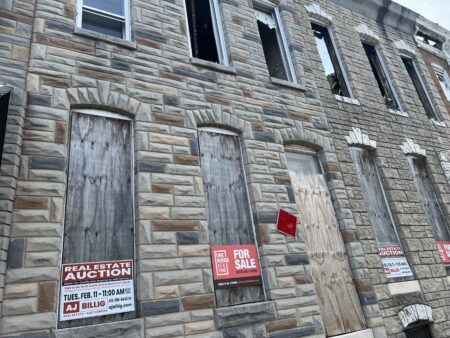
We are only now witnessing approximately $70 million being invested along West North Avenue after 50 or 60 years of neglect.
So, miss me with the deliberate mischaracterizations—particularly from people who have done nothing to invest in Baltimore but hide behind their computer screens and point fingers.
Too often, when we pull back the covers, we discover that some of the loudest critics are disgruntled people who have never contributed anything meaningful to Baltimore—or even to their own communities in Cecil County or wherever else they may live.
Be that as it may, I pray that our leaders remain encouraged.
I recently watched an interview with Robin Murphy, and she was speaking life over Baltimore.
I have interviewed Otis Rolley. He speaks life over Baltimore.
I have talked with Kevin C. Wright. He speaks life over Baltimore.
Shea Rice of the Greater Baltimore Urban League is speaking life over Baltimore.
Alexandria Warrick-Adams of Elev8 Baltimore is speaking life over Baltimore.
Tracy Malone of the Sandtown-Winchester Community Collective is speaking life over Baltimore.
Ashley Esposito of the Baltimore City Board of School Commissioners is speaking life over Baltimore.
And there are countless others doing the same.
Please, please, please—continue speaking life over Baltimore.
That is how transformation begins. We speak life, we work for life, and life manifests.
Yes, there is negativity.
Yes, violence exists.
Yes, people are being killed, and families are grieving.
But that is not the entirety of Baltimore’s story.
People are also graduating from high school. Young people are enrolling in college. Adults are returning to school. People are earning graduate degrees and doctorates. Entrepreneurs are building businesses. Families are growing. Babies are being born. Residents are purchasing homes. New neighbors are moving here from different parts of the country because they recognize something special in Baltimore.
Artists are creating. Researchers are discovering. Teachers are educating. Community leaders are organizing. Developers are investing. Neighborhood associations are fighting. Faith leaders are praying. Entrepreneurs are taking risks. Young people are imagining futures that previous generations were denied.
Baltimore is alive.
Therefore, do not be dismayed.
Baltimore was, is, and will always be a very special place—especially for those who pour love into it.
Because love has a way of coming back around.
God bless Baltimore.
My name is Doni Glover, and I approve this message.