

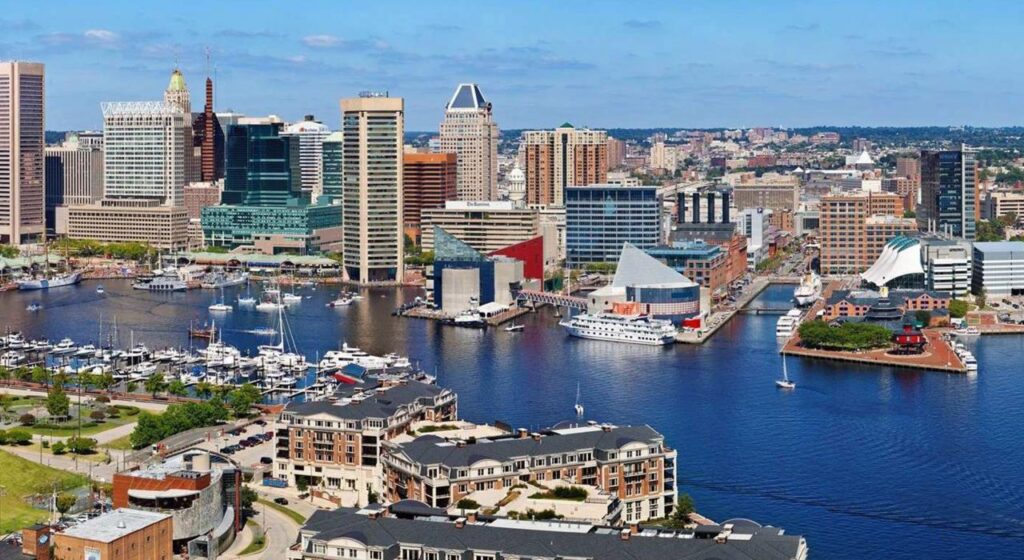
From Thurgood Marshall to the brothers on the Avenue — Baltimore’s Black community has always been built on strength.
(BALTIMORE – February 22, 2026) – I see my young brothers standing on the Avenue, trying to find their way out of this concrete jungle. It has to be intimidating when a GED feels out of reach, when graduation feels distant, and when three squares and a cot can look like temporary relief from street life.
But contrary to mainstream narratives, Baltimore is not all gloom and doom.
While some young rappers say they come from the bottom, I say this with love — we come from the top.
We hail from some of the strongest people on God’s green earth — people who had the audacity to do, be, create, navigate, discover, invent, and compose.
Yes, we can dance.
But we also compute, litigate, actuary, account, profess, build, engineer, and operate.
Any industry we enter, we dominate — even in hostile territory.
And as for wars? We have fought in every battle on this land. Because even if we don’t fully know it, this land carries our fingerprints.
From Park Heights to Edmondson Village, from Dunbar to City to Poly-Western to Walbrook Junction — Baltimore has produced some of the greatest minds imaginable.
Freedom fighters.
National leaders.
Institution builders.
Straight out of Baltimore.
We are more than The Wire.
We are more than the Freddie Gray unrest.
We are more than the prison pipeline that swallows too many of our own.
Still — as Maya Angelou reminded us — still we rise.
The Historical Record
Baltimore had the largest population of free Black people prior to the Civil War.
This city produced Thurgood Marshall, the first Black Supreme Court Justice.
It produced Ashbie Hawkins and George McMechen, who challenged redlining and racial discrimination long before it was fashionable.
It shaped George Russell Sr., a driving force behind the Reginald F. Lewis Museum of Maryland African American History & Culture.
Judge Joseph H. H. Howard became the first Black official elected citywide in Baltimore.
And that’s just the legal field.
We have business leaders.
Elected officials.
Preachers and teachers.
Rev. Harold Dobson.
Rev. A.C.D. Vaughn.
Political operators who understood how to harness Black power.
Organizers who challenged the system.
Movements that demanded change.
This is a strong city for melanated people historically.
Many came here from elsewhere — but Baltimore left its mark on them, and they left their mark on us.
Harriet Tubman came here.
Some still call it Tubman City.
Frederick Douglass came here too.
According to his Narrative, it was here that he learned to read — and literacy became liberation.
Brothers on the Avenue — you did not come from the bottom.
You come from the top.
Never forget where you’re from.