


The giants who built Minority Business Enterprise didn’t act like this. Not one of them.
(ANNAPOLIS – March 8, 2026) – I was there. At the very first MBE Night in Annapolis. Helped promote it, in fact. I know what it was built on. I know who was in the room. I know the spirit that animated it — a spirit that came directly from the giants who spent their lives fighting to open the doors of economic opportunity for Black and minority business owners in Maryland and across this country.
Which is why what I am watching unfold right now — from multiple directions — troubles me deeply. Because the thing those giants built is being used in ways they never intended. It is being used as a political prop. It is being used as a personal brand. And in at least one case, it is being used as a weapon against the very people it was created to serve.
Parren Mitchell. Wayne Curry. Marion Barry. Bob Clay. Raymond V. Haysbert Sr. Arnold Jolivet. None of them — not a single one — would have done what I am about to describe. That is not an opinion. That is a standard. And we have a responsibility to hold it.
The “State of MBE” That Wasn’t
Let me start with something that was less egregious but still worth naming: the event presented by the Greater Baltimore Black Chamber of Commerce and WNADA as the “State of MBE.”
It was not. It was a candidates forum. MBE was used — as a backdrop, as a draw, as a title — but Minority Business Enterprise was not the feature. The people who actually know how MBE works — the business owners who live inside that system every day, who understand certification requirements, disparity studies, subcontracting obligations, waiver abuse, and the chronic underpayment that plagues the program — those people were not the center of the conversation.
The candidates were.
Now let me ask a serious question: how do you convene a “State of MBE” with candidates who, by and large, have very limited working knowledge of how the MBE program actually functions? How do you ask politicians to speak authoritatively on a subject that requires deep technical understanding — the mechanics of certification, the history of disparity studies, the way prime contractors game the system, the structural reasons why Black-owned firms remain chronically underrepresented even in a program designed for them — and call that a service to the MBE community?
You can’t. What you can do is use MBE as a magnet to pull in a room full of business owners and then pivot to a campaign exercise. That may be good politics. It is not good stewardship.
MBE is not a backdrop. It is not a prop. It is not a campaign stop. The giants who built this program sacrificed too much — fought too hard, testified too many times, absorbed too many defeats before they got victories — for MBE to be reduced to a name on an invitation that draws a crowd for someone else’s political ambitions.
The GBBCC and WNADA are not villains in this story. But they need to hear this: if you are going to invoke MBE, honor it. Put the MBE community at the center. Bring in the people who understand the program. Make it about the work, not the optics.
MBE Is a Fraction — And the Math Doesn’t Favor Black Business
Here is a truth that does not get said enough in these conversations: MBE only represents a fraction of the broader Black business ecosystem. The program was designed to open procurement doors for businesses that had been locked out — and it has done important work. But it is not, and has never been, the full picture of Black economic life.
And within that fraction, the data tells an uncomfortable story. The majority of MBE-designated contracts have historically gone not to Black-owned businesses, but to white women. White women are a recognized minority category under MBE programs — and they have used that designation effectively. In many jurisdictions, when you pull back the curtain on MBE contract awards, the largest beneficiary group is not Black men or Black women. It is white women.
I am not saying that to pit communities against each other. I am saying it because it is the truth, and because anyone who stands up and claims ownership over the MBE space — who acts as its gatekeeper, its king, its sole arbiter — is claiming dominion over a program that, structurally, often does not deliver its primary benefits to Black people.
The “King of MBE” is a crown that doesn’t fit. It is a title built on sand — on a program that is a fraction of what Black business needs and a fraction of what it was promised. The real work of Black economic empowerment is vastly larger than MBE Night, larger than certification, larger than any one event or any one man’s brand.
The giants knew this. They never confused the tool with the mission. MBE was a tool — an important one — in the larger project of economic justice. It was never meant to be a kingdom.
Now the Most Egregious: The Lawsuit Against a Black Shero
Sandra “Sandy” Pruitt is the Executive Director and President of the People for Change Coalition in Prince George’s County — an organization she has built and sustained for over 23 years. Employment development. Multiple candidates forums. Business capacity building. Community organizing. Services for the formerly incarcerated. Twenty-three years of showing up for people that the system has left behind.
I know Sandy. I was with her at the very first MBE Night in Annapolis. She will tell you herself: she gave Herman Taylor the idea. Whether that is a matter of public record or personal memory, what is undeniable is that she was in that room — a contributor, a believer, part of the foundation.
And now Herman Taylor is suing Sandy Pruitt for holding MBE Night Prince George’s County.
Let that sit with you.
A man suing a Black woman — a woman who may have planted the seed of the very thing he is now claiming as his property — for trying to bring MBE empowerment to her own county, the county she has served for over two decades.
This is what entitlement looks like. This is what it looks like when someone confuses the movement with themselves. When the mission becomes the brand and the brand becomes the ego and the ego becomes the thing that must be protected at all costs — even at the cost of a Black woman’s work, a Black woman’s vision, a Black woman’s right to serve her community.
Herman Taylor’s legislative record on MBE is real and it deserves acknowledgment. From 2003 through 2010, he introduced and co-sponsored bill after bill — on net worth eligibility, procurement reform, linked deposit programs, certification processes, contractor accountability. Several became law. Many others failed but moved the conversation. That work mattered.
But a body of work — no matter how strong — does not grant anyone ownership of a movement. It does not give anyone the right to use the legal system as a cudgel against a Black woman who is trying to do the same work in a different county. It does not justify this.
What the Giants Would Have Done
Parren Mitchell didn’t fight for a trademark. He fought for a principle — that Black and minority business owners deserved a seat at the table of public procurement, that the doors of economic opportunity should open wider with every generation, not narrower.
Wayne Curry didn’t use the power of Prince George’s County to shut people out. He used it to build. Marion Barry didn’t build Black business infrastructure in the District so that one person could claim it. Bob Clay, Raymond V. Haysbert Sr., Arnold Jolivet — these were builders, every one of them. They measured their success by how many doors they opened, not how tightly they guarded the ones they found.
Not one of those giants would have filed a lawsuit against a Black shero for holding an MBE event in another county. Not one of them would have used MBE as a candidates forum curtain-raiser without making the actual community the center of the conversation. Not one of them confused the tool with the mission or the brand with the movement.
That is the standard. It still stands.
To the GBBCC and WNADA: if you invoke MBE, honor it. Put the business owners at the center. Bring the substance, not just the stage.
To anyone who would claim kingship over a fraction of Black business while the broader ecosystem struggles: check yourself. The crown doesn’t fit and the community sees it.
And to Herman Taylor: you still have time to do the right thing. Drop the lawsuit. Let Sandy Pruitt do her work in Prince George’s County. Honor the movement you helped build — by letting it grow beyond you.
Because MBE was never meant to be pimped — not for politics, not for personal brand, not for ego. It was built on sacrifice. It was built on vision. It was built by giants who deserved better than this from all of us.
That is what Parren Mitchell would have said.
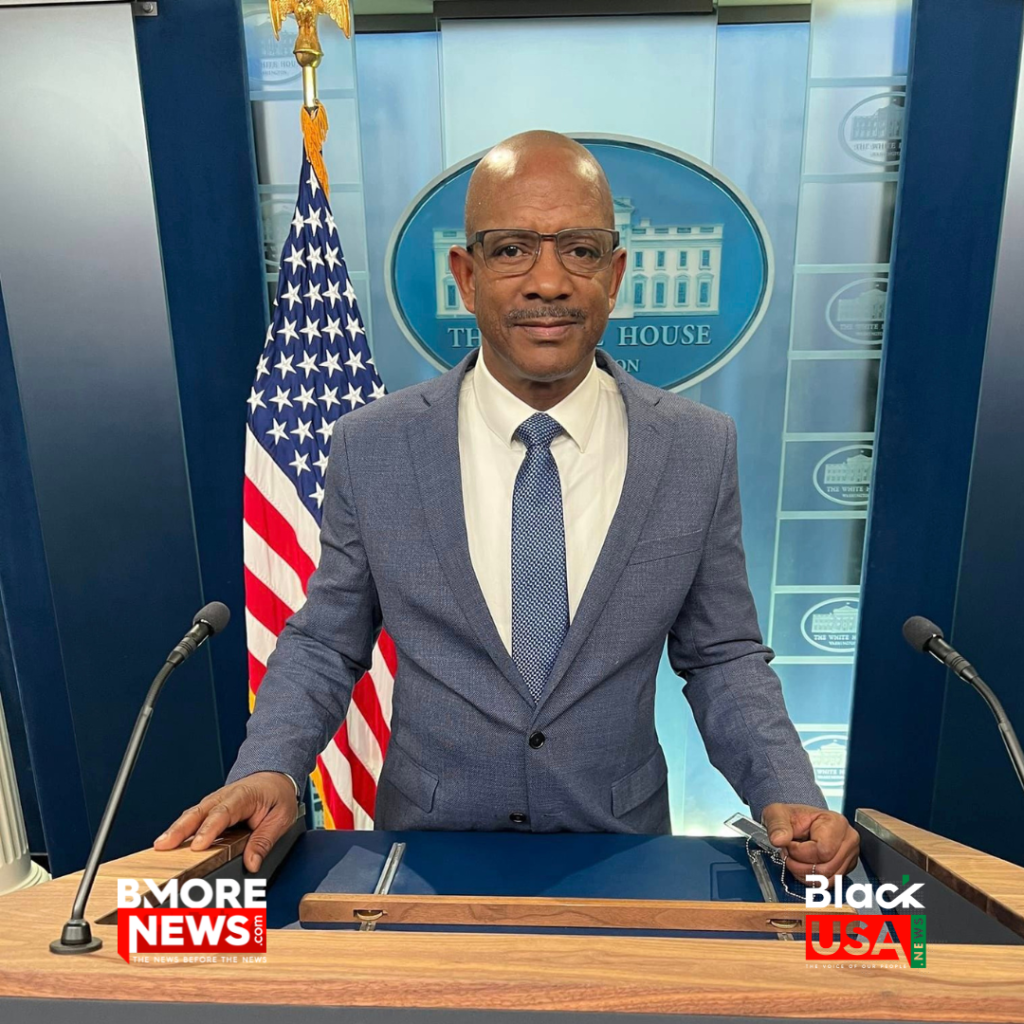
Doni Glover is the founder and publisher of BMORENews.com, Baltimore’s independent digital media outlet now in its 23rd year. He is the host of the Emmy-nominated Doni Glover Show on WMAR-TV 2 and the founder of the Joe Manns Black Wall Street Awards, which has recognized over 3,000 entrepreneurs across nine cities since 2011. He is a DBA candidate at the University of Maryland’s Robert H. Smith School of Business. He was present at the very first MBE Night in Annapolis.