

(BALTIMORE – February 22, 2026) – Baltimore has always been a city of giants. From the shores of the Chesapeake to the streets of Cherry Hill, Liberty Road, Prince George’s County, and beyond — Black men and women from this region have shaped American history, often without the recognition they deserve.
This Black History Month, BMORENews.com proudly honors the builders, the financiers, the organizers, the power brokers, and the institution-makers who helped define Maryland’s Black legacy.
These are our giants.
This is our history.
Black History Month 2026 | Dr. Ella White Campbell — Drum Major for the Liberty Road Corridor
(Fountain Inn, South Carolina – May 15, 2016)

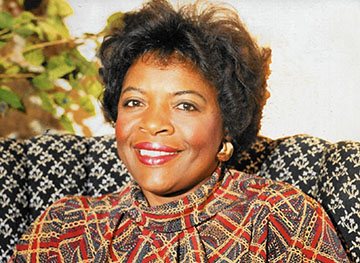
Dr. Ella White Campbell
Dr. Ella White Campbell devoted her life to education, civic leadership, and economic empowerment along Baltimore County’s Liberty Road corridor.
A graduate of Morgan State University who later earned advanced degrees from Johns Hopkins University and the University of Maryland, she rose from classroom teacher to Assistant Principal in Baltimore City Public Schools. Her work in curriculum development strengthened outcomes for countless students.
Beyond education, Dr. Campbell was the founding president of the Randallstown NAACP and a driving force behind Liberty Road revitalization efforts, including the transformative Streetscape Project. Even in death, she continued serving others — donating her remains to Howard University College of Medicine to advance research benefiting the African American community.
Dr. Campbell believed in community, parity, and purposeful leadership.
Her work helped shape the corridor generations now call home.
Her legacy lives in the streets she strengthened.
Black History Month 2026 | Thurgood Marshall — Baltimore’s Architect of Justice
(July 2, 1908 – January 24, 1993)

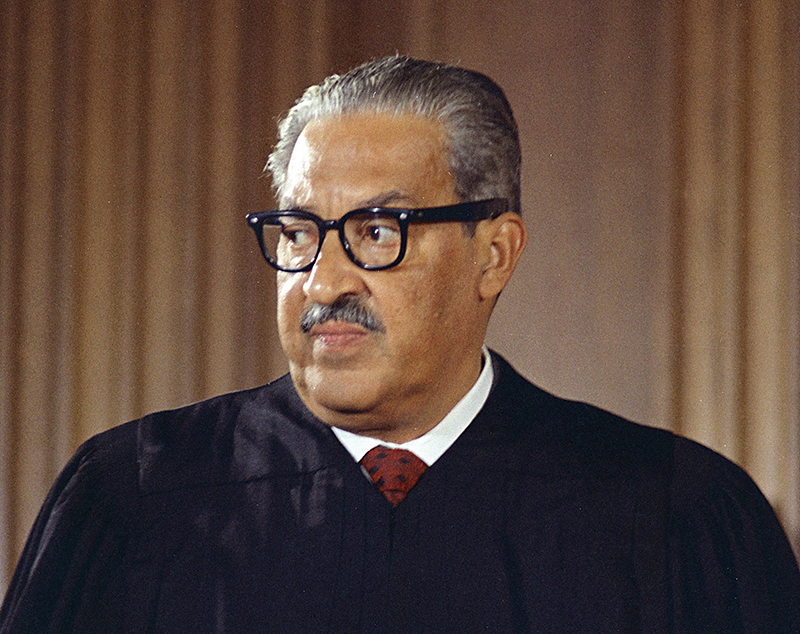
Thurgood Marshall
Before he sat on the highest court in the land, Thurgood Marshall walked the streets of West Baltimore.
Born in Baltimore in 1908, Marshall graduated from Frederick Douglass High School and attended Morgan State University before earning his law degree from Howard University School of Law. Denied admission to the University of Maryland School of Law because of his race, he would later dismantle legalized segregation itself.
As lead counsel for the NAACP Legal Defense Fund, Marshall argued dozens of cases before the U.S. Supreme Court — winning 29 of 32. His most historic victory came in 1954 with Brown v. Board of Education, the decision that declared racial segregation in public schools unconstitutional.
In 1967, he became the first African American appointed to the United States Supreme Court.
Marshall did not ask for equality.
He litigated it.
From Baltimore’s classrooms to the Supreme Court bench, his journey redefined American law and reshaped the nation’s moral direction.
In a segregated America, Black lawyers were rare.
Marshall became Chief Justice of a movement.
Baltimore did not just produce a lawyer.
It produced a Justice.
#BlackHistoryMonth #ThurgoodMarshall #BaltimoreHistory #CivilRights #BMORENews #MarylandLegacy
Black History Month 2026 | Tommie Broadwater Jr. — “The Godfather of Prince George’s County”
(June 9, 1942 – July 11, 2023)

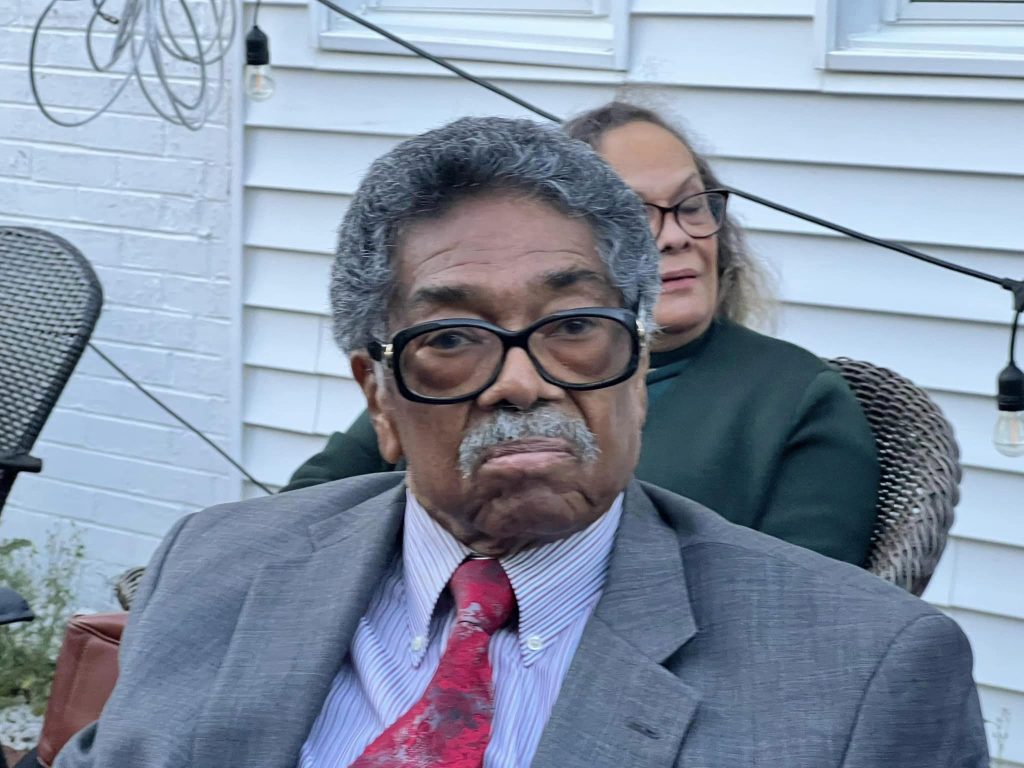
Tommie Broadwater Jr.
Before Prince George’s County became a national model of Black political power, Tommie Broadwater Jr. was building influence block by block.
Elected in 1974, he was among the first Black State Senators elected outside of Baltimore. Known simply as “The Godfather,” Broadwater was more than a legislator — he was a strategist, entrepreneur, bail bondsman, and kingmaker who understood both community dynamics and the mechanics of power.
He mentored generations of leaders, including Wayne Curry, Albert Wynn, Dereck Davis, and Glenn Ivey. Through political discipline and economic independence, he helped shape the modern Prince George’s County political structure.
Broadwater did not just hold office.
He built a machine.
His blueprint remains part of Maryland’s political foundation.
Black History Month 2026 | William Lloyd “Little Willie” Adams — Baltimore’s Original Black Venture Capitalist
(January 5, 1914 – June 27, 2011)

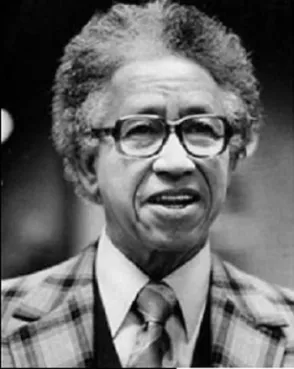
William Lloyd “Little Willie” Adams
At a time when banks refused to lend to Black entrepreneurs, Little Willie Adams built capital — and reinvested it.
Arriving in Baltimore in 1929, Adams operated one of the city’s most powerful pre-legal lottery enterprises. Rather than hoard wealth, he quietly deployed it — backing Parks Sausages, Super Pride supermarkets, Carr’s Beach, and other Black-owned ventures.
He supported the rise of Maryland’s first Black Congressman, Parren Mitchell, and funded hospice care near Memorial Stadium. Frugal, disciplined, and intensely private, Adams shaped Baltimore’s Black economic ecosystem without seeking headlines.
He turned informal capital into institutional strength.
Baltimore’s business foundation still carries his fingerprints.
Black History Month 2026 | Thomas R. Smith — Baltimore’s Black Hotel King
(January 15, 1871 – August 12, 1938)

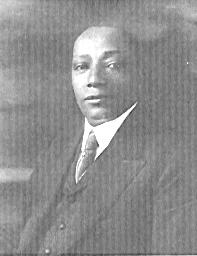
Thomas R. Smith
Born to a formerly enslaved mother in Calvert County, Thomas R. Smith rose during Reconstruction to become one of Baltimore’s wealthiest Black businessmen.
After working as a saloon manager, he entered the hospitality industry in 1913, owning and operating Smith’s Hotel at 437 Druid Hill Avenue for 25 years. Regarded as one of the largest Black-owned hotels in the United States during its time, the establishment became a pillar of Baltimore’s Black business corridor.
At his death, his estate was valued at approximately $121,000 — a substantial fortune rooted largely in Baltimore real estate.
From bondage’s shadow to ownership’s heights, Smith embodied economic ascension.
His success helped redefine possibility in early 20th-century Baltimore.
Black History Month 2026 | Isaac Myers — Father of Black Labor Organizing
(January 13, 1835 – January 26, 1891)

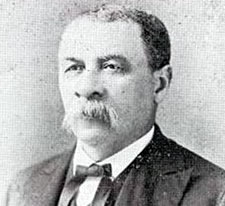
Isaac Myers
Born free in slave-state Maryland, Isaac Myers refused exclusion.
When white workers forced more than 1,000 Black caulkers from Baltimore shipyards after the Civil War, Myers organized. In 1866, he co-founded the Chesapeake Marine Railway and Dry Dock Company — one of the nation’s earliest Black worker-owned cooperatives.
Three years later, he helped establish the Colored National Labor Union, serving as its first president. He later became the first known African American postal inspector.
Before Black Wall Street, before private equity, before political machines — there was labor solidarity.
Isaac Myers laid the foundation.
Black History Month 2026 | Doris J. Cammack-Spencer — Builder of Institutions, Champion of Parity
(1940 – December 30, 2024)

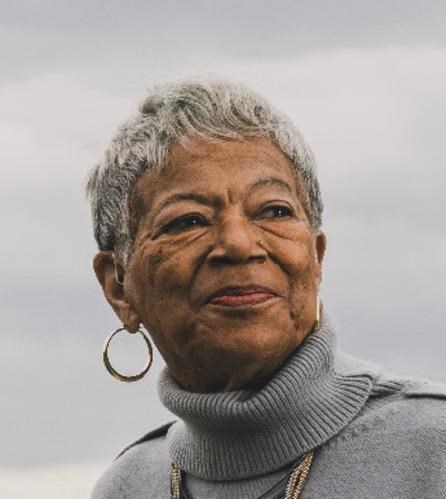
Doris J. Cammack-Spencer
Doris J. Cammack-Spencer built institutions that strengthened Southern Maryland’s economic backbone.
A senior federal executive before becoming a regional civic force, she founded and led the Southern Maryland Minority Chamber of Commerce and co-founded Concerned Black Women of Calvert County.
She expanded access to capital, procurement, and technical assistance for minority-owned businesses across multiple counties. She served on zoning boards, workforce councils, and economic development bodies — always pushing for parity and inclusion.
Doris understood that power is sustained through structure.
Her legacy endures in every entrepreneur she empowered.
Black History Month 2026 | Reginald F. Lewis — Baltimore’s Billion-Dollar Titan
(December 7, 1942 – January 19, 1993)


Reginald F. Lewis
From Dunbar High School to Harvard Law, Reginald F. Lewis mastered the language of capital — then bent it to his will.
In 1983, he launched a private equity firm and acquired McCall Pattern Company. Four years later, he completed a $985 million leveraged buyout of Beatrice International Foods, forming TLC Beatrice International Holdings Inc.
When the company reported $1.8 billion in annual revenue in 1987, it became the first Black-owned and managed company in U.S. history to surpass $1 billion in sales.
Lewis proved that Black leadership could dominate global finance.
His legacy stands in Baltimore — and in boardrooms worldwide.
Black History Month 2026 | Kenneth N. Oliver — Barrier Breaker in Baltimore County
(1945 – 2024)

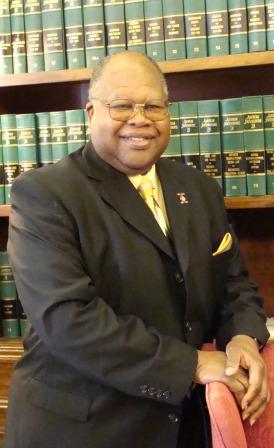
Kenneth N. Oliver
Kenneth N. Oliver became the first African American elected to the Baltimore County Council, representing District 4 from 2002 to 2014.
A graduate of the University of Baltimore and Morgan State University, Oliver built a career in banking and finance before entering public service. He chaired the Baltimore County Planning Board and served in numerous county leadership roles.
As councilman, he advocated for equitable development along the Liberty Road corridor, supporting expanded commercial investment and community infrastructure.
Often the only Black American in the room, Oliver brought discipline, resolve, and fiscal expertise to governance.
He opened doors that had long been closed.
Black History Month 2026 | Harriet Tubman — Maryland’s Daughter, America’s Moses
(c. March 1822 – March 10, 1913)

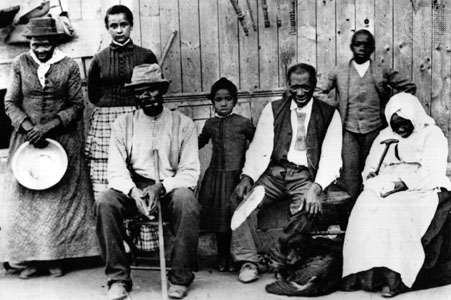
Harriet Tubman
Before there were boardrooms, ballots, or billion-dollar deals, there was Harriet.
Born into slavery on Maryland’s Eastern Shore, Tubman turned the very land that oppressed her into a pathway to freedom. In 1849, she escaped bondage — but freedom for herself was never enough. She returned again and again, guiding enslaved men, women, and children north through forests, swamps, and backroads she knew like scripture. She never lost a passenger.
During the Civil War, she became a Union scout, nurse, and spy. In 1863, she helped lead the Combahee River Raid in South Carolina — the first armed military expedition in U.S. history led by a woman — freeing more than 700 enslaved people and striking a blow against the Confederate economy.
She was strategist. Soldier. Liberator.
After the war, Tubman fought for women’s suffrage and established the Harriet Tubman Home for the Aged in Auburn, New York — serving others until her final days.
She was born Araminta Ross in Dorchester County, Maryland.
She was beaten. Scarred. Hunted.
And still, she went back.
For Marylanders, Harriet Tubman is not just history. She is inheritance. From the Chesapeake marshes rose one of the greatest freedom fighters the world has ever known.
Freedom in this country has her fingerprints on it.
Her story is not legend.
It is liberation.
#BlackHistoryMonth #HarrietTubman #Maryland #EasternShore #UndergroundRailroad #BMORENews
If Harriet is the sword, Frederick is the voice.
You cannot tell Maryland’s freedom story without Frederick Douglass.
Black History Month 2026 | Frederick Douglass — Maryland’s Lion of Liberty
(February 1818 – February 20, 1895)

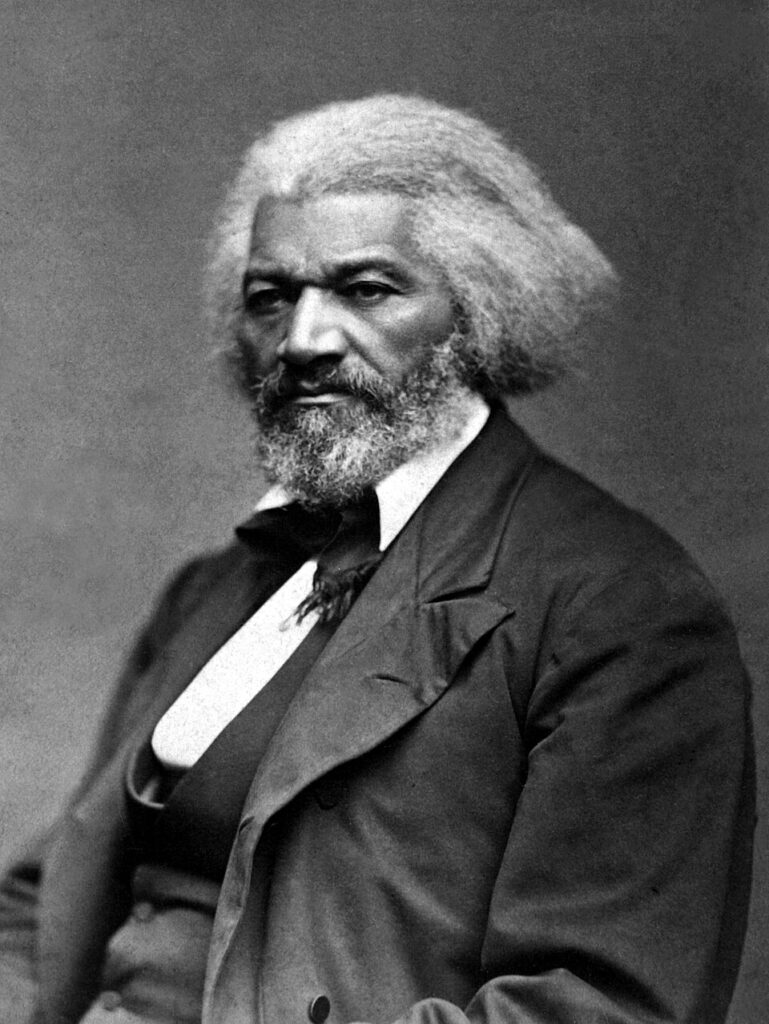
Frederick Douglass
Before there were microphones, there was Frederick Douglass.
Born into slavery on Maryland’s Eastern Shore in Talbot County, Douglass transformed literacy into liberation. Denied formal education, he secretly taught himself to read — and once he understood the power of words, there was no containing him.
He escaped slavery in 1838. But like Harriet Tubman, freedom for himself was not enough.
Douglass became the most photographed American of the 19th century — deliberately shaping his public image to counter racist caricatures. He wrote three autobiographies, including Narrative of the Life of Frederick Douglass, one of the most influential abolitionist texts ever published.
He advised presidents. He debated white supremacists. He demanded the recruitment of Black soldiers during the Civil War. He pushed Abraham Lincoln toward emancipation. He fought for Black suffrage — and for women’s suffrage — long after the war ended.
Where Harriet wielded stealth, Douglass wielded speech.
He once said:
“Power concedes nothing without a demand. It never did and it never will.”
From Maryland’s soil rose not only a freedom fighter — but a statesman.
Douglass understood that liberation required more than escape. It required political power, constitutional change, and relentless public pressure.
He did not just flee slavery.
He dismantled its logic.
Maryland gave America two giants from the same Eastern Shore — Harriet Tubman and Frederick Douglass. One led people through the dark. The other lit the nation with language.
Their courage still defines us.
#BlackHistoryMonth #FrederickDouglass #Maryland #EasternShore #Abolition #BMORENews
Black History Month 2026 | Matthew A. Henson — Maryland’s Arctic Pioneer
(August 8, 1866 – March 9, 1955)

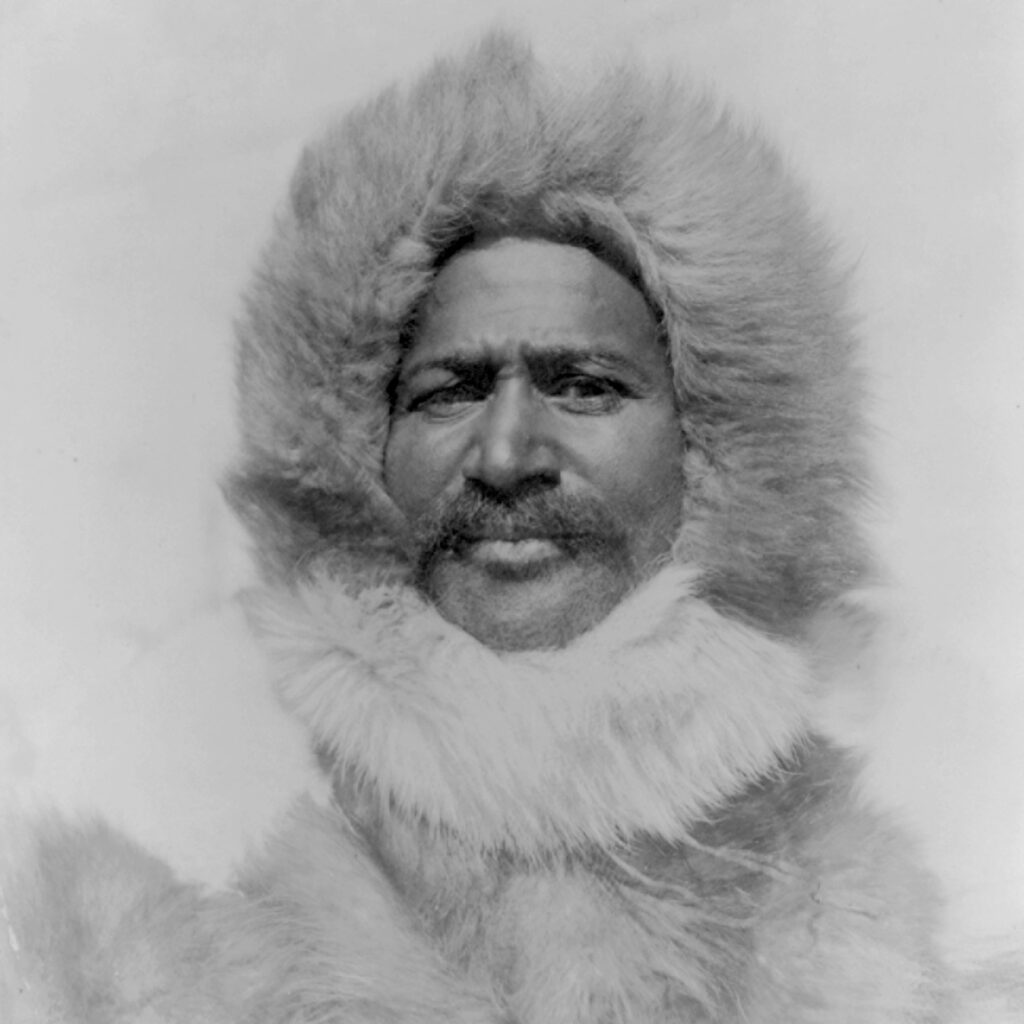
Matthew Alexander Henson
Before satellites and GPS, there was Matthew Henson.
Born in Charles County, Maryland, in 1866, Henson went to sea as a teenager and developed the navigation and survival skills that would later define his legacy. In 1909, alongside explorer Robert Peary, Henson became one of the first men to reach the geographic North Pole.
For decades, his contribution was minimized — even as his skill with sled teams, Arctic navigation, and Inuit language proved essential to the expedition’s success.
He was not merely an assistant.
He was indispensable.
Henson learned the language, adapted to the terrain, and built trust with Inuit communities — becoming, by many accounts, the true field expert of the mission.
History was slow to credit him.
But Maryland remembers.
From Charles County to the top of the world, Matthew A. Henson proved that Black excellence was not confined by geography — or by recognition withheld.
He explored where few dared to go.
And he left footprints at the top of the earth.
Black History Month 2026 | Benjamin Banneker — Maryland’s Astronomer of Freedom
(November 9, 1731 – October 9, 1806)

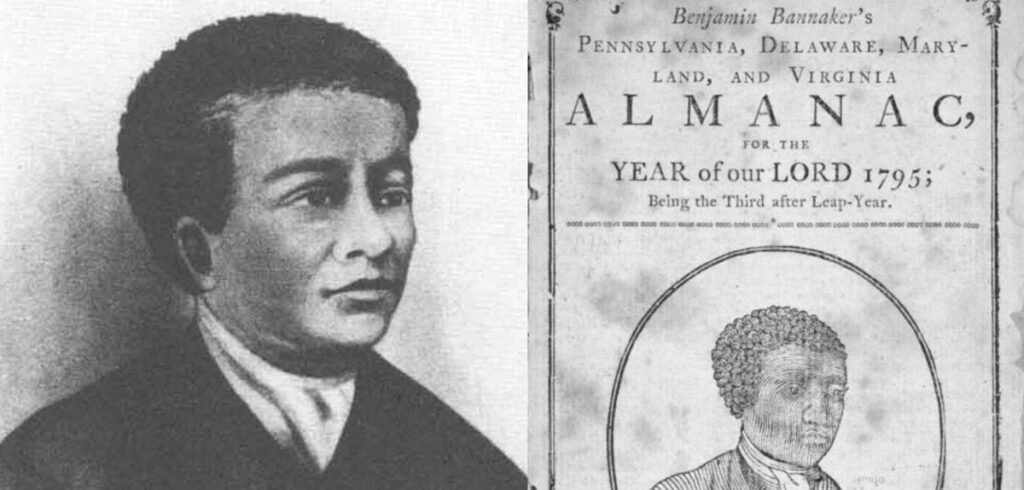
Benjamin Banneker
Before there were engineering schools, before there were observatories, before there was Washington, D.C. — there was Benjamin Banneker.
Born free in Baltimore County in 1731, Banneker was largely self-taught. With borrowed books and relentless curiosity, he mastered mathematics and astronomy. At age 21, he built a striking clock entirely out of wood — a mechanical achievement so precise it kept time for decades.
In 1791, Banneker assisted in surveying the federal territory that would become the District of Columbia. While others measured land, he measured the sky — using celestial calculations to help define the new nation’s capital.
But Banneker was more than a scientist.
From 1792 to 1797, he published widely circulated almanacs predicting eclipses, tides, and planetary movements — proving publicly what many refused to believe: that Black intellect could rival any in the young republic.
In 1791, he wrote directly to Thomas Jefferson, challenging the hypocrisy of slavery in a nation founded on liberty. He attached his astronomical calculations as evidence of Black intellectual capacity.
He did not ask for equality.
He demonstrated it.
From Baltimore County farmland rose a mathematician, astronomer, surveyor, and abolitionist thinker whose brilliance contradicted the racial myths of his era.
Before Frederick Douglass wielded rhetoric,
before Harriet Tubman wielded stealth,
Benjamin Banneker wielded numbers.
Maryland produced a mind that helped measure a nation.
His legacy still calibrates our understanding of possibility.
#BlackHistoryMonth #BenjaminBanneker #MarylandHistory #BlackExcellence #STEM #BMORENews
Black History Month 2026 | Joseph G. Locks Funeral Home — A Baltimore Institution of Dignity
(Founded 1835 – Closed 2017)

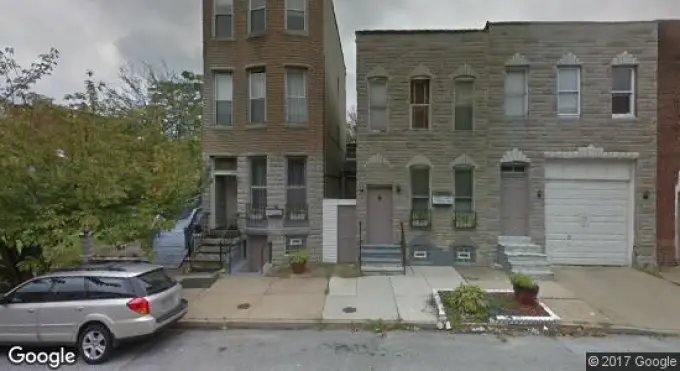
Joseph G. Locks Funeral Home
Before hospitals treated Black patients equally, before insurance companies honored Black policies fairly, there were Black funeral homes — institutions of dignity in a segregated city.
Joseph G. Locks Funeral Home was one of Baltimore’s oldest Black-owned businesses. Established in 1835 by John W. Locks and later operating for generations at 1302–1310 North Central Avenue, it served Baltimore’s African American community for more than 150 years.
Through Reconstruction, Jim Crow, the Great Migration, Civil Rights, and beyond — Locks was there.
The business became especially notable under the leadership of Edna Francis Locks, a pioneering female mortician in Maryland, and later under Joseph G. Locks Jr. and Joseph G. Locks III, who twice served as president of the Funeral Directors and Morticians Association of Maryland.
For decades, the funeral home was more than a business. It was a sacred space — where families gathered, where history passed through open doors, where generations were honored with care.
After the passing of Joseph G. Locks III in 1992 and subsequent family transitions, the North Central Avenue location eventually closed. The buildings were torn down in 2017, marking the end of a physical landmark — though not the end of its legacy.
According to reporting by AFRO American Newspapers, efforts were made to preserve artifacts from the structure, and the funeral home’s historical death records were transferred to the Maryland State Archives for preservation. Digitized records are now accessible through FamilySearch, ensuring that the stories entrusted to Locks remain part of Maryland’s documented history.
The building may be gone.
But the names, the families, and the dignity it provided remain part of Baltimore’s Black institutional memory.
In a segregated America, Black funeral homes were pillars.
Locks was one of the strongest.
#BlackHistoryMonth #BaltimoreHistory #BlackOwnedBusiness #JosephGLocks #BMORENews #MarylandHistory
Black History Month 2026 | Wes Moore — Maryland’s History-Making Governor
(October 15, 1978 – )

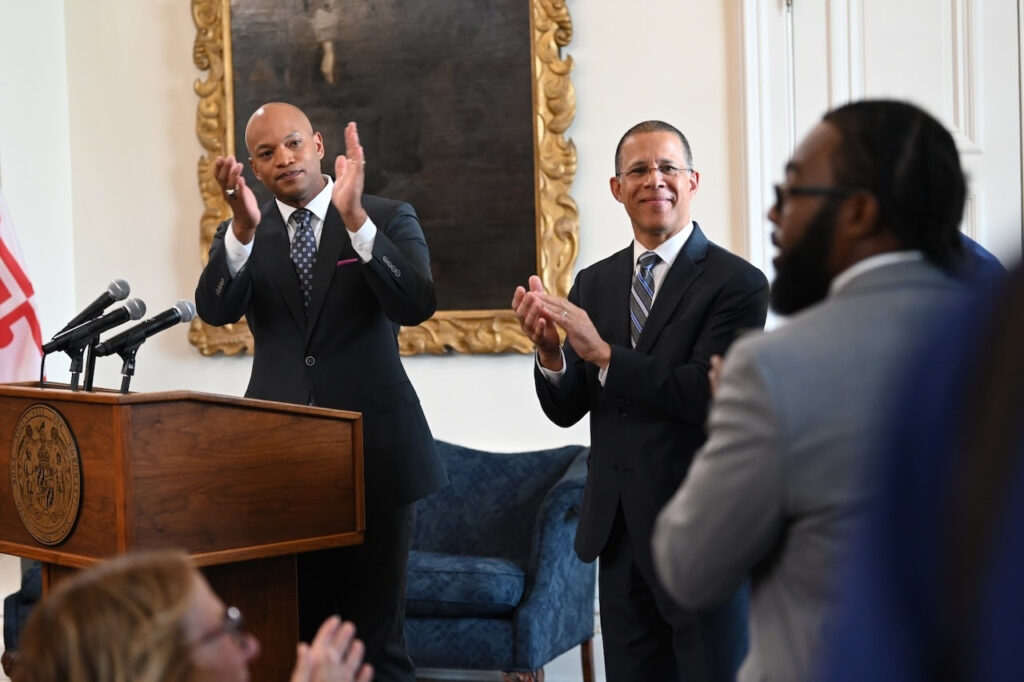
Wes Moore
In 2022, Maryland made history.
Wes Moore became the first African American elected Governor of Maryland — and only the third Black governor elected in United States history.
But his story begins long before Annapolis.
Born in Takoma Park and raised in Baltimore after the death of his father, Moore attended Valley Forge Military Academy, graduated from Johns Hopkins University, became a Rhodes Scholar at Oxford, and served as a U.S. Army officer in Afghanistan.
He later became a best-selling author with The Other Wes Moore, a book that explored how two young men from similar beginnings took radically different paths. The question at the heart of that book — what changes the trajectory of a life? — would later shape his political vision.
Before entering office, Moore led the Robin Hood Foundation, one of the nation’s largest anti-poverty organizations, managing hundreds of millions of dollars in strategic investments aimed at breaking cycles of poverty.
As governor, Moore has focused on economic mobility, workforce development, child poverty reduction, and expanding access to opportunity — framing his leadership around the idea that Maryland can be a state “where no one is left behind.”
From Baltimore streets to the Governor’s Mansion, Wes Moore represents a generational shift in Maryland leadership.
He is not just a symbol of possibility.
He is policy in motion.
#BlackHistoryMonth #WesMoore #Maryland #BlackLeadership #BMORENews